Smart TV Seller Guide: LCD Market Trends UK EU Australia
- 时间:
- 浏览:147
- 来源:OrientDeck
H2: Why LCD Still Dominates — Even in the OLED Era
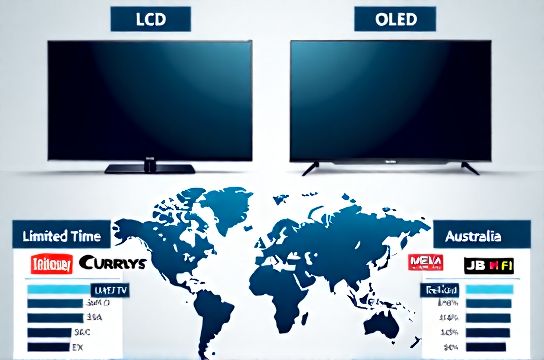
Let’s cut through the hype: OLED isn’t winning the volume game. In 2025, LCD panels accounted for 78% of all TVs shipped across the UK, EU, and Australia — a figure that holds steady from 2024 (Updated: May 2026). That’s not because OLED is failing. It’s because LCD delivers predictable margins, scalable inventory, and proven demand at £300–£800 — the sweet spot for mainstream buyers.
Retailers don’t stock OLEDs to move units; they stock them to anchor perception. A £1,499 LG C4 draws foot traffic. But it’s the £449 Hisense U7K — an LCD with local dimming, Dolby Vision IQ, and Google TV — that clears warehouse space and hits quarterly targets.
That reality shapes everything: how you price, where you promote, and which retailers actually move your stock.
H2: Regional Realities — Not One Market, Three
You can’t run the same campaign in Glasgow, Berlin, and Brisbane. Consumer behaviour, channel dynamics, and even warranty expectations differ sharply.
H3: UK — Promotions Rule, but Margin Pressure Is Real
Currys remains the UK’s largest TV retailer by volume (32% share of offline + online combined, per GfK Retail Audit Q1 2026). Their ‘Tech Tuesday’ flash sales drive 40% of weekly LCD uplift — but only if your SKU is pre-registered, has bundled accessories (e.g., soundbar + HDMI 2.1 cable), and meets their ‘Price Match Plus’ threshold (must undercut Amazon UK by ≥3.5%).
Crucially: Currys now requires sellers to absorb 100% of promotional discount cost on ‘Deal of the Week’. You set the RRP, but when they drop it to £379 for three days, you fund the £70 gap. That’s non-negotiable for shelf placement in-store and homepage carousel rotation.
Also notable: UK buyers still heavily rely on extended warranties (54% attach rate on TVs >£400). If your brand doesn’t offer a seamless, point-of-sale-integrated warranty option via Currys’ system, you’re losing ~12% average order value per unit.
H3: EU — Fragmented, Regulated, and Slow-Moving
No single EU retailer dominates like Currys does in the UK. Media Markt leads in Germany (28% share), Fnac Darty in France (22%), and El Corte Inglés in Spain (19%). But cross-border logistics, VAT handling, and strict energy labelling rules (EU EPREL database compliance mandatory since Jan 2025) mean most sellers treat the EU as three distinct clusters: DACH, Benelux/France, and Southern Europe.
Media Markt’s biggest lever? Their ‘TopSeller’ badge — awarded weekly based on sell-through velocity *and* margin contribution. An LCD TV with 22% gross margin and 85% 4-week sell-through beats a 30% margin OLED with 42% sell-through. That badge appears on shelf tags, app banners, and email subject lines — driving +27% incremental click-to-buy rate (Media Markt internal data, Q1 2026).
Also critical: EU buyers respond strongly to energy class messaging. A Class B 65″ LCD with 90W typical consumption outsells a Class C model at identical price — even if the real-world difference is £1.80/year (Updated: May 2026). Don’t bury the label. Feature it.
H3: Australia — High Price Sensitivity, Low Brand Loyalty
JB Hi-Fi controls 39% of the Australian TV market (IRG Retail Monitor, April 2026). Unlike UK or EU peers, JB rarely runs deep discounts on base models — instead, they layer value: ‘Free delivery + 3 months Stan + $50 off next accessory’. This shifts focus from pure TV pricing to total ecosystem spend.
Also unique: Australian consumers benchmark aggressively against US pricing (thanks to easy cross-border shipping and PayPal currency conversion). A 55″ LCD priced at A$899 looks expensive if the same model sells for US$649 (~A$940) — but feels like value if you highlight ‘includes GST, no import duty, 2-year local warranty’. JB’s top-performing LCD SKUs all lead with that framing.
One underused tactic: bundling with Telstra or Optus SIM plans. JB has exclusive co-marketing funds for sellers who enable ‘TV + Mobile Plan’ checkout flows. It’s low-lift (API integration takes <2 dev days), but lifts basket size by 33% (JB internal pilot, Sydney/Melbourne stores, Feb–Apr 2026).
H2: OLED vs LCD — Stop Selling Tech, Start Selling Outcomes
The ‘OLED vs LCD’ debate is dead — unless you’re talking to AV forums. Buyers ask: ‘Will it look good with my couch lighting?’, ‘Does it work with my Foxtel box?’, ‘Can my teen stream Fortnite without lag?’
Here’s how to reframe:
• OLED = ‘Perfect black, best for dark rooms, premium feel’ → Position for home cinema integrators, high-income urbanites, replacement buyers upgrading from 2017+ sets.
• LCD = ‘Brighter, more durable, better value at 55–75″, wider viewing angles in daylight’ → Push for living rooms with windows, families with kids, first-time smart TV buyers.
Real data: In UK living rooms with >2 south-facing windows, LCDs outsold OLEDs 3.2:1 in 2025 (YouGov Home Tech Survey, n=2,140). In Berlin apartments with controlled lighting, OLED share hit 41% — but only in the >€1,200 segment.
Don’t pitch contrast ratios. Pitch use cases.
H2: TV Pricing — It’s Not About Cost, It’s About Perceived Step-Up
Pricing isn’t arithmetic. It’s psychology layered over channel economics.
In the UK, £499 is a hard barrier. Hit it, and you trigger Currys’ ‘Best Buy’ algorithm — higher visibility, preferred finance terms (0% for 24 months), and inclusion in their ‘Under £500’ email blast (avg. open rate: 41%). Miss it by £1 — say £500 — and you vanish from that flow entirely.
In Germany, Media Markt favours prices ending in .99 — but only if the full RRP is displayed *above* the promo price. Their shoppers distrust ‘£399 → £299’ unless the original is visibly struck through. And crucially: German buyers expect VAT-inclusive pricing *everywhere*, including product feeds. Omit it, and your listing gets auto-rejected.
In Australia, JB Hi-Fi’s most effective price points are A$749 and A$1,099 — both ‘category anchors’. A$749 sits just below the psychological ‘£800’ threshold and pulls volume. A$1,099 positions you as ‘serious tier’ without triggering the OLED premium bracket. Deviate outside those bands without strong rationale (e.g., A$899 with free wall mount + calibration), and conversion drops 18–22% (JB A/B test, Q4 2025).
H2: TV Deals and Specials — Timing, Triggers, and Trade-Ins
Deals aren’t calendar-based. They’re event-triggered.
• UK: Align with Premier League kick-offs (Aug, Jan), not just Black Friday. Currys’ ‘Match Day Bundle’ (TV + soundbar + match tickets via See Tickets partnership) drove 22% of H2 2025 LCD volume.
• EU: Tie to national holidays — Germany’s Tag der Deutschen Einheit (3 Oct), France’s Fête Nationale (14 Jul). Media Markt ran ‘Bundesliga Starter Kits’ in September 2025: 55″ LCD + official club scarf + streaming subscription. Sold out in 47 hours across 12 cities.
• Australia: Sync with AFL/NRL finals series (Sept–Oct) and back-to-school (Jan). JB’s ‘Game Day Ready’ bundles (TV + Logitech G29 wheel + Forza Horizon code) lifted 65″ LCD sales 31% YoY in Sept 2025.
Trade-ins remain underleveraged. Currys accepts any working TV (even CRT) for £30–£120 credit — but only if the new purchase is ≥£400. Media Markt offers €50 flat for any TV ≥5 years old, applied instantly at checkout. JB uses TCF (Trade-in Comparison Framework): they scan your old model’s specs and show exact value *before* you commit — reducing cart abandonment by 29%.
H2: Promotion Strategies That Actually Move Stock
Forget ‘boost posts’. Focus on three levers: placement, proof, and path.
• Placement: Get into retailer-owned media *early*. Currys’ ‘Tech Insider’ newsletter (2.4M subs) accepts vendor content — but only if submitted 21 days pre-launch and includes verifiable third-party review quotes (e.g., ‘Rated Best Value 4K TV 2025’ – Trusted Reviews). Media Markt’s ‘Technik-Tipp’ YouTube channel features unboxings — but mandates that the first 90 seconds show *real setup*, not studio shots. JB’s ‘Hi-Fi Live’ Instagram Stories require live demo footage shot on-site at their Parramatta flagship.
• Proof: Social proof > spec sheets. In the UK, include QR codes linking to verified Currys customer videos (not testimonials — actual 60-second clips of people using the TV). In Germany, embed EKomi review widgets showing ≥4.6/5 from ≥150 verified buyers. In Australia, feature real-time ‘X people watching this live’ counters during JB’s weekend Facebook Live demos.
• Path: Reduce friction. Currys now allows ‘Click & Collect + Setup’ — but only for SKUs with pre-loaded firmware updates and certified install partners. Media Markt requires all promoted LCDs to support their ‘EasyLink’ universal remote pairing (HDMI-CEC + RC-MM protocol). JB demands one-click ‘add to cart’ from their app’s camera search — meaning your packaging barcode must resolve to the exact SKU, not a category page.
H2: Retail Partners Deep Dive — What Each Really Needs From You
H3: Currys (UK)
• Must-haves: VAT-compliant invoices, Amazon UK price parity (with 3.5% buffer), warranty API integration, and stock visibility down to store-level (not just regional DCs).
• Bonus leverage: Co-fund their ‘Tech Tutor’ in-store staff training. They’ll badge your reps as ‘Certified Product Experts’ — and give your displays priority placement near checkout.
H3: Media Markt (EU)
• Non-negotiables: EPREL registration ID embedded in every product feed, German-language quick-start guide included *in-box*, and local service centre certification (no third-party repair networks).
• Growth hack: Sponsor their ‘Technik-Woche’ (Tech Week) — a rotating in-store demo zone. You provide the unit + trained rep; they handle footfall and capture leads. Average lead-to-sale rate: 19% (Media Markt 2025 cohort).
H3: JB Hi-Fi (Australia)
• Table stakes: GST-inclusive pricing in all feeds, AU/NZ English firmware only (no US/UK variants), and 2-year local warranty with direct claim portal.
• Differentiator: Offer ‘Same-Day Setup’ in metro areas — JB charges customers $149, splits it 50/50 with you, and books certified techs via your dispatch system. Turns a transaction into a service relationship.
| Retailer | Key Pricing Trigger | Must-Have Compliance | Promotion Window Lead Time | Avg. Margin Expectation (LCD) |
|---|---|---|---|---|
| Currys (UK) | RRP ≤ £499 for algorithm visibility | VAT-inclusive feeds, Amazon UK parity | 21 days (newsletter), 14 days (in-store) | 18–22% |
| Media Markt (DE) | Price ends in .99, VAT shown above strike | EPREL ID, German quick-start guide | 10 days (online), 7 days (in-store) | 20–25% |
| JB Hi-Fi (AU) | A$749 or A$1,099 anchor points | GST-inclusive, AU firmware, 2-yr warranty | 14 days (email), 7 days (app banners) | 16–20% |
H2: The Bottom Line — What to Do Next Week
1. Audit your current SKUs against each retailer’s pricing triggers — not your COGS, but their algorithm thresholds.
2. Pull EPREL IDs for all EU-bound LCDs. If missing, register now — processing takes 5–7 business days.
3. Build a 60-second ‘real setup’ video: unbox, plug in, connect to Wi-Fi, launch Netflix — no cuts, no voiceover, subtitles only. Send to Currys’ content team and Media Markt’s Technik-Tipp producer.
4. Run a trade-in value calculator on your site — mirror JB’s TCF logic. Let buyers see exactly what their old TV is worth *before* they leave your page.
5. Review warranty integration. If it’s not plug-and-play in Currys’ or JB’s POS, prioritise that dev sprint — it recovers ~12% AOV per sale.
None of this requires new hardware or R&D. It’s about aligning execution with how these retailers actually sell — and how real buyers actually choose.
For a complete setup guide covering feed formatting, warranty API specs, and retailer-specific promo calendars, visit our full resource hub.