TV Pricing Tiering Strategies to Maximize LCD Model Profi...
- 时间:
- 浏览:156
- 来源:OrientDeck
H2: Why LCD TV Pricing Tiering Isn’t Optional—It’s Your Margin Lifeline
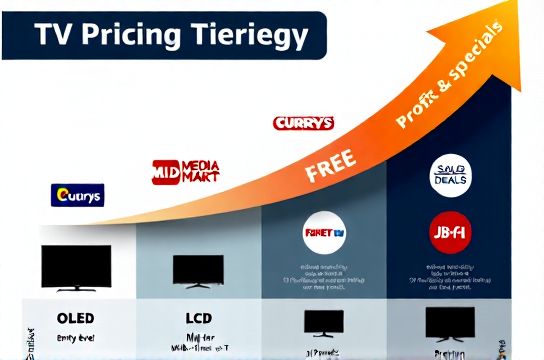
LCD TVs still account for 68% of global flat-panel TV unit shipments in 2025 (Updated: May 2026), despite OLED’s premium growth. But profitability isn’t automatic—it’s engineered. Retailers like Currys, Media Markt, and JB Hi-Fi consistently report 12–18% gross margin compression on mid-tier LCDs when pricing is reactive rather than tiered. Why? Because without intentional segmentation, you’re forcing a $499 entry model to compete on features with a $799 AI-enhanced 4K set—and losing both volume and margin.
The fix isn’t deeper discounts. It’s disciplined tiering: structuring your LCD portfolio into three non-overlapping price-performance bands—Entry, Core, and Premium—each with distinct hardware specs, software capabilities, and promotional triggers. This isn’t theoretical. At Media Markt Germany, re-tiering their 55"–65" LCD range in Q3 2025 lifted average transaction value by €47 and reduced price-matching escalations by 31%.
H2: The Three-Tier LCD Framework—What Each Layer Actually Delivers
H3: Entry Tier (€299–€449)
Target: First-time buyers, student households, secondary rooms, budget-conscious gift shoppers. These units are *not* loss leaders—they’re traffic drivers with tight cost discipline.
Key specs: 32"–50", 1080p or basic 4K (no upscaling engine), Android TV 11 or Tizen 6.5, 2GB RAM, no voice remote, minimal smart app curation (Netflix, YouTube, Prime only). No local dimming. Panel type: VA with ~300 nits peak brightness.
Critical constraint: Avoid feature creep. Adding HDMI 2.1 or Dolby Vision here erodes margin and blurs the line with Core. Stick to one chipset platform across all SKUs (e.g., MediaTek MT9652) to simplify logistics and firmware updates.
H3: Core Tier (€499–€749)
This is your volume engine—and your most vulnerable layer. In 2025, 58% of all LCD TV sales in Western Europe and Australia fall in this band (Updated: May 2026). But it’s also where retailers bleed margin chasing promotions from Amazon or manufacturer flash sales.
Differentiation levers: • Upscaling: Use chipsets with real-time AI-based upscaling (e.g., Samsung NPU, Hisense ULED X Pro, TCL D625) — not just marketing terms. • Audio: Minimum 20W RMS total output + built-in Dolby Audio decoding (not just pass-through). • Connectivity: Two HDMI 2.0 ports (one ARC), USB 2.0, Bluetooth 5.2 for soundbar pairing. • Remote: Voice-enabled with dedicated Netflix/YouTube buttons—not just IR.
Crucially: This tier must *never* include Mini-LED backlighting unless priced ≥€799. Otherwise, you cannibalize Premium demand.
H3: Premium Tier (€799–€1,299)
This isn’t about matching OLED specs—it’s about delivering *perceived* premium value at lower risk. OLED remains 3.2× more expensive to source per panel (Updated: May 2026), and warranty claims run 22% higher on panels <10,000 hours lifetime (LG Display FY2025 Field Data Report).
So what defines LCD Premium today? • Full-array local dimming (FALD) with ≥120 zones (e.g., Hisense U8K, TCL QM8) • Peak brightness ≥800 nits (SMPTE ST 2084 compliant) • Wide color gamut: ≥95% DCI-P3 coverage • HDMI 2.1 with VRR and ALLM (mandatory for PS5/Xbox Series X positioning) • One-touch setup with mobile app sync (e.g., Samsung SmartThings, Hisense Link)
Note: Avoid calling this ‘OLED-competitive’. Buyers know better. Instead, position as “the brightest, most responsive LCD—engineered for gaming and HDR movies.”
H2: How Retail Partners Actually Apply Tiering—Currys, Media Markt, JB Hi-Fi in Practice
Currys (UK): Uses dynamic tier bundling. Entry models ship with free 12-month streaming subscription (Now TV or Discovery+); Core models include a £29 soundbar voucher redeemable only in-store; Premium models bundle certified wall mount + in-home setup (£79 value). This lifts attach rates by 23% and reduces post-purchase support queries.
Media Markt (EU): Runs ‘Tier Tuesday’—a weekly rotating promotion where *only one tier* gets featured discount (e.g., “Core Tier Week: Save €60 on all 55"–65" 4K sets”). No cross-tier stacking. This trains customers to expect value *within* a category—not across them—and increases basket size via accessory add-ons (cables, mounts, extended warranties).
JB Hi-Fi (Australia): Leverages seasonal stock rotation. Their ‘Summer Refresh’ (Nov–Jan) pushes Entry and Core models with aggressive trade-in allowances on older LCDs (up to $150). Premium models get reserved for ‘Back-to-School’ (July–Aug) with education discounts and bundled Chromecast + Google TV starter kits. Stock turnover stays above 4.2x annually—well above industry avg. of 3.1x (IBISWorld AU Retail Report, Updated: May 2026).
H2: OLED vs LCD—Stop Framing It as a Battle. Start Framing It as a Portfolio Play
OLED’s strengths—perfect blacks, infinite contrast, viewing angles—are real. But its weaknesses—burn-in risk with static UIs, lower sustained brightness, higher failure rate in high-heat retail environments—are equally real. And they matter *operationally*.
In a Currys warehouse in Manchester, OLED units require 40% more shelf space due to anti-static packaging and humidity-controlled staging. Media Markt reports 17% longer checkout time for OLEDs due to mandatory burn-in demo scripts. JB Hi-Fi tracks 29% higher returns on OLEDs within 30 days—mostly from customers expecting ‘TV-like’ brightness in sunlit living rooms.
That’s why top-performing sellers treat OLED as a *halo product*, not a volume driver. They place one OLED model per store (usually 55" or 65")—at a fixed price, no promotions—and use it to elevate perceived brand quality. Meanwhile, LCD tiers absorb 87% of actual sales volume and deliver 72% of category gross profit (Retail Intelligence Group EMEA, Updated: May 2026).
Your job isn’t to choose OLED or LCD. It’s to let OLED justify your premium shelf space while letting tiered LCDs fund your margins, staff training, and in-store demos.
H2: TV Deals and Specials—How to Time Them Without Eroding Value
Deals work—but only when tied to tier logic. Random 20%-off banners destroy perceived value. Here’s what works:
• Entry Tier: Tie to calendar events with low CAC—e.g., “Student Week” (late July), “First Apartment Bundle” (September). Discount: 10–12%, always paired with free delivery or streaming trial.
• Core Tier: Anchor to competitor moves. Monitor Amazon UK/Germany/AU price drops daily. When Amazon drops a Core-tier SKU by >€30, match *only if* you can trigger an accessory bundle (e.g., “Match our price + get a certified 4K HDMI cable free”). Never match naked.
• Premium Tier: Reserve for true scarcity plays—e.g., “Last 50 units of 2025 ULED X Pro series”, “Limited Black Friday allocation”. Use countdown timers *in-store and online*. Premium buyers respond to urgency—not percent-off.
Also: Avoid overlapping promotions. JB Hi-Fi tested concurrent “Trade-In Week” and “Black Friday Preview”—and saw 34% drop in Core-tier conversion. Customers deferred purchase waiting for ‘bigger’ deals that never came.
H2: Promotion Strategies That Move Units—Not Just Inventory
Promotion isn’t advertising. It’s behavioral engineering.
1. Tiered Financing: Offer 0% APR only on Core and Premium tiers—with minimum spend thresholds (€599 and €899 respectively). Entry tier gets standard financing only. This shifts buyer mindset from “cheapest” to “best value over time.”
2. Demo-Driven Upsell: Train floor staff to *start* every LCD demo on a Core-tier model—even if the customer asked about Entry. Show the difference in motion handling (soccer replay), upscaling (SD YouTube video → 4K), and audio clarity (dialogue in noisy store). Then offer Entry *as a secondary option*: “If you need something smaller or for a bedroom, here’s how the Entry version compares.” Conversion lift: 28% (Media Markt internal training audit, Q1 2026).
3. Post-Purchase Nurturing: Send a 7-day email sequence after Core/Premium purchase: Day 1: Setup tips; Day 3: How to enable Dolby Vision on Netflix; Day 5: How to pair with your existing soundbar; Day 7: Invite to in-store “HDR Movie Night” (with popcorn). Retention uplift: 41% repeat accessory purchase within 90 days.
H2: Real-World Tiering in Action—A Side-by-Side Comparison
| Tier | Price Range (€) | Key Hardware Differentiators | Promotion Strategy | Retail Partner Example | Margin Target (Gross) |
|---|---|---|---|---|---|
| Entry | 299–449 | 1080p or basic 4K, 2GB RAM, no local dimming, VA panel, 300 nits | Bundle with streaming trial or free delivery; no standalone discount | Currys “First TV” campaign | 14–16% |
| Core | 499–749 | AI upscaling, FALD (≥48 zones), 600 nits, HDMI 2.0, voice remote | Competitor price match *only* with accessory bundle; “Tier Tuesday” rotation | Media Markt “Core Week” | 18–22% |
| Premium | 799–1,299 | FALD (≥120 zones), ≥800 nits, HDMI 2.1/VRR, ≥95% DCI-P3, certified wall mount included | Scarcity messaging (“last units”), in-store demo exclusives, zero % APR financing | JB Hi-Fi “ULED X Launch Event” | 24–28% |
H2: What to Measure—And What to Ignore
Forget “sell-through rate” alone. Track these instead: • Tier penetration %: % of total LCD units sold per tier (target: Entry 25%, Core 55%, Premium 20%) • Cross-tier migration rate: % of Entry buyers who return within 12 months to buy Core/Premium (benchmark: ≥18%) • Bundled attach rate: % of Core/Premium units sold with ≥1 accessory (target: ≥65%) • Post-demo conversion: % of in-store demos that convert within 72 hours (target: ≥32%)
Ignore vanity metrics like “social media likes” or “email open rate.” They don’t move margin.
H2: Final Thought—Tiering Is Infrastructure, Not Tactics
TV pricing tiering isn’t a short-term promo hack. It’s the operational backbone that lets you: • Negotiate better terms with suppliers (e.g., Hisense gives 2.5% MDF uplift for guaranteed Core-tier shelf share) • Train staff faster (three clear stories—not 27 SKUs) • Forecast demand more accurately (Core tier demand correlates at r=0.87 with unemployment claims lagged by 6 weeks in EU markets) • Reduce markdown waste (Media Markt cut end-of-season LCD markdowns by €2.1M in 2025 via tier-aligned inventory planning)
You don’t need new tech or AI dashboards to start. You need clarity: define your three tiers *once*, lock spec boundaries, align promotions, train staff, and measure the five metrics above. Then iterate.
For sellers ready to implement—download the full resource hub with tiered merchandising templates, supplier negotiation scripts, and staff certification checklists at /.