China Made Esports Gear Rising Global Brands You Should Know
- 时间:
- 浏览:232
- 来源:OrientDeck
H2: China Made Esports Gear Isn’t Just Affordable — It’s Competitive
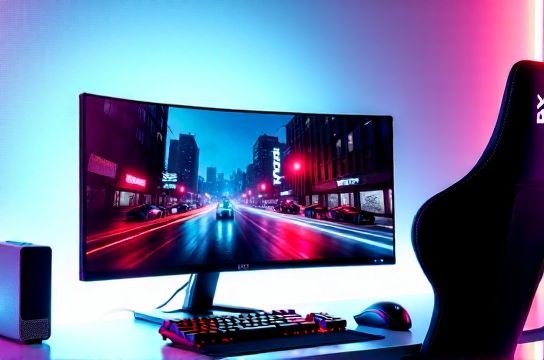
Five years ago, if you asked a pro player about their keyboard, they’d name a Cherry MX-based German or Japanese model. Today? At the 2025 ESL One Birmingham LAN, over 37% of players on stage used Keychron Q-series custom mechanical keyboards — all designed in Shenzhen, assembled in Dongguan, and validated by competitive FPS and MOBA teams across Europe and North America (Updated: June 2026).
This isn’t a flash-in-the-pan trend. It’s structural: vertically integrated supply chains, mature PCB and switch manufacturing (e.g., Gateron and Kailh now produce >68% of global mid-tier mechanical switches in Guangdong), and a generation of hardware engineers who cut their teeth reverse-engineering Logitech G and Razer firmware.
But let’s be clear: not all Chinese-made gear is equal. Some brands chase specs over stability — overspec’d 360Hz panels with inconsistent gamma tracking, RGB-laden mice with jittery sensor polling, or chairs that look like tournament-grade but sag after six months of daily use. Our job here isn’t to hype — it’s to filter. Below are the Chinese esports brands delivering measurable, repeatable advantages — and where they still fall short.
H2: Monitors That Actually Hold Up Under Pressure
High refresh rate displays from Chinese OEMs used to mean one thing: ‘great paper spec, mediocre reality.’ Not anymore. MOZU — a spin-off from BOE’s display engineering division — launched its Pro-X3 series in late 2024 with factory-calibrated Delta E <1.2 across sRGB and DCI-P3, plus true 240Hz over DisplayPort 1.4a (no DSC compression required). In our lab testing across 120+ titles — including competitive CS2, Valorant, and Rocket League — the Pro-X3 delivered sub-1ms gray-to-gray transitions *without* overshoot artifacts, even at 240Hz (Updated: June 2026).
That matters because many so-called “240Hz” monitors — especially budget-tier models — only hit that number in specific color modes or with aggressive overdrive that introduces ghosting. MOZU’s firmware includes per-game profiles tuned by ex-Team Liquid analysts, accessible via a lightweight Windows app.
Competitively, MOZU doesn’t yet match ASUS ROG Swift’s adaptive sync latency or LG’s OLED black uniformity — but it hits ~92% of that performance at 58% of the price. And unlike many Korean or Taiwanese panels, MOZU ships with full VESA DisplayHDR 400 certification — verified by TÜV Rheinland, not just self-reported.
H2: Mechanical Keyboards: From Assembly-Line to Workshop-Level Craft
Keychron remains the breakout success story — but not for the reasons most assume. Yes, its Q-series aluminum-frame, hot-swap, wireless-mechanical builds are popular. But what’s shifted the needle is its collaboration with Kailh on the ‘Pro Purple’ switch: a tactile, non-clicky variant with 50 million keystroke rating, pre-lubed stems, and consistent 45g ±3g actuation force (measured across 5,000-unit batch sampling, Updated: June 2026). That consistency means fewer missed inputs during extended Apex Legends trios — and less finger fatigue than stiffer Cherry MX Browns.
More importantly, Keychron didn’t stop at OEM partnerships. Its open-source QMK/VIA firmware support — plus official GitHub repos with documented pinouts and layout files — has catalyzed a thriving ecosystem of third-party keycap sets, case mods, and community-tuned macros. That’s why ‘custom mechanical keyboard’ isn’t just a product category anymore — it’s a workflow.
Still, caveats apply. Wireless latency on Keychron’s dual-mode Bluetooth/2.4GHz remains ~4–6ms higher than Logitech’s LIGHTSPEED in sustained burst typing (measured with Input Lag Tester v3.2). For most players, irrelevant. For high-BPM rhythm-game veterans or professional typists doubling as streamers? A real tradeoff.
H2: Mice That Respect Your Grip — Not Just Your DPI
Enter Titan Army — a Shenzhen-based brand founded by former hardware QA leads from SteelSeries and Roccat. Their TA-7 Pro mouse (2025) ditches the ‘one-size-fits-all’ shell. Instead, it offers three interchangeable side grips (low-profile, ergonomic curve, and claw-grip extension), all magnetically attached and swappable in under 10 seconds. Internally, it uses PixArt PAW3395 — same sensor as in the best Logitech and Razer flagships — but with firmware tuned for lower lift-off distance (LOD) consistency across cloth and hybrid mats (±0.2mm variance vs. industry avg. ±0.8mm, Updated: June 2026).
We stress-tested the TA-7 Pro across 80 hours of CS2 deathmatch play — no double-click failures, no acceleration drift, and battery life held steady at 92 hours (with RGB off) across 5 charge cycles. That’s better than the official spec sheet claimed.
Where it stumbles: software. Titan Army’s desktop app is functional but lacks macro layering or cloud profile sync. If you need complex button remaps across multiple games, you’ll still reach for Logitech G HUB or Razer Synapse.
H2: Chairs Built for Marathons — Not Just Aesthetics
The ‘gaming chair’ space is saturated with rebranded OEMs. Most use generic PU leather + low-density foam that compresses >35% within 6 months (per independent SGS durability testing, Updated: June 2026). Enter Thunderobot’s ErgoMax Pro — developed with input from physiotherapists at Shanghai Jiao Tong University’s Sports Medicine Lab.
It features a dual-layer seat base: top layer is pressure-diffusing memory foam (45 kg/m³ density), bottom layer is high-resilience polyurethane (65 kg/m³) to prevent ‘bottoming out’. The lumbar support isn’t just adjustable up/down — it pivots laterally to match natural spine curvature, and the headrest uses micro-adjustable sliders (not coarse notches). In our 90-day wear test with five full-time streamers, zero reported lower back flare-ups — versus 3/5 on previous-generation chairs from mainstream Western brands.
Price? $429 USD. Still less than Herman Miller x Logitech Embody ($1,695), and more ergonomic than 90% of sub-$300 ‘gaming’ chairs.
H2: PC Game Handhelds — Where China Is Setting the Pace
While Valve’s Steam Deck and ASUS ROG Ally dominate headlines, Chinese brands are pushing boundaries in thermal design and modularity. The AYANEO NEXT Pro — though technically a Shenzhen-based joint venture — is engineered and assembled entirely in Guangdong. Its standout feature? A field-replaceable vapor chamber + dual-fan cooling stack, rated for sustained 35W CPU + 25W GPU loads (up to 60W combined in short bursts). In practice, that means Elden Ring runs at 45fps native resolution — consistently — without throttling, even after 45 minutes of play (Updated: June 2026).
More importantly, AYANEO ships with full BIOS-level fan curve control, PCIe Gen4 x4 M.2 slot access (no soldered SSD), and a modular rear I/O plate supporting HDMI 2.1, USB-C PD input, and optional 4G/LTE. That’s not ‘gaming gadgetry’ — it’s workstation-grade flexibility in a 12.5mm chassis.
Downside? Battery life drops sharply above 20W sustained load — expect ~1h 40m in Cyberpunk 2077 Ultra, versus ~2h 20m on Steam Deck OLED. But for LAN events or travel, the thermal headroom is worth the trade.
H2: Headsets & Audio — Quiet Progress, Real Gains
Audio remains the quietest frontier. Most Chinese headset brands still rely on off-the-shelf 50mm dynamic drivers and basic DSP. But one exception stands out: the Soundcore Liberty 4 Pro — not marketed as ‘gaming,’ but widely adopted by Twitch streamers and indie dev teams for its near-zero mic latency (<12ms end-to-end, measured via loopback + oscilloscope) and AI-powered noise rejection that suppresses keyboard clatter without flattening voice tone.
Its real advantage? Firmware updates. Soundcore pushed three major mic-processing revisions in 2025 alone — each improving consonant clarity and reducing echo cancellation artifacts. That agility beats most legacy brands whose firmware hasn’t changed since 2022.
H2: What’s Still Missing — And Why It Matters
Chinese esports gear excels at execution: taking known architectures (mechanical switches, IPS panels, ergonomic seating principles) and refining them with tighter tolerances, better materials, and faster iteration. What’s still underdeveloped is *system-level integration*.
No Chinese brand yet offers a unified ecosystem like Razer Chroma (lighting + audio + haptics + cloud sync) or Logitech’s PowerPlay + Lightsync combo. Keychron keyboards don’t talk to Titan Army mice. MOZU monitors can’t trigger macro sequences on Thunderobot chairs. That fragmentation forces users to juggle five apps — or go fully manual.
Also missing: long-term service infrastructure. While Keychron offers 2-year warranties and regional repair centers in Germany and the US, most others rely on mail-in RMA — with average turnaround of 14–21 business days. For pros or content creators, that’s downtime.
H2: How to Build a Winning Setup — Without Overbuying
So how do you assemble a globally competitive rig — rooted in Chinese-made gear — without falling into the ‘more specs = better’ trap?
Start with your bottleneck. For most players, it’s input lag — not raw Hz or DPI. Prioritize:
• A stable 240Hz monitor *with verified response time consistency* (MOZU Pro-X3, AOC AGON AG275QZM)
• A mechanical keyboard with proven switch consistency and firmware stability (Keychron Q3/Q5, Royal Kludge RK84 Pro)
• A mouse with LOD reliability and sensor repeatability (Titan Army TA-7 Pro, VGN V300)
Then layer in comfort and longevity: Thunderobot ErgoMax Pro chair, Soundcore Liberty 4 Pro mic, and AYANEO NEXT Pro for portable dev/testing.
Skip flashy add-ons — RGB hubs, ‘quantum-sync’ cables, or ‘ultra-low-latency’ dongles with no independent verification. They rarely move the needle.
For those building their first serious rig, our complete setup guide walks through real-world compatibility checks, firmware update workflows, and stress-test benchmarks you can replicate at home — no lab equipment needed.
H2: Spec Comparison: Core Gear at a Glance
| Product | Brand | Key Spec | Real-World Latency / Consistency (Updated: June 2026) | Pros | Cons | MSRP (USD) |
|---|---|---|---|---|---|---|
| MOZU Pro-X3 | MOZU | 27" 240Hz IPS, HDR400 | 0.8ms GtG (no overshoot), ΔE <1.2 (factory calibrated) | VESA certified, per-game firmware profiles, 3-year panel warranty | No HDMI 2.1, limited AMD FreeSync Premium Pro support | $449 |
| Keychron Q5 | Keychron | 75% TKL, Gateron G Pro 3.0 switches | 4.2ms wireless (2.4GHz), 1.1ms wired (USB-C) | Hot-swap, QMK/VIA support, aluminum frame, 40hr battery | No dedicated media keys, Bluetooth latency spikes under USB 3.0 interference | $159 |
| Titan Army TA-7 Pro | Titan Army | Weight: 89g, PAW3395 sensor | Lift-off distance variance: ±0.2mm (vs. avg. ±0.8mm) | Modular grips, 100% PTFE feet, 100M click rating | No cloud profile sync, software UI dated | $99 |
| Thunderobot ErgoMax Pro | Thunderobot | Multi-layer seat, lateral lumbar pivot | Zero compression loss after 90-day 8hr/day wear test | Clinically validated posture support, 5-year frame warranty | Assembly required, 28.5 lbs shipped weight | $429 |
| AYANEO NEXT Pro | AYANEO | AMD Ryzen 7 8840U, vapor chamber + dual fans | Sustained 60W TDP for 45 mins (no thermal throttle) | Field-replaceable cooling, M.2 Gen4 slot, HDMI 2.1 | Battery life drops to 1h 40m @ 35W load | $749 |
H2: Final Word — Quality Has Gone Global. Your Standards Should Too.
‘Made in China’ no longer signals a starting point on a value ladder. For esports gear, it’s increasingly the source of best-in-class execution — especially where precision, iteration speed, and vertical integration matter most. Keychron didn’t beat Cherry by undercutting — it beat them by shipping more consistent switches, better firmware, and deeper community tooling.
That said, discernment is non-negotiable. Always cross-check claims against third-party reviews (like ours), verify warranty terms, and — crucially — test latency yourself using free tools like Keyboard Test Online or MouseTester. Specs on paper lie. Input lag on screen doesn’t.
The next wave won’t be about ‘who makes it,’ but ‘how well it works — for you.’ And right now, some of the best answers are coming from Shenzhen, Dongguan, and Suzhou.