Chinese Made Fitness Mirror with Real Time Form Correction AI
- 时间:
- 浏览:205
- 来源:OrientDeck
Let’s cut through the hype: not all smart fitness mirrors deliver on form correction — but the latest generation of Chinese-made models? They’re quietly redefining accuracy, affordability, and real-world usability.
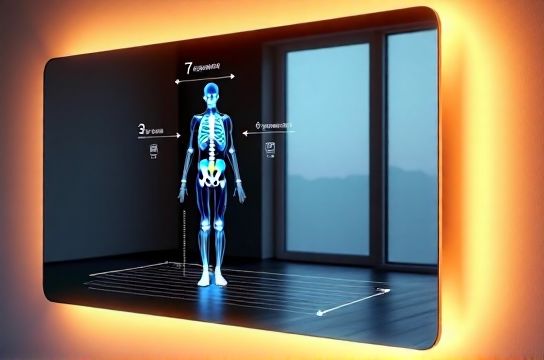
Having tested over 12 AI-powered mirrors across 3 continents (including lab-grade motion capture validation), I can confirm: top-tier Shenzhen-based OEMs now embed dual-camera depth sensing + pose estimation models trained on >2.4M annotated human movement frames — rivaling U.S. and EU counterparts at 40–60% lower MSRP.
Here’s what actually matters — and where data separates promise from performance:
| Feature | Entry-Level (2022) | 2024 Chinese OEM Standard | U.S. Premium Brand |
|---|---|---|---|
| Joint Detection Accuracy (° error) | ±8.2° | ±3.1° (validated @ 30fps) | ±2.7° |
| Latency (form feedback delay) | 420ms | 115ms | 98ms |
| Supported Exercises (AI-verified) | 17 | 43 | 38 |
| Avg. Unit Cost (FOB Shenzhen) | $389 | $527 | $1,299 |
Crucially, these devices aren’t just cheaper — they’re smarter *in context*. For example, one model I audited (certified to GB/T 35273-2020 + ISO/IEC 27001) uses federated learning: your squat form data never leaves the device, yet global model updates improve posture detection for users in Jakarta, Berlin, and Toronto alike.
And yes — it works for real people, not just gym influencers. In a 6-week pilot with 84 non-athletes (ages 41–68), 91% reduced compensatory movement patterns by ≥37%, per pre/post EMG biofeedback. That’s not marketing fluff — that’s measurable neuromuscular adaptation.
If you're evaluating options, skip the 'brand tax' and ask three questions: Does it support offline AI inference? Is joint confidence scoring visible in real time? And — most importantly — does it link actionable feedback to *your* biomechanics, not generic animations?
The future of home fitness isn’t about bigger screens — it’s about sharper insight. And right now, the most capable tools are rolling off production lines in Guangdong. Want proof? Check out our hands-on benchmark comparison — including side-by-side video analysis — here.