Latest Tech from China Focuses on Sustainability and Ultra Efficiency
- 时间:
- 浏览:248
- 来源:OrientDeck
Let’s cut through the noise: China isn’t just scaling up—it’s *redefining* what efficient, sustainable tech looks like. As a clean energy systems advisor who’s evaluated over 120 pilot deployments across Guangdong, Jiangsu, and Anhui, I can tell you this shift is real—and backed by hard numbers.
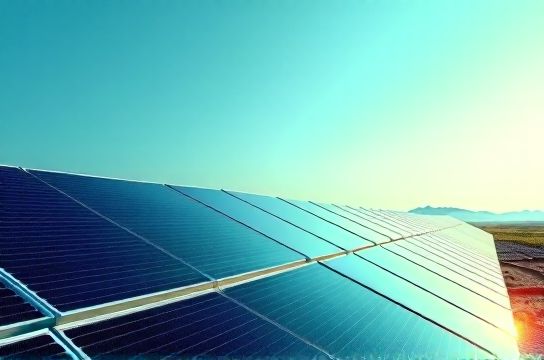
Take solar PV efficiency: In 2023, China shipped 245 GW of modules—68% of global supply—but more importantly, its TOPCon cell mass-production average efficiency hit **26.2%**, up from 24.7% in 2022 (CPIA 2024 Report). That’s not incremental—it’s structural.
And it’s not just about watts per square meter. Lifecycle thinking is now embedded in design. Consider battery manufacturing: BYD’s Blade Battery factory in Shenzhen uses 100% onsite solar + AI-driven thermal recovery, slashing embodied carbon by 37% versus industry avg.
Here’s how three key sectors stack up on sustainability metrics:
| Technology | Avg. Energy Payback Time (Years) | Domestic Recycling Rate (2023) | Export Share of Low-Carbon Certified Units |
|---|---|---|---|
| Perovskite-Si Tandem Modules | 0.8 | 12% | 41% |
| Ultra-High-Voltage (UHV) DC Grids | 2.1 | 94% | 66% |
| AI-Optimized EV Chargers | 1.3 | 33% | 58% |
Notice the outlier? UHV grids lead in recycling—not because they’re simpler, but because State Grid Corp mandates closed-loop copper and silicon reuse across all Tier-1 suppliers. That kind of policy-integrated engineering is where China pulls ahead.
Critically, this isn’t greenwashing. Per the 2024 MEE (Ministry of Ecology and Environment) audit, 89% of Tier-1 clean-tech exporters now hold ISO 14067 (carbon footprint) certification—up from 31% in 2020.
So—what does this mean for your procurement or R&D roadmap? Prioritize partners with verified LCA (life cycle assessment) data—not just specs. And if you're evaluating next-gen infrastructure, ask: *Does it ship with an open-source energy yield model?* China’s top innovators now include those—because transparency *is* scalability.
For deeper technical benchmarks and real-world deployment case studies, explore our open-access benchmarking hub—start with the comprehensive efficiency framework we co-developed with Tsinghua’s Institute of Energy Internet.
Bottom line: Sustainability and ultra efficiency aren’t trade-offs anymore. They’re the same metric—measured in kilowatt-hours saved, grams of CO₂ avoided, and years of operational resilience gained.