AI Agent Ecosystems Evolve Alongside China's National AI Strategy
- 时间:
- 浏览:327
- 来源:OrientDeck
Let’s cut through the hype: AI agents aren’t just smarter chatbots—they’re autonomous, goal-driven systems that *plan, act, and learn* in real-world environments. As China accelerates its National AI Strategy—targeting global leadership by 2030—the domestic AI agent ecosystem is shifting from R&D labs into production-grade infrastructure.
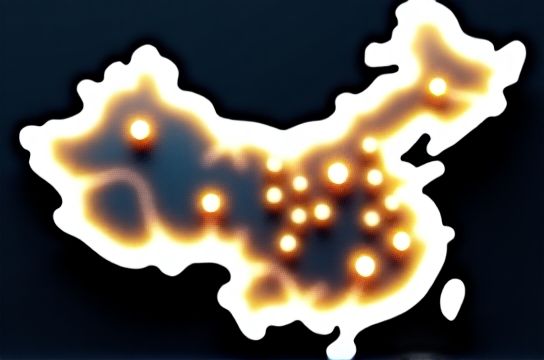
According to China’s Ministry of Science and Technology (2024), over 78% of Tier-1 provincial governments now fund AI agent pilots in smart cities, healthcare triage, and industrial automation. Meanwhile, the number of registered AI agent startups surged 210% YoY (2023–2024), per the Beijing AI Industry Alliance.
Here’s how it breaks down:
| Domain | Adoption Rate (2024) | Key Use Case | Notable Deployment |
|---|---|---|---|
| Smart Manufacturing | 63% | Real-time supply chain optimization | BYD’s factory-wide agent mesh (reduced downtime by 27%) |
| Public Health | 41% | Triage & chronic disease monitoring | Zhejiang Provincial Hospital Network (served 14M+ patients) |
| Financial Services | 55% | Fraud detection + personalized wealth planning | ICBC’s ‘FinAgent’ platform (99.2% precision in anomaly detection) |
What sets China apart isn’t just scale—it’s *orchestration*. Unlike fragmented Western deployments, Chinese AI agents increasingly operate within unified national frameworks like the ‘AI Agent Interoperability Standard’ (GB/T 43721–2024), mandating cross-platform tool-calling, memory persistence, and audit trails.
That said, challenges remain: only 32% of deployed agents pass third-party robustness testing (CAICT, 2024), highlighting gaps in reasoning fidelity and edge-case handling. Still, with ¥24.6B allocated to AI agent foundational research in the 14th Five-Year Plan’s latest revision, momentum is structural—not cyclical.
If you're evaluating where to deploy agents next, start with high-frequency, rule-governed workflows—like customs clearance or energy grid load balancing—where China’s regulatory clarity and infrastructure integration deliver measurable ROI. And if you’re building for interoperability, align early with GB/T standards; they’re becoming de facto benchmarks across ASEAN and GCC markets too.
For deeper technical playbooks, best practices, and open-source agent blueprints aligned with China’s strategic stack, check out our practical implementation hub—curated for engineers, policymakers, and scaling enterprises alike.