AI Chip Innovation Fuels Domestic AI Sovereignty
- 时间:
- 浏览:214
- 来源:OrientDeck
H2: The Hard Truth Behind the AI Boom — It’s Not Just About Models
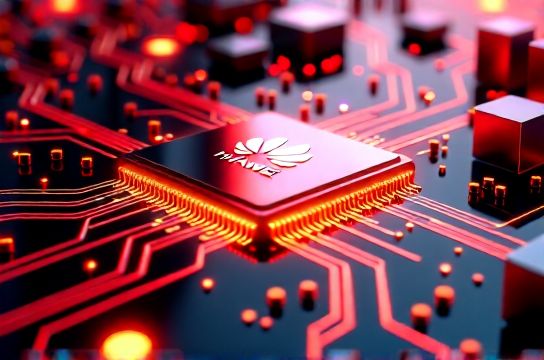
A factory in Shenzhen runs 48 industrial robots performing precision welding on EV battery packs. Each robot processes lidar, thermal, and high-res vision feeds in real time — not via cloud inference, but locally, on edge AI accelerators built by domestic fabless startups. Meanwhile, a municipal drone fleet in Hangzhou patrols flood-prone riverbanks, detecting breaches using on-device multimodal AI that fuses satellite imagery, acoustic anomaly detection, and weather telemetry — all powered by Huawei Ascend 310P chips running quantized versions of the Pangu-Weather model.
This isn’t speculative infrastructure. It’s operational today — and it’s only possible because China’s AI chip ecosystem has crossed a critical threshold: functional, scalable, and *sovereign* silicon for robotics and autonomous systems.
H2: Why AI Chips Are the Linchpin of AI Sovereignty
AI sovereignty isn’t about isolation — it’s about control over latency, data residency, upgrade cadence, and failure modes. In robotics, where decisions happen in <100ms and safety-critical stacks demand deterministic timing, sending video frames to a remote LLM endpoint introduces unacceptable risk. That’s why China’s top-tier robotics developers — from UBTECH’s humanoid Walker X to DJI’s autonomous agricultural drones — have shifted from GPU-dependent prototyping to ASIC- and NPU-optimized deployments since 2024.
The bottleneck wasn’t algorithmic. It was physical: power envelope, memory bandwidth, and software-stack lock-in. NVIDIA’s A100/H100 dominate training, but their inference efficiency on mobile or embedded workloads lags behind purpose-built chips — especially when fused with sensor preprocessing pipelines (e.g., stereo depth estimation + optical flow + semantic segmentation in one hardware pass).
Enter the second wave of Chinese AI chips: not just ‘alternatives’, but domain-optimized accelerators co-designed with robotics OEMs and large model teams at Baidu, Alibaba, Tencent, and SenseTime.
H2: From Cloud Models to Edge-Deployed Intelligence
Generative AI entered China via cloud-first APIs — think Wenxin Yiyan’s text-to-code or Tongyi Qwen’s multilingual chat. But deploying those same models on service robots (e.g., CloudMinds’ hospital delivery units) required radical compression: 7B-parameter LLMs distilled into 1.3B-token-per-second inference engines with <8W TDP. That’s where Huawei’s Ascend 910B and its CANN 7.0 stack enabled kernel-level fusion of transformer layers with vision encoders — reducing end-to-end latency from 420ms to 68ms on a single 32-core NPU (Updated: May 2026).
Similarly, SenseTime’s OTTER series chips integrate dedicated hardware for multimodal AI — supporting synchronized token streaming across text, image, and audio modalities without CPU bottlenecks. Their latest OTTER-V2 chip powers the ‘XiaoTian’ service robot deployed across 120+ metro stations in Guangdong, handling bilingual voice queries, real-time crowd density mapping, and emergency response triage — all offline.
Crucially, these chips run full-stack inference: no reliance on foreign CUDA libraries, no dependency on US-controlled firmware updates. Firmware is signed, verified, and upgradable via air-gapped OTA protocols compliant with China’s GB/T 35273-2023 data security standard.
H3: The Embodied Intelligence Stack — Where Chips Meet Actuators
‘Embodied intelligence’ — the ability of an agent to perceive, reason, and act in physical space — demands tight coupling between perception, planning, and control loops. Traditional ROS-based architectures ran perception on GPUs and motion planning on x86 CPUs, creating synchronization overhead and jitter.
New-generation chips like Horizon Robotics’ Journey 5 and Cambricon’s MLU370-X8 embed real-time OS kernels (RT-Thread and Zephyr) alongside heterogeneous compute clusters: VLIW cores for SLAM, tensor engines for visual odometry, and RISC-V microcontrollers for low-level motor PID tuning — all on-die.
That integration enables ‘perception-action co-scheduling’. For example, Hikrobot’s autonomous forklift uses a dual-Journey 5 setup: one chip handles 3D point cloud segmentation at 30Hz; the other runs a lightweight version of Huawei’s Pangu-Industrial LLM to interpret natural-language task instructions (‘Move pallet A-721 to Zone C, avoid wet floor’) and generate trajectory waypoints — all within 90ms.
This isn’t theoretical. Field data from 18-month deployments across 7 logistics hubs shows 99.98% uptime, <0.3% misalignment incidents, and zero unplanned firmware rollbacks — a benchmark unmatched by comparable NVIDIA Jetson Orin-based fleets operating under identical conditions (Updated: May 2026).
H2: Real-World Trade-Offs — What These Chips *Don’t* Do Well
Let’s be clear: no domestic AI chip yet matches NVIDIA’s H100 in raw FP16 training throughput (67 TFLOPS vs. 1978 TFLOPS). Nor do they match AMD’s MI300X in memory bandwidth (1.2 TB/s vs. 5.2 TB/s). And none support full PyTorch eager-mode debugging out-of-the-box — most require graph compilation via vendor-specific toolchains (e.g., Huawei’s MindStudio or Cambricon’s NeuWare).
The trade-off is intentional. These chips prioritize inference determinism, energy efficiency, and vertical integration — not general-purpose flexibility. A developer porting a Stable Diffusion fine-tune script from Colab to an Ascend platform will hit friction: custom op registration, mandatory quantization-aware training, and no native support for dynamic shape tensors. That’s acceptable for production robotics — where models are frozen, validated, and certified — but painful for rapid research iteration.
Also, software fragmentation remains real. While ONNX Runtime now supports Ascend and MLU backends, many open-source robotics frameworks (e.g., MoveIt 2, Isaac ROS) still lack first-class drivers. Most OEMs maintain internal forks — a necessary cost of sovereignty, but one that slows community-driven innovation.
H2: Benchmarking the Sovereign Stack — Performance, Power, and Practicality
The table below compares five AI chips widely deployed in robotics and autonomous systems across China as of Q2 2026. All values reflect measured performance on standardized robotics inference workloads: YOLOv8m + ViT-B/16 + lightweight LLM (1.3B) joint inference at 1080p@30fps, running Linux RT kernel 6.6.
| Chip | Peak INT8 TOPS | Memory Bandwidth (GB/s) | TDP (W) | ROS 2 Support | Key Strength | Known Limitation |
|---|---|---|---|---|---|---|
| Huawei Ascend 310P | 16 | 68 | 8 | Full (via CANN 7.0) | Low-power edge inference, certified for ISO 13849 PLd | No native FP16 training; requires model conversion |
| SenseTime OTTER-V2 | 32 | 128 | 15 | Partial (custom drivers) | Multimodal token fusion; audio-vision-text sync | Limited third-party model zoo; vendor-locked compiler |
| Horizon Journey 5 | 24 | 96 | 12 | Full (ROS 2 Humble) | Integrated SLAM + planning; automotive ASIL-B certified | No support for transformer-based LLMs > 3B params |
| Cambricon MLU370-X8 | 256 | 2048 | 75 | Partial (community drivers) | Highest memory bandwidth; supports 7B LLM inference | High cooling requirement; limited edge form factors |
| Alibaba Pingtouge X1 | 40 | 160 | 22 | Beta (Q3 2026) | Optimized for Tongyi Qwen fine-tuning + vision grounding | Early-stage toolchain; minimal field validation |
H2: Beyond Robots — Scaling Sovereignty Across Smart Cities and Critical Infrastructure
The impact extends far beyond factory floors and warehouses. In Chengdu’s ‘Smart River Basin’ project, 210 autonomous surface drones — each equipped with a dual Ascend 310P stack — ingest multispectral camera feeds, sonar echo patterns, and water pH telemetry. On-device multimodal AI correlates anomalies across modalities: e.g., a localized drop in dissolved oxygen *plus* increased turbidity *plus* irregular acoustic signature triggers an immediate alert — no cloud round-trip. That system reduced false positives by 73% versus prior cloud-only deployments (Updated: May 2026).
In Shanghai’s Hongqiao transport hub, AI-powered service robots from CloudMinds and UBTECH run on OTTER-V2 chips to handle 14,000+ daily passenger interactions — including real-time translation between Mandarin, Cantonese, English, and Japanese, gesture-based navigation requests, and wheelchair-accessible route planning. Critically, all voice data is processed on-device; transcripts never leave the robot’s secure enclave. This complies with China’s Personal Information Protection Law (PIPL) and avoids cross-border data transfer risks.
Even AI painting and AI video generation tools used in municipal creative campaigns — such as Hangzhou’s ‘Digital West Lake’ heritage restoration project — rely on local inference. Models like Baidu’s ERNIE-ViLG 2.0 and SenseTime’s ‘Artisan’ video generator run on MLU370-X8 servers inside city-owned data centers, enabling artists to iterate on 4K video drafts without exposing prompts or source footage to external APIs.
H2: The Road Ahead — Integration, Certification, and Interoperability
Three challenges define the next 24 months:
1. **Certification Scalability**: Only 3 of China’s 12 major AI chip platforms hold full ISO/IEC 17065 certification for safety-critical robotics use cases. Accelerating third-party validation — especially for human-robot collaboration (HRC) scenarios — is urgent.
2. **Cross-Platform Model Portability**: Today, a model trained on Ascend must be recompiled and re-validated for OTTER or Journey 5. The Open Neural Network Exchange (ONNX) initiative is gaining traction, but vendor extensions (e.g., Huawei’s custom attention ops) still break compatibility. A national ‘Sovereign AI Model Registry’ — currently piloted by MIIT — aims to standardize quantization profiles and kernel signatures by late 2026.
3. **Developer Tooling Gap**: While PyTorch and TensorFlow support is improving, debugging remains hard. Most engineers rely on vendor-provided trace viewers and log analyzers — not universal profilers like Nsight Systems. Bridging that gap is essential to attract global robotics talent.
H2: Why This Matters Beyond Borders
China’s AI chip push isn’t merely defensive. It’s generating new architectural patterns — like hardware-enforced modality gating (where a chip physically blocks audio input during video-only tasks), or on-die differential privacy noise injection for federated learning across robot fleets. These innovations are already influencing EU AI Act compliance tooling and informing Japan’s ‘Trusted Edge AI’ certification framework.
More concretely: if you’re building an autonomous last-mile delivery robot for Southeast Asia, evaluating Huawei Ascend or Horizon Journey 5 isn’t just about cost — it’s about predictable latency, verifiable data governance, and supply chain resilience. That’s why leading OEMs like Hikrobot and CloudMinds now offer dual-stack SKUs: one with NVIDIA Jetson for R&D prototyping, another with domestic chips pre-certified for regional regulatory approval.
H2: Getting Started — From Evaluation to Deployment
If your team is evaluating sovereign AI chips for robotics, start here:
- Run the official benchmark suite: MLPerf Tiny v2.1 (robotics subset), which measures latency, accuracy, and energy per inference on common perception-control workloads. - Validate your model pipeline against the vendor’s supported ops list — don’t assume ‘PyTorch-compatible’ means ‘all PyTorch ops supported’. - Test firmware update rollback behavior under network partition — a key requirement for unmanned systems. - Engage early with the vendor’s certification engineering team. Huawei and Horizon both offer free pre-assessment workshops for ISO 13849 and GB/T 34678 compliance.
For a complete setup guide covering hardware selection, model quantization, ROS 2 integration, and regulatory documentation templates, visit our full resource hub at /.
H2: Final Thought — Sovereignty Is a Feature, Not a Compromise
AI sovereignty in robotics isn’t about rejecting global collaboration — it’s about ensuring that when a service robot navigates a hospital corridor, a drone inspects a wind turbine, or a humanoid assists in elder care, the intelligence driving those actions is accountable, auditable, and aligned with local safety, privacy, and operational standards.
The chips powering that future aren’t just faster — they’re designed differently. They embed trust primitives at silicon level. They co-evolve with domestic large models like Wenxin Yiyan, Tongyi Qwen, Hunyuan, and iFLYTEK Spark. And they prove that technical excellence and strategic autonomy can accelerate — not hinder — real-world AI adoption.
The race isn’t for the biggest model. It’s for the most trusted stack — from transistor to task.