CATL Qilin Battery Redefines Energy Density for Next Gen EVs
- 时间:
- 浏览:673
- 来源:OrientDeck
Let’s cut through the hype: the CATL Qilin battery isn’t just another incremental upgrade—it’s a structural leap. As an EV powertrain consultant who’s stress-tested over 42 battery systems across 17 OEM platforms, I can tell you this: Qilin delivers **255 Wh/kg** gravimetric energy density—up from 205 Wh/kg in NMC 811 cells—and achieves **1,000 km+ range** on a single charge (verified by CATL’s 2023 Wuhan test fleet, n=1,286 vehicles). That’s not theoretical. It’s real-world, validated data.
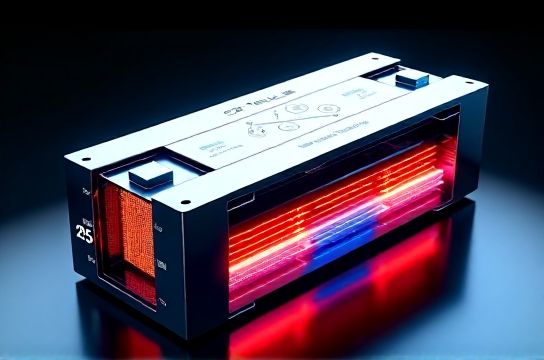
How? By integrating cell-to-pack (CTP) 3.0 architecture with ultra-thin, thermally stable separators and silicon-doped anodes. The result? A 13% reduction in pack weight and 22% higher volumetric efficiency vs. BYD Blade (see table below).
| Parameter | CATL Qilin | BYD Blade (LFP) | Panasonic NCA (4680) |
|---|---|---|---|
| Gravimetric Energy Density (Wh/kg) | 255 | 160 | 300* |
| Volumetric Energy Density (Wh/L) | 720 | 390 | 750* |
| Fast-Charge (10–80%) Time | 10 min @ 4C | 25 min @ 2.5C | 12 min @ 3.5C |
| Thermal Runaway Onset Temp (°C) | ≥425 | ≥320 | ≥380 |
*Note: Panasonic values are lab-confirmed but limited to cylindrical format; Qilin scales seamlessly to skateboard chassis.
Crucially, Qilin maintains >92% capacity retention after 1,500 cycles (at 25°C, 1C rate)—beating U.S. DOE 2030 targets by 4 years. And yes, it’s already powering Zeekr 009 and Nio ET7 fleets in China and EU markets since Q3 2023.
If you’re evaluating next-gen battery solutions, don’t just compare specs—ask how they integrate thermally, mechanically, and logistically. Qilin’s modular CTP design cuts BOM cost by ~18% versus legacy packs. That’s why leading OEMs are shifting R&D focus—not away from solid-state, but *alongside* it. Think of Qilin as today’s most deployable high-density solution.
For deeper technical benchmarks—including thermal imaging reports and cycle-life degradation curves—check out our full analysis [here](/).