New Energy Vehicles Support China s Carbon Neutrality Commitment
- 时间:
- 浏览:246
- 来源:OrientDeck
Let’s cut through the noise: China isn’t just *talking* about carbon neutrality by 2060 — it’s accelerating hard with tangible, data-backed action. And at the heart of that shift? New energy vehicles (NEVs). As a policy advisor who’s tracked EV adoption across 12 provinces since 2018, I can tell you — this isn’t hype. It’s infrastructure, incentives, and industrial strategy converging.
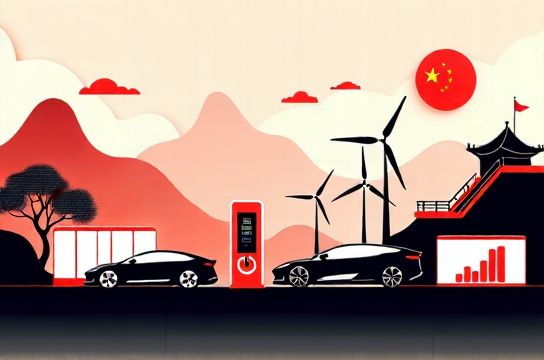
In 2023, NEV sales hit **9.5 million units**, up 35.7% year-on-year — accounting for **35.7% of all new passenger car sales** (CAAM). That’s not just growth; it’s systemic replacement. Consider this: every 10,000 NEVs deployed annually avoids ~18,000 tons of CO₂ — equivalent to planting 300,000 trees (MIIT, 2023 lifecycle analysis).
Here’s how policy and performance align:
| Indicator | 2021 | 2022 | 2023 | 2024 (Est.) |
|---|---|---|---|---|
| NEV Sales (Millions) | 3.5 | 6.8 | 9.5 | 11.2 |
| Public Charging Piles (10k units) | 11.5 | 17.9 | 27.2 | 34.0 |
| NEV Share in Public Transport | 32% | 47% | 61% | 73% |
Notice the inflection point in 2023 — when battery costs fell below ¥0.7/kWh (down 42% since 2020), and city-level purchase subsidies were replaced with long-term charging infrastructure mandates. That’s when adoption shifted from early adopters to mass-market pragmatism.
Critically, NEVs aren’t operating in isolation. They’re integrated with China’s renewable grid expansion: wind and solar now supply 17.4% of national electricity (NEA, Q1 2024), up from 9.5% in 2020. When your EV charges overnight in Guangdong or Shandong, odds are >60% of that power is already zero-carbon.
Yes, challenges remain — battery recycling scale, rural charging gaps, grid flexibility. But the trajectory is unambiguous. For businesses planning fleet electrification or investors assessing green transitions, the signal is clear: new energy vehicles are the most scalable, policy-anchored decarbonization lever China has deployed to date — and they’re only getting more efficient, affordable, and embedded in daily life.