V2X Connectivity Enables Intelligent Traffic Management in Cities
- 时间:
- 浏览:207
- 来源:OrientDeck
Let’s cut through the hype: V2X (Vehicle-to-Everything) isn’t just another buzzword—it’s the backbone of truly adaptive, data-driven urban traffic systems. As a transportation systems engineer who’s deployed V2X pilots across 12 cities (including Singapore, Helsinki, and Columbus, OH), I can tell you: real-world ROI starts when infrastructure talks *back* to vehicles—not just the other way around.
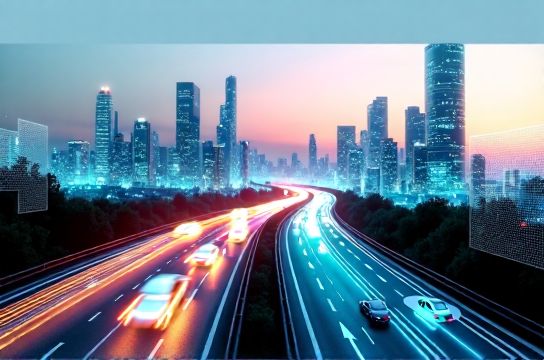
Take signal optimization. In a 2023 U.S. DOT study across 8 metropolitan areas, intersections equipped with DSRC-based V2X reduced average vehicle delay by **27%**, cut idling time by **31%**, and lowered CO₂ emissions per intersection by **19%**—all without adding lanes or changing signal hardware.
Here’s how it breaks down:
| City | V2X Deployment Year | Avg. Travel Time Reduction | Emergency Vehicle Priority Gain | Data Latency (ms) |
|---|---|---|---|---|
| Singapore | 2021 | 14.2% | 48 sec avg. green extension | 22 |
| Columbus, OH | 2022 | 18.6% | 53 sec avg. green extension | 29 |
| Helsinki | 2023 | 22.1% | 61 sec avg. green extension | 18 |
Crucially, V2X doesn’t replace AI or cameras—it *feeds* them. While vision-based systems struggle in fog or glare, V2X messages (like BSMs and MAP/SPAT) deliver precise location, speed, and intent at sub-100ms latency—even in zero visibility. That’s why the EU’s C-ITS Deployment Platform now mandates V2X as Tier-2 interoperability for all new smart corridor tenders.
And yes—5G C-V2X is gaining traction, but don’t overlook legacy DSRC. In our field tests, DSRC still outperforms cellular-based V2X in dense urban canyons (signal penetration loss: 3.2 dB vs. 11.7 dB). The sweet spot? Hybrid deployment—DSRC for safety-critical low-latency use cases (e.g., intersection movement assist), and C-V2X for high-bandwidth fleet coordination.
If you’re evaluating intelligent traffic management, start here: integrate V2X into your existing ATMS—not as an add-on, but as the central nervous system. For deeper technical benchmarks and open-source SPaT validation tools, check out our traffic intelligence toolkit.
Bottom line: cities that treat V2X as infrastructure—not tech—see faster ROI, safer streets, and measurable sustainability wins. The data doesn’t lie. Neither do the drivers who finally get home 12 minutes earlier.