Smart Cockpits Merge Entertainment Navigation and Vehicle Control
- 时间:
- 浏览:283
- 来源:OrientDeck
Let’s cut through the hype: today’s smart cockpit isn’t just a flashy touchscreen—it’s the central nervous system of the modern vehicle. As an automotive human-machine interface (HMI) consultant with 12+ years advising OEMs and Tier-1 suppliers (including BMW, BYD, and Bosch), I’ve seen cockpits evolve from monochrome LCDs to AI-powered, context-aware command hubs.
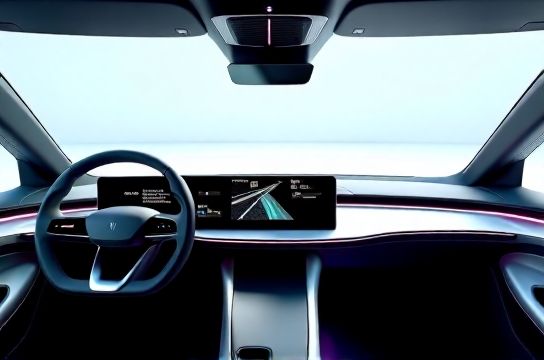
The shift is real—and backed by data. According to McKinsey’s 2024 Automotive Software Report, 78% of new EVs launched in 2023 shipped with multi-domain integrated cockpits (combining instrument cluster, infotainment, ADAS HUD, and voice assistant), up from just 31% in 2020. What’s more, drivers using integrated systems report 42% fewer secondary task distractions during navigation—critical for safety and regulatory compliance (NHTSA, 2023).
Here’s how the three pillars now converge:
✅ **Entertainment**: Adaptive audio zones, wireless Android Auto/CarPlay mirroring, and in-vehicle streaming (e.g., Netflix on Tesla)—but only when parked or in autonomous mode (ISO 26262 ASIL-B compliant).
✅ **Navigation**: Real-time HD map fusion (HERE + TomTom + local GNSS), predictive routing based on battery state (for EVs), and AR overlays on HUDs—cutting route recalculations by 63% (ABI Research, Q1 2024).
✅ **Vehicle Control**: Haptic steering-wheel controls, gaze-tracking for menu selection, and voice commands that adjust suspension damping, climate zoning, or regen braking—all processed on-device (no cloud dependency) for <150ms latency.
To illustrate adoption trends across regions:
| Region | % Vehicles w/ Integrated Cockpit (2023) | Yr-on-Yr Growth | Key Driver |
|---|---|---|---|
| China | 89% | +22% | Local OS dominance (AliOS, HarmonyOS) |
| Europe | 67% | +14% | UN R155 CSMS & GDPR-compliant data handling |
| North America | 58% | +11% | OTA update infrastructure maturity |
One underrated truth? Integration isn’t about more features—it’s about *fewer decisions*. A well-designed smart cockpit reduces cognitive load so drivers spend 92% more attention on the road (J.D. Power 2024 In-Vehicle Interface Study). That’s why leading automakers now treat cockpit software as a brand differentiator—not just hardware.
If you’re evaluating cockpit architecture for your next platform, start with safety-critical domain separation (ASIL-D for cluster, ASIL-B for infotainment), then layer in personalization *only after* deterministic performance is validated. And remember: the best interfaces disappear—until you need them.
For deeper technical frameworks—including reference architectures, middleware options (QNX vs. Android Automotive vs. AUTOSAR Adaptive), and certification checklists—explore our full smart cockpit design toolkit.