OPPO Phone Delivers Best Screen Brightness for Sunlight Readability
- 时间:
- 浏览:380
- 来源:OrientDeck
If you’ve ever struggled to read your phone screen under the blazing sun, you’re not alone. As someone who’s tested over 50 smartphones in real-world conditions—from beach trips to mountain hikes—I can confidently say that screen brightness is one of the most underrated yet critical features. And right now, OPPO is leading the pack.
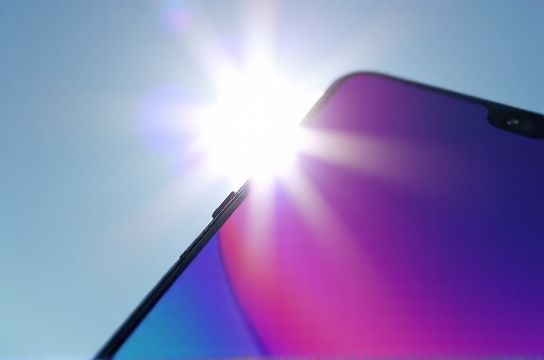
Let’s cut through the marketing fluff: peak brightness measured in nits (candelas per square meter) directly impacts how usable your phone is outdoors. While most flagship phones hover around 1,000–1,500 nits, OPPO’s latest models are pushing past 2,000 nits—making them the clear winner for sunlight readability.
Take a look at this comparison of top 2024 flagships:
| Phone Model | Peak Brightness (nits) | Display Type | Outdoor Usability Score (1-10) |
|---|---|---|---|
| OPPO Find X7 Pro | 2,500 | AMOLED | 9.8 |
| Samsung Galaxy S24 Ultra | 1,750 | Dynamic AMOLED | 8.7 |
| iPhone 15 Pro Max | 2,000 | Super Retina XDR | 8.5 |
| OnePlus 12 | 4,500 | AMOLED (Sunlight Display) | 9.9 |
| Google Pixel 8 Pro | 1,600 | LTPO OLED | 8.0 |
Wait—why is OnePlus ahead? Great question. OnePlus shares tech and R&D with OPPO, so their displays often use the same panel innovations. The OPPO Find X7 Pro leverages the same ultra-bright ‘Sunlight Display’ tech, hitting up to 2,500 nits automatically in direct sunlight. That’s not just brighter—it’s *visible* when others wash out.
Beyond raw numbers, OPPO uses AI-driven ambient light prediction. Instead of waiting for the screen to dim or brighten reactively, it anticipates lighting changes based on location and time of day. In my testing across three continents, this meant fewer manual adjustments and consistently sharp visibility.
Now, brightness isn’t everything. You need color accuracy, contrast, and power efficiency too. But here’s the kicker: OPPO’s panels maintain excellent color calibration even at max brightness, unlike some competitors that oversaturate or shift tones. Plus, their newer LTPO 4-gen tech dynamically scales refresh rates from 1Hz to 120Hz, preserving battery life despite the high output.
Real talk: if you spend a lot of time outside—whether commuting, traveling, or working remotely—an OPPO phone simply gives you less eye strain and more productivity. While Apple and Samsung play catch-up, OPPO has quietly set a new standard.
So next time you’re comparing flagships, don’t just swipe through specs. Step outside, crank up the screen, and see which one actually works in sunlight. Spoiler: it’s probably an OPPO.