China Wearables Market Expands with Elderly Health Focus
- 时间:
- 浏览:292
- 来源:OrientDeck
If you're keeping an eye on the tech scene in Asia, here’s a trend you can’t ignore: the China wearables market is booming, and it's not just about fitness geeks tracking their steps anymore. With an aging population and rising health awareness, wearable devices are shifting focus—fast—toward elderly healthcare.
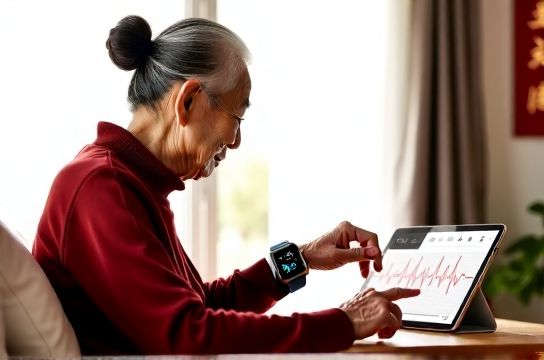
Let’s break it down. By 2025, China will have over 300 million people aged 60 or above. That’s nearly 1 in 5 citizens needing proactive health monitoring. And guess what? Wearable tech is stepping up to the plate.
According to IDC, shipments of wearable devices in China reached 148 million units in 2023, growing at a CAGR of 12.4% over the past three years. But the real story is in the细分 (segmentation). Devices with ECG, blood oxygen, fall detection, and remote data sync are seeing the fastest adoption among older adults.
Take Huawei and Xiaomi—they’ve both launched senior-friendly smartwatches with one-touch emergency alerts and AI-powered arrhythmia detection. In fact, a 2023 clinical trial by Peking Union Medical College found that Huawei’s wearable ECG monitor achieved 94.7% accuracy in detecting atrial fibrillation—rivaling traditional medical equipment.
Why the Elderly Health Angle Is a Game-Changer
It’s simple: prevention beats treatment. Chronic diseases like hypertension and diabetes affect over 270 million Chinese adults, many over 60. Continuous monitoring via wearables reduces hospital visits and catches issues early.
And families love it. A survey by iiMedia Research showed that 68% of adult children would buy a health-focused wearable for their parents. Trust in local brands helps too—Huawei, Honor, and Xiaomi dominate with over 60% combined market share.
Top Wearables for Senior Health in China (2024)
| Device | Key Features | Battery Life | Price (CNY) |
|---|---|---|---|
| Huawei Watch D2 | Blood pressure, ECG, SpO₂, fall detection | 7 days | 2,999 |
| Xiaomi Watch S3 | Heart rate, SpO₂, GPS, emergency call | 10 days | 1,499 |
| Honor Watch GS 4 | Stress tracking, sleep apnea screening, long battery | 14 days | 1,899 |
As you can see, these aren’t just gadgets—they’re health guardians. The China wearables market is evolving from lifestyle tools into essential medical companions.
But it’s not all smooth sailing. Data privacy, device accuracy, and elder usability remain challenges. Still, government support through digital health initiatives and insurance integrations is accelerating adoption.
Looking ahead, expect more AI-driven insights and partnerships between tech firms and hospitals. For example, Baidu Health and Huawei recently teamed up to link wearable data directly to online consultations.
In short, if you're exploring opportunities in health tech, don’t overlook the silver-haired segment. The demand is real, the tech is ready, and the market is expanding fast. Whether you're a consumer, developer, or investor, now’s the time to dive into the elderly health wearables space in China.