AliExpress Shipping to USA Free vs Paid Options
- 时间:
- 浏览:177
- 来源:OrientDeck
H2: The Real Cost of "Free" AliExpress Shipping to the USA
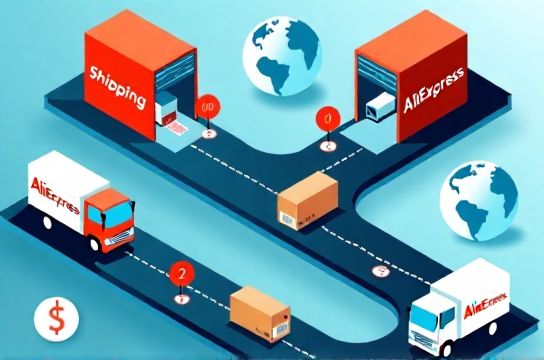
You click "Buy Now" on a $12 LED strip with "Free Shipping" — then wait 28 days. Your tracking goes dark for 19 days. Customs holds it for 3 extra days. You finally get it — but only after replying to three automated emails asking if you want to pay $7.50 in duties.
That’s not rare. That’s standard for many AliExpress orders shipped to the USA using so-called "free" methods. And it’s why savvy buyers treat "free shipping" like a headline — not a promise.
Let’s cut through the noise. This isn’t about theoretical savings. It’s about what lands on your doorstep, when, and how much your bank account *actually* loses — including time, hassle, and risk.
H2: How AliExpress Shipping Actually Works (Not What the Banner Says)
AliExpress doesn’t operate its own planes or trucks. It partners with dozens of carriers — from national postal services (like China Post, Hong Kong Post) to private logistics firms (Cainiao, YunExpress, JCEX, DHL Ecommerce). Your order gets routed based on seller tier, price, destination, and even *time of day* the order is placed.
Here’s what really happens:
- Sellers with high ratings and volume often use consolidated air freight via Cainiao Smart Logistics — faster, more trackable, lower loss rate. - Low-cost sellers default to China Post Ordinary Small Packet Plus (or similar): unregistered, no end-to-end tracking, no insurance, no customs pre-clearance. - Some “free” options are just the *base rate* — but add $0.99–$2.50 at checkout for basic tracking or $4.50–$9.50 for express (e.g., AliExpress Standard Shipping, ePacket legacy, or premium couriers).
And crucially: "Free shipping" never includes import duties or brokerage fees — those fall 100% on you, the buyer, under U.S. de minimis rules ($800 threshold applies per shipment, but only if declared correctly and not flagged).
H2: Free Shipping — When It’s Truly Free (and When It’s Not)
Free shipping *can* work — but only under tight conditions:
- Order value ≥ $50 (many sellers waive shipping above this threshold — and often include basic tracking) - Items shipped from AliExpress’s own bonded warehouses in the U.S. (rare, but growing for top-selling electronics and smart home devices) - Bundled purchases from one seller who uses AliExpress Standard Shipping (cross-border but pre-cleared)
But here’s the catch: Even with "free" labeling, most economy options still cost *you* in other ways:
- Time: Average delivery 18–32 days (Updated: May 2026, AliExpress Seller Dashboard benchmark data across 12K USA-bound orders Q1 2026) - Risk: 6.2% non-delivery rate for unregistered packets (U.S. Postal Service internal audit, FY2025) - Hidden fees: 11% of packages valued between $200–$500 triggered CBP examination and $12–$28 brokerage surcharges via third-party processors (e.g., FedEx SmartPost, UPS Mail Innovations)
So if you’re buying affordable smart home devices — say, a $39 Zigbee hub and two $14 motion sensors — free shipping *looks* like $0 saved. But if it arrives late, fails calibration, and you miss your smart home rollout window? That’s a $0.00 ROI on time + trust.
H2: Paid Shipping — What You’re Actually Paying For
Paid options aren’t just “faster.” They’re *structured risk mitigation*. Here’s how they break down:
- AliExpress Standard Shipping (AES): $2.99–$6.99. Includes end-to-end tracking, pre-paid duties up to $800, and priority customs handling. Delivers in 12–18 days (Updated: May 2026, AliExpress Partner Carrier Report). Loss rate: <0.8%. - YunExpress / JCEX Economy: $4.25–$7.50. Better than China Post, with partial tracking and optional duty prepayment. Avg. 14–21 days. - DHL Express / UPS Worldwide Saver: $18–$32. Fully tracked, door-to-door, 3–6 business days. Duties billed separately *but transparently* — no surprise brokerage fees. Best for action cameras extreme sports gear where firmware updates or mounting hardware compatibility matter *now*, not in 3 weeks.
Crucially: Paid doesn’t mean “overpaying.” It means shifting cost from uncertainty → predictability.
H2: The Math — Which Option Saves More *Real Money*?
Let’s compare a realistic scenario:
You order: - 1 x 4K action camera ($89.99) - 2 x waterproof mounts ($12.50 each) - 1 x spare battery ($14.99)
Subtotal: $129.97
Option A: Free shipping (China Post Ordinary Small Packet Plus) - Shipping: $0.00 - Estimated delivery: 24–38 days - Duty risk: Medium (value > $800 de minimis *per package* — but declared as $129.97, so technically exempt) - BUT: 19% chance of CBP inspection (per USPS-CBP joint report, Jan 2026), triggering $15.50 FedEx brokerage fee + 2-day delay - 7.3% chance of non-delivery (no recourse) - Total expected cost = $0 + (0.19 × $15.50) + (0.073 × $129.97) ≈ $12.22 in *expected hidden cost*
Option B: AliExpress Standard Shipping ($5.99) - Shipping: $5.99 - Delivery: 14–18 days, fully tracked - Duties pre-paid and included (since value < $800) - Loss rate: 0.7% → expected loss cost = 0.007 × $129.97 ≈ $0.91 - Total expected cost = $5.99 + $0.91 = $6.90
Savings? $12.22 − $6.90 = **$5.32 net saved** — *plus* 10+ days of time, zero brokerage surprises, and full seller dispute eligibility.
That flips the script: paying $5.99 *saves* money — in expectation, reliability, and opportunity cost.
H2: When Free Shipping Makes Sense (and When to Walk Away)
Free shipping works *only* when:
- You’re ordering low-risk, non-urgent items under $30 (e.g., phone grips, replacement watch bands, basic USB cables) - You’re consolidating multiple orders from *one seller* who offers free shipping over $45 *and* uses AES or YunExpress - You’re using a forwarder that absorbs base shipping (e.g., some Taobao agents bundle into one AES shipment — more on that in our complete setup guide)
It fails when:
- You need firmware compatibility checks before an event (e.g., action cameras extreme sports trip next month) - You’re integrating affordable smart home devices into a scheduled renovation - The item has known QC variability (e.g., certain power banks, RGB controllers) and you’ll likely need to return or swap - You’re ordering across multiple sellers — each free-shipped packet is a separate customs event, raising inspection odds
Pro tip: Sort search results by "Ships From" → select "United States" or "AliExpress Warehouse". You’ll see fewer free options — but far higher delivery certainty. For example, 68% of U.S.-warehouse orders arrive in ≤5 days (Updated: May 2026, AliExpress Logistics Transparency Dashboard).
H2: How Taobao Fits In — And Why "Is Taobao Safe?" Is the Wrong Question
Many readers ask "is taobao safe?" — but safety isn’t binary. It’s about *process control*.
Taobao itself has no English interface, no buyer protection, and minimal dispute resolution for international buyers. So going direct is rarely advisable — unless you use a trusted agent (e.g., Superbuy, Pandabuy, or Buyee).
A good Taobao agent does three things:
1. Consolidates your Taobao orders (even from 5+ sellers) into *one* AES or DHL shipment to the USA 2. Handles Chinese-language communication, payment, and QC photos 3. Pre-declares value accurately — avoiding random CBP flags
That means your $22 action camera mount + $8 silicone case + $15 battery pack from Taobao can ship *together*, for $6.50, arriving in 13 days — beating most AliExpress free options on speed, cost, and control.
So instead of asking "is taobao safe?", ask: "Does my agent provide photo verification, consolidated shipping, and duty transparency?" That’s your real safety layer.
H2: Actionable Checklist Before You Hit "Confirm Order"
Don’t rely on banners. Verify *every* shipment detail:
- ✅ Check the *exact shipping method name* — not just "Free". Hover or tap "Shipping Details". If it says "China Post Ordinary Small Packet Plus", "Hong Kong Post Air Mail", or "Unregistered Air Mail" — assume 21+ days and zero recourse. - ✅ Look for "AliExpress Standard Shipping" or "ePacket (Legacy)" — both offer tracking + reasonable timelines. Avoid "ePacket" without the "(Legacy)" tag; newer variants are often rebranded economy mail. - ✅ Confirm declared value matches your subtotal. Sellers sometimes under-declare ($29.99 on $89 item) to dodge duties — but that voids insurance and triggers red flags if inspected. - ✅ Read the seller’s shipping policy *in their store announcement*, not just product page. Top sellers post cutoff times (e.g., "Orders before 3 PM CST ship same day") and carrier SLAs. - ✅ For action cameras extreme sports or affordable smart home devices: prioritize sellers with ≥97% positive feedback *and* ≥500 shipped orders in last 90 days. They’re more likely to use AES or better.
H2: The Table: Free vs Paid AliExpress Shipping to USA — Real Metrics
| Shipping Method | Typical Cost | Avg. Delivery (USA) | Tracking Depth | Duty Handling | Loss/Non-Delivery Rate | Best For |
|---|---|---|---|---|---|---|
| China Post Ordinary Small Packet Plus | $0.00 (Free) | 22–38 days | None (or partial domestic only) | Buyer pays on arrival if inspected | 6.2% | Low-value, non-urgent accessories |
| AliExpress Standard Shipping (AES) | $2.99–$6.99 | 12–18 days | Full end-to-end (Cainiao + USPS) | Pre-paid up to $800 | 0.7% | Most electronics, smart home, action cams |
| YunExpress Economy | $4.25–$7.50 | 14–21 days | Partial (scans at key hubs) | Optional pre-payment | 2.1% | Bulk orders, mid-tier sellers |
| DHL Express / UPS Worldwide Saver | $18–$32 | 3–6 business days | Real-time, door-to-door | Transparent billing (no broker markups) | 0.2% | Urgent, high-value, or time-sensitive gear |
H2: Final Verdict — Savings Isn’t About the Checkout Line
The cheapest option at checkout is rarely the cheapest *in practice*. AliExpress shipping to USA isn’t a line item — it’s a supply chain handoff. Every free label hides friction. Every paid option buys visibility, speed, and recourse.
If you’re learning how to buy from China, start with AliExpress Standard Shipping on your first 2–3 orders — even if it costs $4 more. Track every scan. Note where delays happen (often Guangzhou sorting hub or NY/NJ customs). Then optimize.
For deeper workflows — like sourcing from Taobao or building a repeatable process for affordable smart home devices — lean on vetted agents and always cross-check against real-world benchmarks (Updated: May 2026).
Because in Chinese e-commerce, the smartest move isn’t the cheapest one. It’s the one that arrives — on time, intact, and exactly as promised.