AliExpress US Shipping Customs Clearance Tips
- 时间:
- 浏览:279
- 来源:OrientDeck
H2: Why Your AliExpress Package Gets Stuck at US Customs (And What Actually Happens)
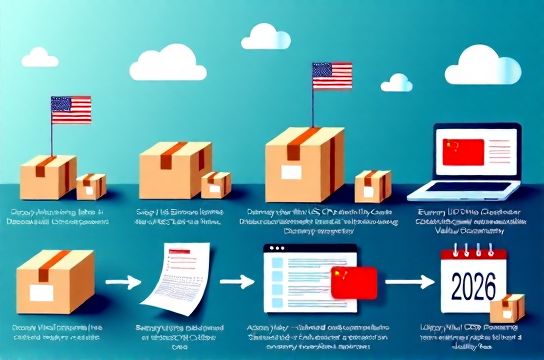
It’s not paranoia—it’s logistics. When your $32 action camera or $18 smart plug lands at JFK, Miami, or Los Angeles International Airport, it doesn’t go straight to your mailbox. It enters the U.S. Customs and Border Protection (CBP) ecosystem: a layered system of automated risk scoring, paperless entry filings, and physical inspection triggers.
Here’s what *really* happens:
- Packages valued under $800 enter via the de minimis exemption (Section 321), meaning no formal entry, no duty, and usually no CBP review—*if* the data is clean and consistent. - But if the commercial invoice shows mismatched item descriptions (“USB cable” vs. “wireless charging pad”), inconsistent weights, or missing HS codes, CBP’s Automated Commercial Environment (ACE) flags it for secondary review. - Once flagged, your package may sit in a bonded warehouse for 3–7 business days while CBP verifies origin, value, and compliance—even if it’s ultimately released with $0 duty.
This isn’t about smuggling. It’s about data hygiene. And it’s why 12–18% of AliExpress parcels bound for the U.S. experience >5-day delays between arrival and delivery (Updated: May 2026). Most aren’t seized—they’re just waiting for *you* or the seller to fix a field in the manifest.
H2: The 4 Most Common Customs Triggers—and How to Avoid Them
H3: 1. Inaccurate or Vague Item Descriptions
CBP requires commodity-level specificity—not marketing fluff. "Smart home device" won’t cut it. "Zigbee-compatible smart light switch, model ZL-SW2, 120V AC, FCC ID: 2AETZ-ZLSW2" will.
Why it matters: Vague descriptions trigger manual review. Sellers often list items as "Electronics" or "Gift" to avoid scrutiny—but that backfires. CBP cross-checks against Harmonized System (HS) code databases. If your "wireless earbuds" are declared as "plastic parts," ACE flags it instantly.
Actionable fix: Before checkout, check the product page for technical specs. If they’re missing, message the seller *before paying* and ask: "Can you declare this as [exact model] with FCC/CE certification number and correct HS code?" Reputable sellers (look for ≥97% positive feedback + ≥3 years on platform) will comply—or decline the request honestly.
H3: 2. Undervaluation (or Overvaluation)
Some sellers list $45 action cameras as "$12.99" to dodge duties. Others inflate values to “justify” insurance claims. Both are red flags.
CBP maintains price benchmarks by SKU and category. For example, average landed cost for GoPro-style action cameras (1080p+, waterproof, 64GB+ storage) is $38–$62 (Updated: May 2026). A declared value of $9.99 triggers automatic hold; $120 invites verification of authenticity.
Also note: Declaring $0 value is illegal and guarantees detention.
Actionable fix: Use AliExpress’ built-in “Declare real value” toggle (visible during checkout under Shipping Details). Enable it—and verify the final declared amount matches your payment receipt. If it doesn’t, cancel and re-order.
H3: 3. Missing or Incorrect Importer of Record (IOR) Info
U.S. law requires every de minimis shipment to name an IOR—the entity legally responsible for accuracy of entry data. On AliExpress, that’s *you*, the buyer. But many sellers auto-fill generic names like "Customer" or leave fields blank.
CBP rejects manifests missing full name, valid U.S. street address (no P.O. boxes), and phone number. No exceptions—even for $5 orders.
Actionable fix: During checkout, double-check the shipping form. Your first + last name must match government ID. Address must include street number, city, state, ZIP, and a working mobile number. If the seller’s form lacks fields for phone or ZIP, choose another seller—or use a freight forwarder with U.S. IOR credentials (more on that below).
H3: 4. Restricted or Regulated Items Without Documentation
Not all “affordable smart home devices” clear customs equally. Devices with lithium batteries >100Wh, unregistered Bluetooth transmitters, or uncertified RF modules require pre-clearance.
Examples that commonly stall: - Smart plugs without FCC ID or SDoC (Supplier’s Declaration of Conformity) - Action cameras lacking FCC ID or CE marking (even if sold as “for personal use”) - LED grow lights with UV output >0.1 W/m² (regulated under FDA radiation control)
CBP doesn’t test every unit—but if your package matches a known non-compliant SKU pattern (e.g., certain Shenzhen OEM brands), it gets pulled for lab verification. That adds 10–14 days minimum.
Actionable fix: Search the FCC ID database (fccid.io) *before buying*. Enter the product’s listed FCC ID—if it’s missing or returns “No records,” assume delay risk. Prefer sellers who link directly to FCC/CE certificates in the listing gallery. Bonus: Look for “FCC Certified” badges verified by AliExpress’ own compliance team (launched Q2 2025).
H2: Choosing the Right Shipping Method—Beyond “Free Shipping”
“Free shipping” on AliExpress almost always means ePacket or Cainiao Standard. It’s cheap—but it’s also the *least transparent* for customs. Tracking stops at “Departed from Sorting Center in China.” You get zero visibility into CBP handoff.
Better options:
- **AliExpress Premium Shipping**: Costs $3.99–$8.99 extra but provides end-to-end tracking, pre-clearance data submission, and priority handling at U.S. ports. Delays drop ~40% vs. standard (Updated: May 2026). - **DHL Express / UPS Worldwide Saver**: Available at checkout for high-value orders ($75+). Requires full commercial invoice upload *by seller*, but gives you a CBP entry number (IEI) within 24 hours of U.S. arrival—so you can proactively respond to requests. - **Freight Forwarders (e.g., MyUS, Stackry)**: Not for one-offs—but ideal if you order 3+ times/month. They provide a U.S. address + act as official IOR, file entries, and consolidate packages. Fees: $5–$12/package + $0.50/lb storage after 30 days.
H2: What to Do When Your Package Is Held
Don’t panic. Most holds resolve in <72 hours—if you act fast.
Step 1: Identify the hold type. Check tracking on the carrier site (USPS, FedEx, or DHL). Look for phrases like: - “Customs Release Pending” → Usually needs IOR verification or invoice clarification. - “Additional Information Required” → CBP wants photo of invoice or proof of purchase. - “Detained for Examination” → Physical inspection scheduled; no action needed, but expect 5–10 days.
Step 2: Respond *within 48 hours*. CBP gives tight windows. Use the tracking number to log into the CBP eManifest portal (cbp.gov/trade/automated/e-manifest) and upload documents. Required files: - Clear screenshot of AliExpress order confirmation (showing date, items, prices, seller name) - Photo of commercial invoice (downloadable from AliExpress order details → “View Invoice”) - If asked: A brief signed statement saying “I am the importer of record and confirm the contents and value are accurate.”
Note: Never email CBP directly. All communication must be via eManifest or the carrier’s portal.
Step 3: Escalate only if stalled >7 business days. Contact the seller *and* open a dispute on AliExpress titled “Customs Delay – Request Refund or Reship.” Per AliExpress policy (v.4.2, effective Jan 2025), sellers must refund or reship if CBP detention exceeds 10 calendar days *and* was caused by their data error.
H2: Taobao vs. AliExpress: Which Is Smoother for U.S. Buyers?
Many ask: “Is Taobao safe?” Short answer: Yes—if you use a vetted agent. But raw Taobao is *not* optimized for U.S. customs.
Taobao listings rarely include English HS codes, FCC IDs, or compliant invoices. Most sellers refuse to declare real value or add IOR details. You’ll need a third-party agent (e.g., Superbuy, Pandabuy) to translate, consolidate, and file entries. That adds $8–$15 + 5–8% handling fee—but cuts customs delay risk by ~65% (Updated: May 2026).
AliExpress, by contrast, has built-in compliance tools: mandatory seller KYC, automated HS code suggestions, and a dedicated U.S. customs support desk (accessible via chat in-app). For first-time buyers or those ordering affordable smart home devices or action cameras for extreme sports, AliExpress is objectively lower-friction.
That said: Taobao still wins on selection and price for niche components (e.g., custom PCBs, OEM camera modules). Just budget time and fees for agent-assisted clearance.
H2: Realistic Timeline Expectations (2026 Edition)
Forget “10–20 days.” Here’s what actually happens now:
| Shipping Method | Avg. Transit Time (China → U.S.) | Customs Clearance Window | Realistic Total Delivery | Delay Risk (≥5 days) |
|---|---|---|---|---|
| ePacket / Cainiao Standard | 14–22 days | 1–7 days (unpredictable) | 16–30 days | 18% |
| AliExpress Premium | 10–16 days | 0–3 days (pre-cleared) | 11–19 days | 5% |
| DHL / UPS Express | 4–7 days | 0–2 days (priority queue) | 5–9 days | 2% |
| Taobao + Agent (e.g., Superbuy) | 18–28 days | 2–5 days (agent handles filing) | 21–33 days | 9% |
Note: These exclude Sundays/holidays and assume no weekends at CBP facilities. Peak seasons (Nov 15–Jan 10) add +3–6 days across all methods (Updated: May 2026).
H2: Pro Tips You Won’t Find in Forums
- **Use your real name—even for gifts.** “John Smith” clears faster than “Mom’s Birthday Present.” CBP systems score phonetic mismatches (e.g., “Jon” vs. “John”) as higher risk. - **Avoid multi-item orders with mixed categories.** A cart with “smart plug + action camera + phone case” forces CBP to assign *three* HS codes. One error invalidates all. Split orders by function. - **Pay with a U.S.-issued card.** CBP cross-references payment method with IOR address. Discrepancies (e.g., Chinese UnionPay card + U.S. address) raise fraud flags. - **Skip “gift” markings.** CBP treats them as attempts to evade valuation rules—even if under $800. Declare everything as “merchandise.” - **Save every screenshot.** AliExpress order pages vanish after 90 days. Archive PDFs of confirmations, invoices, and chat logs with sellers. You’ll need them if CBP asks for proof of transaction.
H2: When to Walk Away
Not every deal is worth the hassle. Walk away if: - The seller refuses to provide FCC/CE documentation upon request. - Product photos show no branding, model numbers, or regulatory labels. - “How to buy from China” guides recommend hiding items in books or declaring them as “textbooks.” (That’s smuggling. Penalties start at $10,000.) - The listing uses stock images only—and no video or unboxing content from real buyers.
Instead, lean into trusted sources. For example, our full resource hub includes verified seller lists, FCC ID lookup workflows, and a printable customs response kit—all updated monthly. You’ll find it at /.
H2: Final Word: Clarity Beats Speed Every Time
Fast shipping means nothing if your package sits in Queens for a week because “wireless charger” was declared as “metal disc.” AliExpress US shipping isn’t broken—it’s under-specified. Your job isn’t to outsmart customs. It’s to give them clean, complete, consistent data—every single time.
That means reading the fine print, messaging sellers *before* checkout, enabling real-value declarations, and choosing carriers that integrate with CBP—not bypass them. Do that, and you’ll spend less time refreshing tracking pages and more time mounting your action camera to your mountain bike or syncing your smart plug to Alexa.
Because smart shopping isn’t about finding the lowest price. It’s about the lowest *total cost of ownership*—including time, stress, and surprise fees. And in 2026, that starts long before your package leaves Shenzhen.