Action Camera Field of View Explained Simply
- 时间:
- 浏览:433
- 来源:OrientDeck
So you're in the market for an action camera—awesome choice. Whether you're into mountain biking, surfing, or just capturing epic travel moments, one spec keeps popping up: Field of View (FOV). But what does it actually mean? And why should you care? Let’s break it down in plain English—with real data and no marketing fluff.
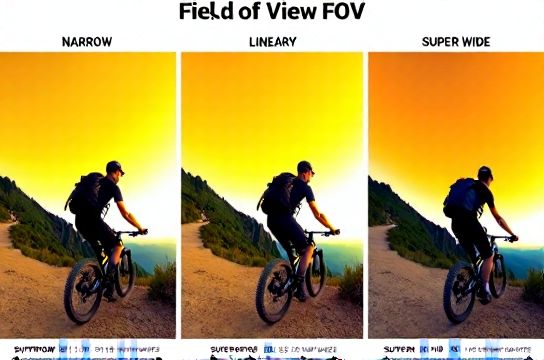
What Is Field of View, Really?
Simply put, FOV is how much of the world your camera can see at once. Measured in degrees, a wider FOV captures more scenery—great for dynamic shots. But too wide? Hello, fisheye distortion. Too narrow? You’re missing the action on the edges.
Most action cameras offer multiple FOV settings. Here’s a quick comparison of popular models:
| Camera Model | Max FOV (Degrees) | Default FOV | Distortion Level |
|---|---|---|---|
| GoPro Hero 12 | 150° | 94° (Linear) | Low (with stabilization) |
| DJI Osmo Action 4 | 155° | 105° (Horizon-Balancing) | Moderate |
| Digital Bolex D16 | 120° | 80° | Very Low |
| AKASO Brave 7 LE | 170° | 120° | High |
As you can see, budget models like the AKASO often push ultra-wide angles to look impressive on paper—but that comes at the cost of image quality and heavy warping around the edges.
Why Default Settings Matter More Than Max FOV
Here’s a pro tip: don’t get dazzled by the max number. Most people shoot in stabilized or linear modes, which crop the image and reduce effective FOV. For example, GoPro’s HyperSmooth stabilization cuts about 10–15° off the wide-angle lens. So while the Hero 12 technically shoots 150°, your usable, shake-free footage is closer to 94°–100°.
If you prioritize smoothness over extreme width, aim for cameras that balance both. The DJI Action 4 uses horizon-leveling tech to keep shots stable without aggressive cropping—making its 105° default feel wider and more natural.
Real-World Use Cases: Which FOV Wins?
- Vlogging / Self-Filming: 90°–100° is ideal. Captures your face and some background without stretching your nose into oblivion.
- Skiing / Mountain Biking: 110°–130° gives immersive perspective, but only if stabilization is strong.
- Underwater Shooting: Stick to 90°–100°. Water magnifies distortion, and light loss makes wide angles noisy.
And remember: wider ≠ better. A 170° shot might sound cool, but if your arms look like they’re bending backward, was it worth it?
Final Verdict: What Should You Choose?
If you want professional-looking footage with minimal post-processing, go for a camera that offers flexibility. The GoPro Hero 12 and DJI Osmo Action 4 lead here—not because they have the widest specs, but because they deliver clean, usable fields of view across scenarios.
Bottom line: focus less on the highest number and more on real-world performance. Your future self (and your viewers) will thank you.