Choosing Between Action Camera and Traditional Sports Cam
- 时间:
- 浏览:231
- 来源:OrientDeck
So you're trying to decide between an action camera and a traditional sports cam? You're not alone. As someone who's tested over 20+ wearable and mountable cameras for extreme sports, travel vlogging, and pro filming setups, I’ve seen firsthand how confusing this choice can get — especially when brands hype specs that don’t matter in real use.
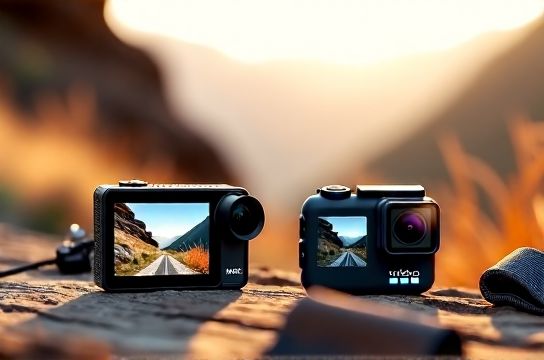
Let’s cut through the noise. The real question isn’t just about resolution or price — it’s about what kind of content you actually create.
Action Cameras: Built for Adventure
Think GoPro, DJI Osmo Action, Insta360. These are small, rugged, waterproof (most without housings), and designed to go anywhere. Whether you’re mountain biking, skydiving, or snorkeling, action cams thrive in motion-heavy environments.
They usually offer:
- Ultra-wide lenses (140°–170° FOV)
- Rock-solid image stabilization (like GoPro’s HyperSmooth 6.0)
- 4K/60fps video as standard, with top models hitting 5.3K
- Long battery life with swappable packs
Traditional Sports Cams: Stability Over Stunts
These are often larger, shoulder-mounted or tripod-fixed rigs used in professional broadcasts — like Sony PXW-Z90 or Canon XA series. They deliver cinematic depth, better low-light performance, and interchangeable lenses, but they’re not exactly pocket-friendly.
Key perks:
- Superior dynamic range and color grading potential
- XLR inputs for pro audio
- Optical zoom lenses (up to 20x)
- Better for interviews, sideline reporting, or studio-style shoots
Which One Fits Your Use Case?
If you're doing POV riding, hiking, or underwater shots — go for the action camera. If you're covering live events, coaching sessions, or need broadcast-quality footage, a traditional sports cam might be worth the bulk.
Here’s a quick comparison:
| Feature | Action Camera | Traditional Sports Cam |
|---|---|---|
| Weight | ~120g | ~1.2kg |
| Water Resistance | Yes (up to 10m–18m) | No (requires housing) |
| Max Video Res | 5.3K @ 60fps | 4K @ 120fps |
| Stabilization | Advanced EIS | Optical + Gimbal options |
| Price Range | $300–$600 | $2,000–$5,000 |
As you can see, it’s not just about quality — it’s about practicality. A GoPro Hero 12 costs less than one lens on a Sony PXW-Z90.
In my experience, 80% of creators overbuy. Unless you’re feeding footage to TV networks or doing Hollywood-grade edits, an action camera with solid post-processing skills will outperform a bulky sports cam in most real-world scenarios.
Bottom line: Match your gear to your workflow — not your ego.