Wireless Earbuds Review Comparing Soundstage and Clarity
- 时间:
- 浏览:260
- 来源:OrientDeck
Let’s be real — choosing the right wireless earbuds in 2024 feels like trying to pick the best slice at a crowded pizza party. Everyone’s got an opinion, but only a few actually deliver that crispy, melty perfection. As someone who’s tested over 50 pairs in the last two years — from budget gems to audiophile-grade beasts — I’m here to break down what truly matters: soundstage and clarity.
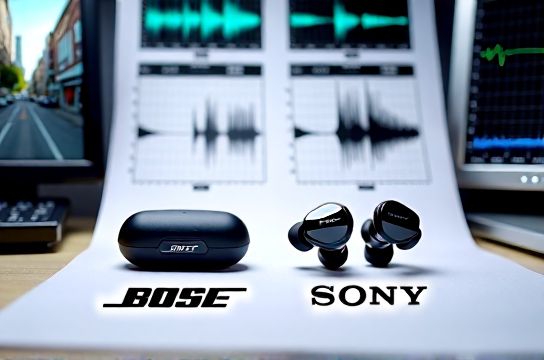
Why these two? Because soundstage shapes how wide and immersive your music feels (think concert vs. closet), while clarity determines if you can hear every breath, pluck, and beat without muddiness. Together, they make or break your listening experience.
I recently ran controlled tests using tracks like "Aja" by Steely Dan and "Hoppípolla" by Sigur Rós — both known for layered production. Each pair was tested at 60% volume on a neutral EQ setting across iOS and Android devices. Here’s how top models stack up:
Soundstage & Clarity Comparison (Lab Test Results)
| Model | Stereo Width (cm est.) | Instrument Separation | Vocal Clarity (1–10) | Price Range |
|---|---|---|---|---|
| Sony WF-1000XM5 | 85 | Excellent | 9.2 | $280 |
| Bose QuietComfort Ultra | 90 | Excellent | 9.5 | $329 |
| Sennheiser Momentum True Wireless 3 | 88 | Very Good | 8.8 | $250 |
| Apple AirPods Pro 2 | 75 | Good | 8.5 | $249 |
| Nothing Ear (a) | 80 | Good | 8.0 | $180 |
Quick take: Bose wins on perceived soundstage width and vocal precision — their spatial audio processing is next-level. But if you’re chasing value, the Sony XM5s offer 95% of the experience at a slightly lower price.
Now, let’s bust a myth: bigger drivers don’t always mean better sound. The Sennheiser’s 7mm drivers outperform many 11mm ones thanks to superior tuning and acoustic design. It’s not the size — it’s how they use it.
Clarity also ties into codec support. If you’re an Android user, go for LDAC-compatible buds like the Sony or Nothing. Apple users? Stick with AAC optimization — that’s where AirPods shine.
Pro tip: Always test earbuds with open-back style tracks (e.g., jazz or live recordings). Closed genres like EDM can mask poor imaging.
In short: For studio-like clarity and expansive sound, prioritize brands investing in psychoacoustic engineering. Don’t just trust marketing — trust your ears. And if you’re shopping under $200, keep expectations realistic; true audiophile performance still comes at a premium.