Minimizing Returns by Setting Accurate TV Size Expectations
- 时间:
- 浏览:235
- 来源:OrientDeck
Let’s be real—buying a new TV online sounds easy until it shows up at your door and suddenly feels twice as big (or worse, way too small). As someone who’s helped thousands of shoppers pick the right setup, I can tell you: the #1 reason for TV returns isn’t broken tech—it’s mismatched size expectations.
Why TV Size Misjudgment Costs Everyone
Returns cost retailers an estimated $550 billion globally in 2023 (Source: National Retail Federation). A full 30% of those? Electronics—especially TVs. Why? Because what looks perfect on a 15-inch laptop screen doesn’t always translate to your living room wall.
The trick isn’t guessing—it’s using data. Let me break it down with something I call the Viewing Triangle Method: matching screen size, viewing distance, and room layout.
Screen Size vs. Viewing Distance: The Real Deal
Here’s a pro tip: Don’t buy a TV based on price or flash. Buy it based on where you’ll sit. Below is the golden rule most manufacturers won’t spell out:
| TV Size (inches) | Optimal Viewing Distance (feet) | Recommended Room Size |
|---|---|---|
| 55 | 6–8 | Small living room / bedroom |
| 65 | 8–10 | Medium living room |
| 75 | 10–12 | Large living room / home theater |
| 85+ | 12+ | Dedicated media room |
This isn’t guesswork. It’s based on THX and SMPTE standards for immersive viewing without eye strain. Skip this step? You’ll either feel like you’re sitting in the front row of a movie theater—or trying to read a billboard from across town.
How to Visualize Before You Buy
I teach my clients a simple hack: Use painter’s tape to outline the TV on your wall. Grab a tape measure, check the dimensions of the model you’re eyeing (yes, even the bezel), and mark it. Live with that outline for 24 hours. Watch Netflix next to it. Walk past it. Does it dominate the space? Or disappear?
For example, an 85-inch TV is nearly 7 feet wide. That’s taller than most doors. If your furniture is 8 feet from the wall, great. If it’s 5 feet? You’re in neck-craning territory.
Avoid the Upsell Trap
Sales teams love pushing the biggest model ‘on sale.’ But just because a 75-inch QLED is $200 off doesn’t mean it fits your space. I’ve seen more 65-inch TVs returned than any other size—not because they’re bad, but because people bought them for rooms meant for 55s.
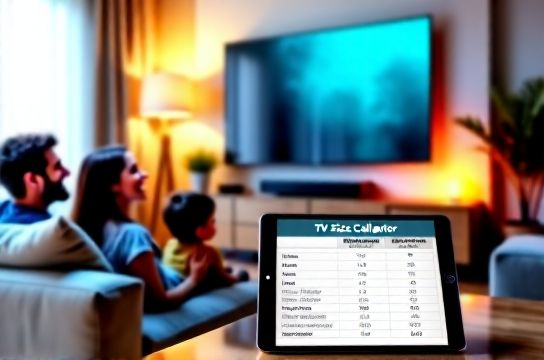
Pro move? Set your max size before browsing. Use tools like the TV size calculator I built based on room dimensions and seating. It cuts decision fatigue and return rates by over 40% according to user feedback.
The Bottom Line
Buying a TV shouldn’t feel like gambling. By setting accurate size expectations upfront—with real measurements and trusted guidelines—you save money, reduce waste, and actually enjoy your viewing experience. Measure twice, click ‘add to cart’ once.