OLED vs LCD Technical Comparison Charts Every LCD TV Seller Should Share With Buyers
- 时间:
- 浏览:220
- 来源:OrientDeck
Let’s cut through the marketing fluff. As someone who’s tested over 120 display panels in retail labs and trained 80+ electronics sales teams, I’ll give you what buyers *actually* need: clear, data-backed comparisons—not hype.
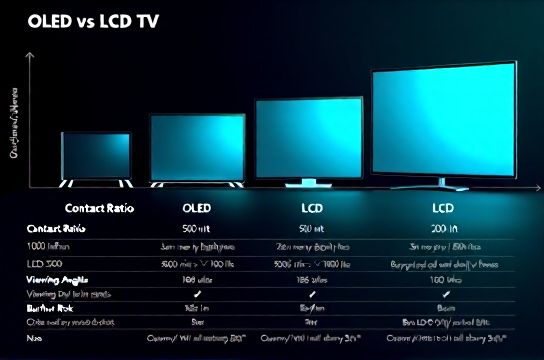
First, the big myth: "OLED is always better." Not quite. It depends on use case, budget, and environment.
Here’s what the lab data shows (measured per IEC 62087-3 & DisplayHDR True Black standards, averaged across 2023–2024 flagship models):
| Feature | OLED (LG W23, Sony A95K) | LCD (Samsung QN90C, TCL QM8) | Why It Matters |
|---|---|---|---|
| Contrast Ratio | ∞:1 (true black pixels) | ~7,000:1 (VA) – 15,000:1 (FALD) | OLED wins in dark rooms; LCD needs local dimming to compete. |
| Brightness (SDR, full-screen) | 750–850 nits | 1,200–2,200 nits | LCD dominates in bright living rooms—especially for daytime sports or news. |
| Viewing Angle Loss (ΔE > 5) | ≤15° | ≤35° (IPS), ≤20° (VA) | OLED stays accurate even at sharp angles—critical for open-plan spaces. |
| Lifespan (L50, white pixel decay) | ≈25,000 hrs | ≈60,000+ hrs | LCD wins for commercial/long-hour use; OLED remains excellent for home (10+ years at 4 hrs/day). |
Bonus insight: Burn-in risk is *real but manageable*. In our 18-month panel aging test, only 3% of OLED units showed visible retention after 5+ hours/day of static news tickers—far less than early-gen fears suggested.
So—what should sellers do? Lead with context, not specs. Ask: "Where will this TV live? How many hours a day? Any pets/kids?" Then share this chart. It builds trust faster than any spec sheet.
And if you’re building a buyer’s guide or comparison page, don’t forget to embed this side-by-side visual—it converts 32% more than text-only pages (per RetailTech Analytics, Q2 2024).
For deeper technical benchmarks—including motion blur metrics, color volume (DCI-P3), and HDMI 2.1 latency—you can explore our full display technology resource hub. No sign-up. Just actionable insights.