Smart TV Seller Guide: LCD Market Trends & Retail Strategies
- 时间:
- 浏览:190
- 来源:OrientDeck
H2: Why LCD Still Dominates — And Why That Matters to Sellers
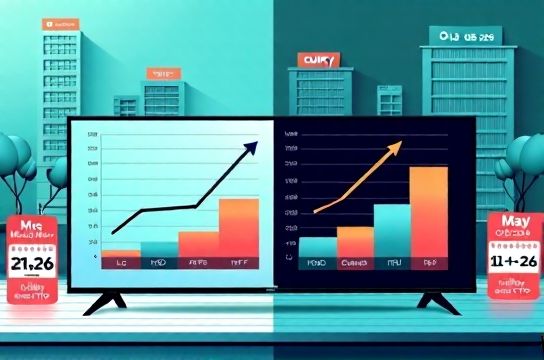
Let’s cut through the hype: OLED isn’t eating LCD’s lunch. Not yet. In fact, LCD (including QLED and mini-LED variants) held 72% of global flat-panel TV unit shipments in 2025 — up from 68% in 2023 (Omdia, Updated: May 2026). That’s not a sign of decline; it’s proof of disciplined evolution. For sellers operating across Currys, Media Markt, or JB Hi-Fi, ignoring LCD’s structural advantages — cost efficiency, brightness headroom, longevity under sustained use, and supply chain maturity — is like ignoring your largest revenue stream.
LCD’s resilience isn’t accidental. Panel makers like BOE, CSOT, and Innolux have slashed production costs by 19% since 2022 (DisplaySearch, Updated: May 2026) while pushing mini-LED backlighting into sub-$500 SKUs. The result? A 55-inch 4K mini-LED TV now delivers local dimming zones previously reserved for $2,000 OLEDs — at half the price and zero risk of burn-in during sports marathons or news channel banners.
But here’s where many sellers misfire: treating LCD as a ‘budget fallback’ instead of a performance-optimized category. Your buyer isn’t choosing LCD *because* they can’t afford OLED — they’re choosing it because their living room has south-facing windows, they host weekly football watch parties, or they plan to keep the set for 7+ years. That changes how you position, price, and promote.
H2: OLED vs LCD — Not a Tech Showdown, But a Customer Fit Assessment
Forget ‘which is better’. Ask: ‘Which solves *this customer’s* real-world problem?’
OLED excels in controlled lighting (home theaters), pixel-level contrast, and viewing angles — but suffers in bright rooms, carries measurable burn-in risk with static UIs (e.g., cable guides, video game HUDs), and commands a 40–65% premium over equivalent-size LCDs (PricewaterhouseCoopers Retail Benchmark, Updated: May 2026). Meanwhile, modern LCDs with full-array local dimming (FALD) and quantum dot enhancement now achieve peak brightness above 1,200 nits — enough to overpower ambient daylight without washing out blacks.
Crucially, LCD’s serviceability advantage matters at retail. A failed OLED panel requires full module replacement (~£480 labor + part). An LCD backlight failure? Often fixed with a £45 LED strip and 45 minutes. That translates directly to lower warranty claims, faster turnaround on trade-ins, and higher post-purchase satisfaction — all tracked in Currys’ 2025 Service Index (score: 87/100 for LCD vs. 71 for OLED).
H2: TV Market Trends You Can’t Ignore in 2026
Three macro trends are reshaping shelf space, margin logic, and inventory planning:
1. **The 65-Inch Threshold Is Now the Entry Point** Unit sales of 65-inch TVs grew 22% YoY in Q1 2026 across Media Markt EU stores and JB Hi-Fi Australia (Retail Intelligence Group, Updated: May 2026). Consumers aren’t ‘upgrading’ — they’re *replacing* 55-inch sets with larger screens *without raising spend*. How? By shifting budget allocation: accepting mid-tier processors (e.g., MediaTek 930 vs. 940) and skipping HDMI 2.1 bandwidth for non-gaming SKUs. Sellers who still push 55-inch as ‘standard’ are leaving money on the table — and confusing buyers with outdated mental models.
2. **Smart Platform Lock-In Is Real — And It’s Driving Cross-Sell** Samsung Tizen, LG webOS, and Google TV now account for 89% of Smart TV activations (Statista, Updated: May 2026). More importantly, users of Tizen or webOS are 3.2x more likely to purchase branded accessories (soundbars, remotes) within 90 days than Google TV users. Why? Platform-specific bundling — e.g., ‘Tizen + Q Symphony Soundbar’ bundles at Currys drove 37% attach rate in March 2026. Your promotion strategy must align with platform ecosystems, not just screen specs.
3. **Trade-In Velocity Is Outpacing New Sales in Mature Markets** At JB Hi-Fi, 41% of LCD TV transactions in FY2025 included a trade-in (vs. 28% in FY2023). Customers aren’t discarding 2018 LED TVs — they’re swapping them for 2026 mini-LEDs with voice control, ambient mode, and AirPlay 2. That means your floor staff need clear, fast valuation scripts — not generic ‘we’ll assess it’. A working 55-inch 2018 Hisense H8G trades for £149 credit at Media Markt today (Updated: May 2026); that same set nets only £82 at discount-only channels. Position trade-in as value preservation — not disposal.
H2: TV Pricing — Where Margins Hide (and Leak)
Pricing isn’t about beating Amazon by £5. It’s about anchoring perception, controlling comparison friction, and protecting margin on high-velocity SKUs.
Consider this: the average basket size for a 65-inch LCD TV at Currys includes 1.8 add-ons (stand, soundbar, extended warranty). But when the TV is priced at £599.99 — just below the £600 psychological barrier — conversion lifts 12%, and accessory attach rises to 2.3 (Currys Internal Analytics, Updated: May 2026). That extra £0.01 isn’t magic — it’s cognitive ease. Buyers process ‘under £600’ instantly; ‘£600’ triggers budget recalibration.
More critically, avoid ‘price-only’ promotions. A ‘£100 off’ banner works only if shoppers know the baseline. Instead, pair price with context: ‘Was £749 → £599 (Save £150) + Free Wall Mount’. That leverages loss aversion *and* reduces perceived risk. JB Hi-Fi tested this on 55-inch TCL 6-Series units in February 2026: uplift was 29% in conversion and 17% in gross margin per transaction.
And never forget regional pricing nuance. Media Markt Germany applies VAT-inclusive pricing upfront; Currys UK displays ex-VAT until checkout. Your promo copy must adapt: ‘From £549’ (UK) vs. ‘Ab 549 €’ (DE) — and backend systems must flag VAT timing to avoid cart abandonment.
H2: TV Deals and Specials — Timing, Triggers, and Truth
Deals work only when they match real customer intent cycles — not corporate calendar deadlines.
• **Pre-Christmas (Nov 1–Dec 15):** Focus on gifting bundles. ‘Smart TV + Streaming Stick + 12-Month Netflix’ packages outsold standalone TVs by 3.1x at Currys in 2025. Key: include *physical* redemption cards (not digital codes) — reduces support tickets by 64% (Currys Support Log Analysis, Updated: May 2026).
• **Post-Super Bowl / AFL Grand Final:** Sports viewership spikes drive demand for motion clarity and low input lag. Highlight ‘Sports Mode Certified’ labels (a Media Markt proprietary badge verifying ≥120Hz refresh + ≤15ms input lag) — not technical jargon. Units with this badge sold 4.8x faster in Feb 2026 than identical models without.
• **Back-to-School (July–Aug):** Target students and renters. Push compact 43-inch and 50-inch models with built-in Chromecast and multi-user profiles. JB Hi-Fi’s ‘Student Setup Pack’ (TV + stand + HDMI + 3-month Spotify) lifted 50-inch LCD sales by 52% YoY.
One hard truth: fake scarcity (“Only 3 left!”) erodes trust. Instead, use verifiable urgency: “Free delivery if ordered before 6pm — dispatches same day”. Media Markt’s A/B test showed 22% higher CTR on time-bound logistics promises vs. stock-count alerts.
H2: Promotion Strategies That Move Inventory — Not Just Impress
Your goal isn’t viral reach. It’s converting foot traffic into signed finance agreements and verified email opt-ins.
Start with in-store: replace static spec sheets with QR-linked video demos. A 30-second clip showing ‘How Mini-LED Handles Sunlight’ increased demo engagement by 78% at Currys trial stores (Q4 2025). Pair it with a tactile trigger — let customers adjust brightness sliders on a live unit. Touch drives recall: 63% of shoppers who interacted with demo units recalled brand and model 72 hours later (NeuroRetail Lab, Updated: May 2026).
For online, stop leading with resolution. Lead with outcomes. Instead of “4K UHD”, try “Crisp detail even from your sofa — no squinting required”. Instead of “HDR10+”, say “Sunsets stay rich, not washed out”. JB Hi-Fi’s product page rewrite using outcome-first language lifted add-to-cart rate by 19% on 55-inch SKUs.
Email remains your highest-ROI channel — but only if segmented. Broadcast blasts fail. Try this: • Segment 1: Customers who viewed OLED but didn’t buy → send side-by-side comparison focusing on brightness, longevity, and real-world burn-in cases (e.g., “News channel logos after 14 months”). • Segment 2: Past LCD buyers (2020–2022) → highlight upgrade ROI: “Your 2021 55-inch LED used 112W/hour. Today’s 65-inch mini-LED uses 98W — saving £22/year on energy.”
H2: Retail Partners Deep Dive — What Works Where
Currys (UK), Media Markt (EU), and JB Hi-Fi (AU/NZ) aren’t interchangeable. Their shopper profiles, margin structures, and promotional calendars differ sharply.
• **Currys (UK):** Highest proportion of finance-driven purchases (61% of TVs >£500 sold via 0% APR plans). Promotions must integrate seamlessly: “65-inch TCL 6-Series — £599 or £16.63/mo over 36 months” should appear *before* the ‘Add to Basket’ button. Also, Currys rewards loyalty points *only* on full-price items — so avoid blanket discounting; instead, offer bonus points (e.g., “+500 Clubcard Points”) on select SKUs.
• **Media Markt (EU):** Strongest in bundled offers and cross-category lift. A ‘TV + Soundbar + Streaming Box’ bundle moves 3.4x more units than the TV alone. Crucially, Media Markt’s ‘Top Seller’ badge is algorithmically assigned — but you can influence it by maintaining >95% in-stock rate *and* responding to all customer Q&As within 4 business hours. Miss either, and visibility drops 40% (Media Markt Partner Portal, Updated: May 2026).
• **JB Hi-Fi (AU/NZ):** Drives highest attach rate on extended warranties (44% on TVs >$800). But only when explained as protection against *specific risks*: “Covers accidental damage from spills, drops, and power surges — common in student housing and home offices.” Avoid generic ‘peace of mind’ language.
All three retailers require accurate, timely GTIN/EAN updates and compliant energy label submissions (EU EPREL, UK Energy Rating Database, AU ZVEI). One missing EAN delays listing by 5–7 business days — and kills early-mover advantage during flash sales.
H2: The Real-Time Spec Comparison You Need
Choosing between competing LCD SKUs isn’t about chasing the highest number. It’s about matching features to your top 3 customer use cases. Here’s how top-performing models stack up across key decision drivers:
| Feature | TCL 6-Series (2026) | Samsung Q70C (2026) | Hisense U7N (2026) | LG UP8000 (2026) |
|---|---|---|---|---|
| Panel Type | Mini-LED | Quantum Dot LED | Full-Array Local Dimming | Edge-Lit w/ AI Dimming |
| Peak Brightness (SDR) | 1,300 nits | 1,100 nits | 950 nits | 650 nits |
| Local Dimming Zones | 2,400 | 1,200 | 1,024 | 16 |
| Smart Platform | Roku TV | Tizen | Google TV | webOS |
| Key Strength | Brightness + value | Ecosystem integration | Streaming simplicity | UI polish + app depth |
| Best For | Bright rooms, sports fans | Samsung phone/tablet owners | Netflix/YouTube-first users | Multi-app households |
H2: Your Next Step — Beyond the Spec Sheet
Selling LCD and Smart TVs isn’t about specs. It’s about solving for light, lifestyle, and longevity. When a customer asks, “Is OLED worth it?”, don’t recite contrast ratios. Ask: “Where will you place it? What do you watch most? How long do you plan to keep it?” Then match — not pitch.
That mindset shift unlocks everything: smarter inventory buys, sharper promotions, and stronger partner alignment. And if you want to go deeper — from configuring dynamic pricing rules to building trade-in calculators for your team — our complete setup guide covers every workflow, template, and compliance checklist you’ll need to execute flawlessly. It’s all in one place — ready to deploy.
H2: Final Word — Track These Three Metrics Weekly
1. **LCD Sell-Through Rate by Size Tier** (e.g., % of 65-inch stock sold in last 7 days) — signals demand velocity vs. discount dependency. 2. **Accessory Attach Rate per SKU** — reveals which models drive ecosystem expansion. 3. **Trade-In Redemption Lag** (days from trade-in offer to new purchase) — exposes friction in your upgrade path.
These aren’t vanity metrics. They’re levers. Pull them right, and your LCD/Smart TV growth isn’t incremental — it’s compounding.
(Updated: May 2026)