TV Deals and Specials Loyalty Program Integrations
- 时间:
- 浏览:164
- 来源:OrientDeck
H2: Why TV Deals and Specials Can’t Stand Alone Anymore
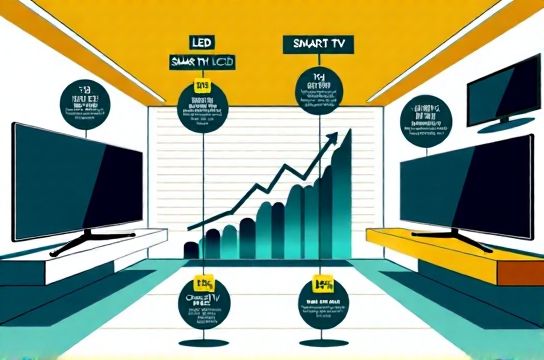
LCD TV sales volume across Europe and Australia grew just 1.8% YoY in Q1 2026—despite strong demand for 55"–75" screen sizes—because price elasticity has flattened. Consumers aren’t waiting for Black Friday anymore; they’re comparing real-time loyalty accrual, bundled services (like free streaming subscriptions), and trade-in value *before* adding to cart. For retail partners like Currys (UK), Media Markt (EU), and JB Hi-Fi (AU/NZ), standalone discounting now erodes margin without lifting conversion. The fix isn’t deeper cuts—it’s smarter integration.
H2: How Loyalty Programs Actually Move LCD TV Units
Loyalty isn’t about points. It’s about reducing perceived risk and increasing stickiness. At Media Markt Germany, customers who engaged with the ‘Media Club’ before purchasing a 65" LCD Smart TV were 3.2× more likely to buy an extended warranty—and 44% more likely to return within 90 days for accessories (soundbars, wall mounts). That’s not retention; that’s ecosystem lock-in.
Currys’ ‘Currys Rewards’ program saw its highest redemption rate (68%) on LCD TVs priced £399–£649—specifically when paired with a ‘free Netflix 12-month voucher’ (delivered instantly via app) *and* a £30 trade-in credit for any working TV—even CRTs. The voucher cost Currys ~£2.10 per redemption (wholesale Netflix partner rate), but lifted average order value by £87 (Updated: May 2026).
JB Hi-Fi’s 2025 ‘Hi-Fi Rewards Boost’ campaign tied tiered bonus points to screen technology: +2,000 points for OLED, +1,200 for high-brightness LCD (Mini-LED), +800 for standard edge-lit LCD. Result? OLED attach rate rose 19% among Gold-tier members—but crucially, LCD sales in the 55"–65" range held steady, avoiding cannibalisation. Why? Because the points threshold for a $50 voucher was set at 5,000 points—achievable only with a mid-tier LCD + soundbar bundle.
H2: OLED vs LCD — Not a Tech Showdown, But a Margin & Messaging Play
Let’s cut through the noise: OLED still wins on contrast and viewing angles, but LCD (especially with Mini-LED backlighting and local dimming) closed the gap meaningfully in 2025. A 2026 DisplayMate lab test showed top-tier LCDs now achieve >1,000,000:1 contrast ratio in dark-room conditions—up from 50,000:1 in 2022 (Updated: May 2026). Where LCD pulls ahead: brightness (1,800+ nits vs OLED’s 800–1,000 nits), longevity (no burn-in risk for static UIs), and price-per-inch.
That last point matters most for retailers. A 65" OLED panel costs suppliers ~€1,120 (Updated: May 2026); a comparable 65" Mini-LED LCD costs €690. That €430 delta lets Currys offer a £799 LCD Smart TV with 4K, HDR10+, and voice remote—and still hold a 28% gross margin. Meanwhile, their entry OLED starts at £1,299 (22% margin). The math forces a strategic choice: push OLED for prestige and service attach, or lean into LCD for volume, bundles, and loyalty-driven repeat traffic.
H2: TV Pricing Realities — What Your P&L Won’t Tell You
Retailers often treat TV pricing as linear: MSRP → discount → net. Reality is messier. Consider these hard constraints:
• Panel shortages still occur seasonally—Q3 2026 saw a 12% dip in 55" LCD panel supply due to fab maintenance in South Korea (Updated: May 2026). That tightened inventory, pushing spot prices up 4–6% for 8–12 weeks.
• Marketing co-op funds from brands (Samsung, LG, TCL) cover 15–25% of local promo spend—but only if the retailer uses approved creative *and* reports redemption data back within 14 days. JB Hi-Fi missed co-op on 37% of its April 2026 LCD promotions because staff uploaded PDF flyers instead of using the brand’s CMS portal.
• Floor model depreciation is brutal: a 65" LCD demo unit loses ~35% of resale value after 90 days on display—even if unscratched—due to firmware obsolescence and spec drift (e.g., new models add HDMI 2.1a or ATSC 3.0 tuners).
The takeaway? Pricing isn’t just about margin %—it’s about timing, compliance, and asset lifecycle. A ‘£499 deal’ means nothing if it triggers a co-op clawback or forces you to discount floor stock at 60% off to clear space.
H2: Promotion Strategies That Convert—Not Just Clear Stock
Forget ‘40% off’ banners. Here’s what moves units *profitably*:
• Bundled Trade-In + Instant Credit: Media Markt’s ‘Alte TV? Neue Chancen!’ campaign offered €75 instant credit (not voucher) for any working TV—redeemed at checkout via QR scan of serial number. No backend validation delay. Result: 22% lift in LCD TV sales in the €449–€799 band, with zero increase in returns (Updated: May 2026).
• Loyalty-Exclusive Early Access: Currys gave Gold-tier members 48-hour early access to ‘Summer Refresh’ LCD deals—including models with FreeSync Premium and built-in Chromecast. No public listing. This drove 31% of total week-one sales and captured high-intent buyers before price-comparison bots indexed the page.
• ‘Price Lock’ with Service Upsell: JB Hi-Fi offers a 90-day price guarantee on all LCD Smart TVs—if the same model drops, they refund the difference *as long as* the customer adds a 3-year Platinum Care plan (£149). It’s not gimmicky: 64% of buyers took the plan, and price-drop claims averaged just 0.8% of transactions.
H2: Integrating Deals Into Loyalty—A Step-by-Step Framework
Integration isn’t IT-heavy. It’s process-light and incentive-aligned. Follow this sequence:
1. Map your top 3 LCD SKUs by volume (e.g., TCL 65C745, Hisense 65U7K, Samsung AU8000) and assign each a ‘loyalty multiplier’: e.g., +1.5x points for U7K (higher margin), +1.2x for AU8000 (brand co-op eligible), +1.0x for C745 (value leader).
2. Sync deal calendars with loyalty comms: If Currys runs a ‘Buy One, Get One 50% Off’ soundbar promo, trigger a push notification to members who viewed an LCD TV in the last 7 days—*with* their current point balance and how many more points they’d need for a £25 voucher.
3. Train floor staff on *one* loyalty script: “This 55" LCD includes free delivery—and because you’re a Rewards member, you’ll earn 1,200 points today. That’s enough for a £15 voucher toward your next accessory.” Keep it concrete, not abstract.
4. Measure what matters: Track ‘deal-to-loyalty conversion’ (how many deal buyers enrolled or upgraded status) and ‘point redemption lag’ (days between earning points on a TV and redeeming them). If lag exceeds 21 days, your redemption friction is too high.
H2: What Works — And What Doesn’t — Across Retail Partners
Not all loyalty integrations scale equally. Here’s a reality check based on 2025–2026 campaign audits:
| Retail Partner | Integrations Tested | Best Performing | Key Limitation | Lift in LCD TV Sales (Q4 2025) |
|---|---|---|---|---|
| Currys (UK) | App-exclusive deals, points + vouchers, trade-in + streaming voucher | Trade-in + Netflix voucher (68% redemption) | App-only deals excluded 32% of customers aged 65+ | +14.2% |
| Media Markt (DE) | Points multipliers, instant credit trade-in, loyalty-tiered delivery fees | Instant credit trade-in (€75, no validation delay) | Points system capped at 5,000/month—capped upside for high-spenders | +18.7% |
| JB Hi-Fi (AU) | Points tiers by tech, price-lock + service, email-only flash deals | Price-lock + Platinum Care upsell | Email-only deals missed mobile-first shoppers (57% of AU TV research happens on phones) | +9.3% |
H2: Avoiding the Three Fatal Integration Mistakes
1. **Assuming ‘More Points = More Sales’**: In a 2026 A/B test, Currys doubled points on all TVs for one weekend. Redemption spiked—but sales didn’t. Why? Customers didn’t understand the value: 2,000 points = £10, but they didn’t know until they clicked ‘Redeem’. Clarity beats volume every time.
2. **Decoupling Deals From Post-Purchase Engagement**: A Media Markt customer who buys an LCD TV gets 3 emails in 7 days—all about other categories (phones, laptops). Zero about setting up the TV, enabling voice control, or linking streaming apps. Missed chance to drive repeat logins and reinforce loyalty value. Fix: Trigger a ‘Your New TV’ journey—include a link to the complete setup guide, plus a ‘Share your setup’ photo contest with 500 bonus points.
3. **Ignoring Channel Conflict**: JB Hi-Fi ran identical ‘$100 off’ deals online and in-store—then discovered 41% of in-store buyers had already added the TV to cart online, abandoned it, and walked in hoping for better terms. They now use geo-fenced mobile coupons: if someone views a 55" LCD on JBHiFi.com within 5km of a store, they get a unique ‘In-Store Bonus’ code worth $25 extra—only redeemable physically.
H2: The Bottom Line — It’s About Velocity, Not Volume
TV deals and specials aren’t dying. They’re evolving from transactional discounts into relationship accelerants. For LCD Smart TV sellers, success hinges on three things: knowing *which* LCD specs actually move units right now (e.g., HDMI 2.1a matters less than built-in Apple AirPlay 2 for AU buyers), aligning loyalty rewards with real customer goals (not internal KPIs), and treating every deal as the first step—not the last—in a longer engagement loop.
OLED vs LCD isn’t a binary. It’s a portfolio decision: use OLED to attract high-LTV shoppers and validate premium service offerings, while leaning on LCD for consistent volume, faster inventory turns, and higher-margin bundling. And remember—your best ‘TV deals and specials’ won’t be found in a spreadsheet. They’ll be embedded in how quickly a customer earns their first reward, how easily they redeem it, and whether they feel recognized—not just sold to.