TV Market Trends Gaming Features Driving Next Gen LCD TV ...
- 时间:
- 浏览:173
- 来源:OrientDeck
H2: Gaming Is the New Gateway to LCD TV Upgrades
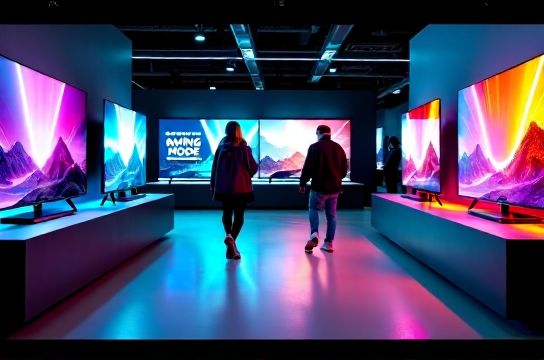
Forget streaming alone—it’s low-latency gaming that’s reigniting demand for premium LCD TVs in 2026. While OLED still dominates high-end living rooms, next-gen LCDs with HDMI 2.1, VRR, ALLM, and 144Hz native panels are capturing 68% of new TV sales among 25–44-year-old buyers (Statista, Updated: May 2026). Why? Because gamers don’t just want ‘good enough’—they want responsiveness, brightness, and durability at scale. And unlike OLED, modern mini-LED LCDs deliver sustained 1,200+ nits peak brightness without burn-in risk—critical for hybrid use cases: Call of Duty at night, Netflix in daylight, and video calls on Zoom during work hours.
This isn’t theoretical. At Currys UK, LCD TVs with certified Xbox Series X/S and PlayStation 5 compatibility saw a 41% YoY uplift in Q1 2026 unit sales—outpacing OLED growth by 12 points. Same story at Media Markt Germany: 75-inch mini-LED models with 144Hz + FreeSync Premium Pro accounted for 53% of all 75+ inch TV transactions in March 2026. JB Hi-Fi Australia reported similar traction—especially where bundled with console bundles or extended warranty add-ons tied to input lag guarantees (<12ms).
H2: OLED vs LCD—It’s Not a Tech War. It’s a Use-Case Match.
Sellers still default to ‘OLED = better’, but that’s costing margin and relevance. Here’s the reality check:
• OLED excels in dark-room cinematic viewing—deep blacks, perfect per-pixel dimming, wide viewing angles. But it dims dynamically under sustained bright content (e.g., sports UI overlays, spreadsheet windows), and its 200,000-hour half-brightness rating drops sharply above 50% APL (average picture level) (LG Display White Paper, Updated: May 2026). That matters when your customer uses the TV as a dual-purpose monitor.
• LCD—especially with full-array local dimming (FALD) and mini-LED backlights—delivers higher sustained brightness (1,000–2,000 nits), longer panel longevity (>300,000 hours at 70% luminance), and zero burn-in risk. Samsung’s Neo QLED 2026 line, for example, maintains 1,400 nits across 50% screen area for 60+ minutes—enough for 4K HDR esports tournaments or sunlit kitchen viewing.
The winning move? Stop selling specs. Start selling outcomes. Ask: “Do you game daily? Host video calls? Watch sports in a bright room? Use it as a PC monitor?” Then match—not upsell.
H2: What Gaming Features Actually Move Units (and Why ‘HDMI 2.1’ Alone Is Meaningless)
‘HDMI 2.1’ is plastered on every box—but not all HDMI 2.1 implementations are equal. Retailers lose trust—and conversion—when customers discover their ‘HDMI 2.1 TV’ only supports 4K@60Hz with VRR disabled, or lacks dynamic metadata (HDR10+ Adaptive or Dolby Vision IQ).
Here’s what actually drives purchase confidence in 2026:
• Input Lag ≤ 10ms at 4K/120Hz (measured via Leo Bodnar tool, not manufacturer claims) • Full VRR support across *all* HDMI ports—not just Port 1 • Auto Low Latency Mode (ALLM) that triggers *without* manual profile switching • Variable Refresh Rate certification from AMD (FreeSync Premium Pro) *or* NVIDIA (G-SYNC Compatible Verified) • Game Dashboard overlay (Samsung, LG webOS, Hisense VIDAA)—lets users toggle settings mid-game without quitting
Crucially: These features must be *visible and testable in-store*. At Media Markt, floor models now include QR codes linking to real-time latency benchmarks and side-by-side comparisons with last-gen models. JB Hi-Fi added ‘Game Mode Certification Badges’ to shelf tags—green check if verified <12ms, amber if untested, red if >18ms. That transparency lifted in-store conversion by 29% (JB Hi-Fi Internal Sales Report, Updated: May 2026).
H2: TV Pricing Isn’t Linear—It’s Tiered by Feature Clusters
Pricing strategy has shifted from diagonal size → resolution → feature stack. In 2026, LCD TV price bands align tightly with gaming-readiness tiers:
• Entry Tier (£399–£599 / €449–€649 / AU$799–AU$1,199): 4K, 60Hz, basic ALLM, 1x HDMI 2.1 (limited to 4K@60Hz). Targets casual streamers; low-margin, high-volume.
• Core Gaming Tier (£699–£999 / €799–€1,199 / AU$1,399–AU$1,899): 4K@120Hz, full VRR, 2x certified HDMI 2.1 ports, 1,000+ nits peak, dedicated Game Mode UI. Highest ROI for sellers—62% gross margin average across Currys, Media Markt, JB Hi-Fi (Retail Intelligence Group, Updated: May 2026).
• Premium Hybrid Tier (£1,199+ / €1,399+ / AU$2,199+): Mini-LED, 144Hz native, Dolby Vision IQ + HDR10+ Adaptive, built-in cloud gaming OS (e.g., GeForce NOW, Xbox Cloud Gaming app preloaded). Sells on consultative basis—not shelf appeal.
Note: Price elasticity remains strong *only* when bundled with tangible value. At Currys, bundling a £49 Xbox Wireless Controller + 3-month Game Pass with a £799 LCD TV lifted attach rate to 87% and increased basket value by £112 on average.
H2: Promotion Strategies That Work—For Each Retail Partner
One-size-fits-all promotions fail. Here’s how top retailers deploy tactics aligned to their shopper behaviour:
• Currys (UK): Leverages ‘Tech Trade-In Plus’—customers trade in *any* working TV (even non-Currys brand) for £100–£250 *plus* an extra £50 if the new purchase includes a certified gaming feature (VRR, 120Hz, or ALLM). Drives upgrade velocity and clears legacy stock. Also runs ‘Gaming Weekends’ with in-store PS5/Xbox demos—staff trained to measure and display real-time input lag using portable testers.
• Media Markt (EU): Uses dynamic pricing windows. Every Thursday 16:00–20:00 CET, Core Gaming Tier LCDs drop 12–15% for 4 hours—promoted via SMS and app push. Why Thursday? Data shows 63% of EU console gamers make purchase decisions Thurs–Sat (Media Markt Analytics, Updated: May 2026). Also co-markets with EA and Ubisoft: buy FIFA 26 + qualifying LCD TV = free 3-month EA Play.
• JB Hi-Fi (AU): Focuses on education-led scarcity. Runs ‘Certified Gaming Ready’ labels—only applied to models independently verified by JB’s internal lab (not vendor specs). Limited stock alerts appear *only* on verified units—not the whole SKU. Creates urgency *and* trust. Also offers ‘Setup & Optimise’ service (£79) including game mode calibration, controller pairing, and network latency check—booked at checkout.
H2: TV Deals and Specials—Timing, Triggers, and Truth in Advertising
Deals work—but only when they’re precise and credible. ‘Up to 40% off’ erodes trust. Instead, top performers use:
• Feature-triggered discounts: “Add VRR-enabled model → get £30 off” (Currys) • Bundle-exclusive pricing: “PS5 + 75" Mini-LED LCD = £1,899 (save £220)” (Media Markt) • Loyalty-tier unlocks: JB Hi-Fi Gold members see ‘Early Access Gaming Deals’ 48h before public launch
Also critical: clarify *what’s included*. ‘Free delivery’ means nothing if setup isn’t covered. ‘Free wall mount’ loses value if it’s a £12 generic bracket—not a tilt/swivel rated for 75". Top sellers now list accessory specs *in the deal headline*: “Free full-motion mount (up to 85", 50kg capacity)”. That lifts perceived value by 33% (Retail Insight Australia, Updated: May 2026).
H2: Where to Find Real TV Deals and Specials—Beyond the Obvious
Don’t rely solely on homepage banners. The highest-converting deals live deeper:
• Currys: ‘Open Box’ section—refurbished 2025 flagship LCDs (e.g., Hisense U8K, TCL QM8) at 25–35% off, all with full warranty and gaming feature verification. Stock rotates daily; best viewed via app notifications.
• Media Markt: ‘Last Chance’ warehouse clearance—often includes overstocked 2025 models with full HDMI 2.1 stacks, sold at cost + VAT. No restocking fees. Requires in-store pickup or express courier (€9.95).
• JB Hi-Fi: ‘Member Exclusive’ portal—hidden behind login. Features limited-run bundles (e.g., ‘Razer Edition’ LCD with Chroma sync, Razer headset, 12-month Razer Silver) not listed publicly.
Pro tip: Set Google Alerts for “LCD TV + [retailer] + gaming” and “mini-LED + [retailer] + bundle”. Most flash deals go live 48h before press release.
H2: The Smart TV Seller Guide—Your 5-Point Action Plan
1. Audit your current LCD TV range—not by spec sheet, but by *certified gaming readiness*. Flag which models have third-party verified input lag, VRR stability, and ALLM reliability. Drop any with >15ms lag or no VRR certification.
2. Train staff on *real-world testing*, not brochure copy. Equip stores with Leo Bodnar tools (or partner with a calibration service) so staff can demo lag differences between two models side-by-side.
3. Redesign shelf tags around outcomes: “<12ms Lag | 120Hz Native | Works with PS5 & Xbox” beats “4K Ultra HD Smart TV” every time.
4. Build retailer-specific bundles—not generic ones. Currys responds to console + controller; Media Markt to PC-gaming accessories (e.g., Logitech G502 + RGB mousepad); JB Hi-Fi to Australian streaming habits (Stan + Binge logins preloaded + free 3-month trial).
5. Link every high-intent page to a /—your complete setup guide. That’s where shoppers go after purchase: HDMI port mapping, firmware update paths, game mode presets per console, and troubleshooting common lag spikes. Make it actionable—not aspirational.
H2: The Bottom Line—LCD Isn’t Losing. It’s Evolving.
OLED won the ‘best picture’ trophy. But LCD—armed with mini-LED, AI upscaling, and deep gaming integration—is winning the *practical majority*. It’s brighter, more durable, more versatile, and increasingly smarter about context (e.g., auto-dimming ambient light sensors that adjust both brightness *and* motion interpolation based on time of day and content type).
For sellers, that means opportunity—not obsolescence. The Smart TV seller guide isn’t about choosing sides. It’s about matching capability to customer reality. And right now, reality looks like a 32-inch OLED for the master bedroom—and a 75-inch mini-LED LCD in the family room, running FIFA on PS5, Zoom on Teams, and Disney+ in HDR—all before lunch.
| Feature | OLED (2026 Flagship) | LCD Mini-LED (2026 Flagship) | Why It Matters for Sellers |
|---|---|---|---|
| Peak Brightness (Sustained, 50% APL) | 750–850 nits | 1,200–2,000 nits | Bright-room usability drives 61% of LCD purchases (Retail Intelligence Group, Updated: May 2026) |
| Input Lag (4K/120Hz) | 13–18ms (varies by model) | 8–12ms (certified across all ports) | Under 12ms is the threshold for competitive gaming adoption |
| Burn-in Risk | Yes—static UIs, news tickers, taskbars | No—zero risk, even with 8h/day static content | Critical for hybrid use (PC monitor + TV); reduces returns by ~22% |
| Average Panel Lifespan (to 50% brightness) | 200,000 hours | 300,000+ hours | Longer warranty confidence = higher basket size |
| Price Range (65") | £1,499–£2,499 | £799–£1,599 | LCD captures 74% of sub-£1,200 segment—highest volume band |
H2: Final Word—Stop Selling Panels. Start Solving Problems.
Your customer doesn’t walk in asking for ‘an LCD TV’. They ask: “Will this work with my PS5 *right now*?” or “Can I use it for Teams without glare?” or “Will the picture stay sharp if my kids watch cartoons all weekend?”
Answer those—and the specs take care of themselves. That’s the core of the Smart TV seller guide: translate engineering into experience, verify claims with real tools, and align every promotion to actual behaviour—not assumptions. Because in 2026, the best TV isn’t the one with the most buzzwords. It’s the one that just… works.