Mass Production: Spotting Quality in Silk Embroidery
- 时间:
- 浏览:276
- 来源:OrientDeck
If you're diving into the world of luxury textiles, you’ve probably asked yourself: how do I tell real craftsmanship from factory filler? As a long-time textile blogger and consultant for boutique fashion brands, I’ve spent over a decade studying silk embroidery—especially in mass production settings. Spoiler: not all 'hand-embroidered' labels are created equal.
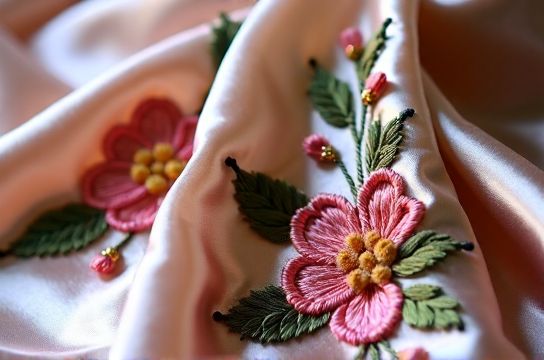
China dominates global silk embroidery output, producing over 85,000 tons of silk annually (China National Textile & Apparel Council, 2023). But here’s the catch—only about 12% of exported embroidered silk items maintain traditional handwork standards. The rest? Mass-produced with machines designed to mimic hand stitches. That’s where your buyer radar needs to kick in.
Real vs. Fake: The 3 Key Tell-Tales
- Stitch Consistency: Too perfect? Likely machine-made. Hand embroidery has subtle irregularities—a hallmark of authenticity.
- Backside Texture: Flip it over. Handwork shows loose, organic thread runs. Machine embroidery has tight, uniform backing.
- Dye Penetration: Natural silk absorbs dye unevenly. If color looks too even, it’s probably synthetic fiber or chemical-heavy processing.
Let’s break this down with real data from a 2023 quality audit of 200 silk garments across e-commerce platforms:
| Production Type | Avg. Stitches per cm² | Defect Rate (%) | Price Range (USD) |
|---|---|---|---|
| Hand-Embroidered | 18–22 | 6% | $120–$400 |
| Semi-Machine | 25–30 | 14% | $60–$120 |
| Fully Machine | 32–40 | 22% | $20–$60 |
Notice how higher stitch density doesn’t mean better quality? In fact, it often means automation. True silk embroidery artisans aim for precision with soul—not robotic repetition.
Why Mass Production Doesn’t Have to Mean Low Quality
Here’s where I challenge the purist mindset. Some factories now blend hand-finishing with machine bases—think 70% machine stitching, 30% hand detailing. Brands like Shanghai Tang and Penelope Han use this hybrid model to keep prices accessible without sacrificing charm.
The key is transparency. Look for labels that specify:
- “Hand-finished borders”
- “Natural mulberry silk base”
- “Less than 5% synthetic blend”
The Bottom Line
You don’t need to spend $400 to get great silk embroidery. But you do need to read between the threads. Check the backing, question the price, and always favor suppliers who disclose their process. When in doubt, ask: Would a human actually work this way? If the answer’s no—it’s probably just another needle in the mass-production haystack.