Walnut Carving Artists Preserving Chinese Craftsmanship
- 时间:
- 浏览:199
- 来源:OrientDeck
If you’ve ever held a finely carved walnut in your hand and thought, ‘This can’t be real’ — welcome to the mesmerizing world of traditional Chinese walnut carving. As a longtime observer of Asian artisanal crafts, I’m here to break down why these tiny masterpieces are more than just curiosities — they’re cultural time capsules.
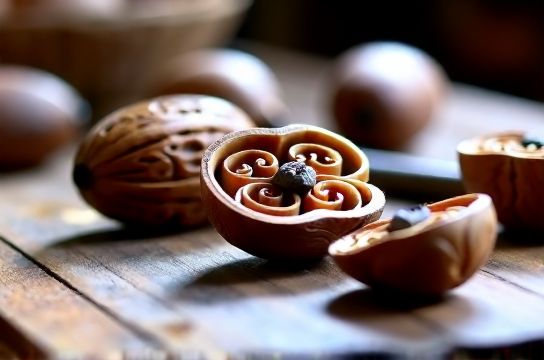
For centuries, walnut carving artists in China have transformed humble hutao (walnuts) into intricate sculptures featuring dragons, deities, and even entire landscapes. These aren’t your backyard craft projects — we’re talking about pieces so detailed, they require magnifying lenses to fully appreciate. And yes, some sell for over $10,000 at auction.
Why Walnut Carving Still Matters Today
In an age of mass production, handmade craftsmanship like this is rare. But it’s not just nostalgia driving interest. Collectors, museums, and even tech entrepreneurs are snapping up these works. Why? Because each piece tells a story — of patience, skill, and heritage.
The best carvings come from mountain-grown walnuts with thick shells, mainly found in Shanxi and Hebei provinces. These nuts naturally resist cracking, making them ideal canvases. Artisans spend weeks — sometimes months — on a single pair, using tools as fine as sewing needles.
Spotting Quality: What to Look For
Not all carved walnuts are created equal. Here’s a quick guide to help you tell the masters from the mass-produced knockoffs:
| Feature | High-Quality Carving | Low-Quality Copy |
|---|---|---|
| Detail Level | Micro-engraving visible under magnifier | Smeared or shallow lines |
| Surface Texture | Smooth, symmetrical pairing | Rough, uneven edges |
| Material Source | Natural mountain walnuts | Thinner, farmed shells |
| Price Range | $300–$15,000+ | Under $50 |
As you can see, real walnut carving art demands premium materials and time. That price gap? It’s not markup — it’s mastery.
The Cultural Comeback
Thanks to social media and platforms like Douyin and Xiaohongshu, younger generations are rediscovering this craft. Viral videos showing artisans carving tiny temples inside walnut shells have racked up millions of views. Some artists now offer live-streamed workshops, bridging tradition and tech.
But don’t mistake popularity for accessibility. True Chinese craftsmanship takes decades to master. Many top artists begin training in their teens. The government even lists walnut carving as an Intangible Cultural Heritage skill.
So next time you see a pair of carved walnuts, don’t just think ‘cool souvenir.’ Think: centuries of technique, culture, and quiet rebellion against disposable culture. And if you’re lucky enough to hold one — rotate it slowly. You might just feel history turning in your palm.