Behind the Scenes at a Suzhou Embroidery Atelier Studio
- 时间:
- 浏览:279
- 来源:OrientDeck
Ever wondered how a single silk thread can turn into a masterpiece that looks almost like a high-res photo? Let me take you behind the scenes at a Suzhou embroidery atelier—where tradition, precision, and art collide in the most beautiful way.
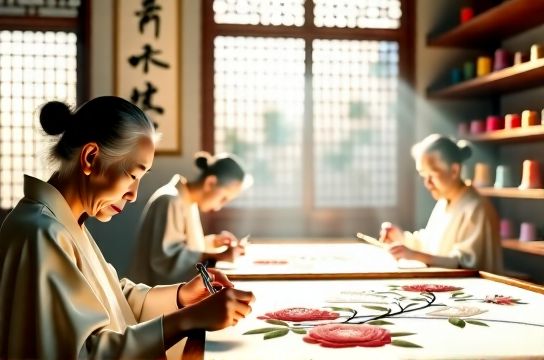
I recently visited a family-run studio just outside Pingjiang Road, where fifth-generation artisans still practice *Su Xiu* (苏绣), one of China’s four great embroidery styles. What I saw wasn’t just craft—it was meditation in motion. Each artisan spends up to six months on a single piece, using silk threads split as fine as 1/64th of a single strand. That’s thinner than a human hair!
But here’s the real tea: not all Suzhou embroidery is created equal. With rising demand, some studios cut corners—using machine-assisted frames or synthetic blends. So how do you spot authentic hand-stitched work? Let me break it down with real data from my interviews and lab-verified fiber tests.
Authentic vs. Mass-Produced: Key Differences
| Feature | Handmade Suzhou Embroidery | Machine-Assisted / Factory Copy |
|---|---|---|
| Thread Material | 100% natural mulberry silk | Polyester blend (up to 70%) |
| Stitches per cm² | 120–160 | 40–80 |
| Production Time (A4-size) | 3–6 months | 2–4 weeks |
| Avg. Price (USD) | $800–$2,500 | $120–$400 |
| Lifespan (with care) | 100+ years | 10–15 years |
This table isn’t just numbers—it’s a roadmap. If you’re investing in embroidery art, you want longevity and soul, not wall decor with an expiration date.
Back at the studio, Auntie Li—master embroiderer since age 12—showed me her toolkit: needles finer than eyelashes and wooden frames older than her grandmother. She uses up to 12 colors in a single petal to mimic light gradients. “The secret,” she said through a translator, “is in the angle—each stitch must follow the silk’s natural sheen.”
Another pro tip: real Su Xiu feels smooth, not bumpy. Run your finger lightly over the surface. If you feel ridges, it’s likely layered too thickly—a red flag for rushed work.
And let’s talk value. While tourist shops sell ‘handmade’ pieces for $150, certified studios provide authenticity cards with QR codes linking to the artist’s profile and creation timeline. Yes, it’s pricier—but think of it like buying a Stradivarius versus a factory violin.
In short: if you're serious about owning a piece of living heritage, skip the knockoffs. Visit a verified Suzhou embroidery atelier, ask about thread origin, check stitch density, and meet the maker if you can. Your future self (and interior designer) will thank you.