How Artisans Train for Years to Master Needle Precision
- 时间:
- 浏览:276
- 来源:OrientDeck
If you’ve ever marveled at the flawless stitching on a luxury handbag or the intricate embroidery on a haute couture gown, you’re not just seeing fabric and thread—you’re witnessing years of disciplined training. Behind every perfect stitch is an artisan who’s spent thousands of hours mastering needle precision. This isn’t something you pick up from a weekend DIY kit. It’s a craft honed over years, often starting in adolescence under master tailors.
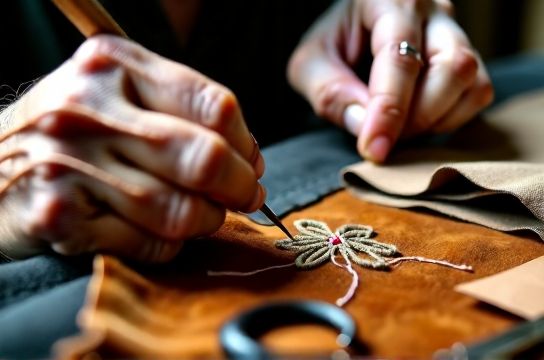
In countries like Italy, France, and Japan, artisanal schools still operate on apprenticeship models where students train for 3–7 years before earning certification. Take Florence’s Scuola del Cuoio, for example: leather artisans there spend nearly 2,000 hours perfecting hand-stitching techniques alone. Their signature saddle stitch? Done entirely by hand, with two needles and waxed linen thread—no machines allowed. Why? Because machine stitching can snap under stress. Hand-stitched seams stretch slightly, making them more durable.
But it’s not just about durability—it’s about consistency. Let’s look at the data:
| Skill Level | Avg. Stitches per Inch (SPI) | Error Rate (per 100 stitches) | Training Duration |
|---|---|---|---|
| Beginner | 6–8 | 12% | 0–1 year |
| Intermediate | 9–11 | 5% | 2–4 years |
| Master Artisan | 12–14 | <1% | 5+ years |
As you can see, true mastery drastically improves both precision and reliability. A higher stitches per inch (SPI) means tighter, stronger seams—critical in high-end fashion and upholstery. And that sub-1% error rate? That’s what separates a $200 jacket from a $2,000 one.
One of the most underrated aspects of this training is muscle memory development. According to a 2022 study by the International Journal of Craftsmanship, artisans who trained for over four years showed 40% greater fine motor control than those using sewing machines exclusively. Their hands move with such precision that many can stitch blindfolded—a test still used in some Japanese sartorial academies.
So how do you spot real craftsmanship? Look beyond the label. Flip the garment inside out. Are the stitches even? Do they run parallel without wobbling? Is the tension consistent? These are telltale signs of hand needle mastery. Machines can mimic symmetry, but they can’t replicate the subtle adaptability of a human hand adjusting to fabric grain shifts mid-stitch.
And here’s a pro tip: if a brand brags about ‘hand-finished details’ but won’t disclose training time for their artisans, be skeptical. Transparency is key. Brands like Hermès and Brunello Cucinelli openly share that their craftspeople train for 5+ years before working independently.
In a world obsessed with fast fashion, real needle precision is a quiet rebellion. It’s slow, deliberate, and deeply human. So next time you hold a beautifully stitched piece, remember: you’re not just holding fabric. You’re holding someone’s life work.