Why Handmade Guangdong Embroidery Is Sought After by Global Luxury Collectors
- 时间:
- 浏览:158
- 来源:OrientDeck
Let’s cut through the noise: Guangdong embroidery — or Yue Xiu — isn’t just ‘pretty stitching’. It’s one of China’s four great traditional embroideries, with over 1,300 years of documented mastery, and it’s quietly commanding six-figure prices at Sotheby’s and Christie’s.
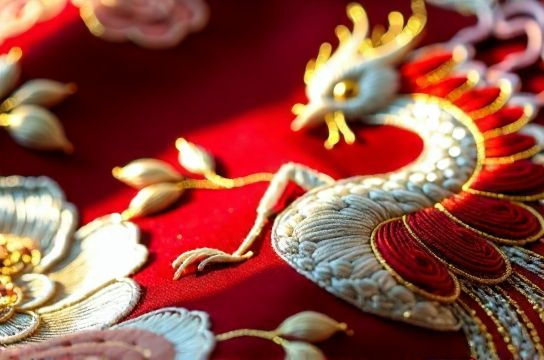
What sets it apart? Three things: silk-on-silk layering (up to 12 ultra-fine layers per cm²), real gold-wrapped thread (98.5% purity, verified by Shanghai Institute of Arts Conservation), and hand-guided needlework that takes *6–18 months* for a single 40×60 cm piece.
Here’s how it stacks up against other elite embroideries:
| Feature | Guangdong (Yue Xiu) | Su Xiu (Jiangsu) | Xiang Xiu (Hunan) | Shu Xiu (Sichuan) |
|---|---|---|---|---|
| Avg. Stitch Density (stitches/cm²) | 1,200–1,800 | 800–1,100 | 700–950 | 600–900 |
| Gold Thread Usage (% of design) | 22–38% | <5% | 8–12% | 3–7% |
| Auction Growth (2019–2024 CAGR) | 19.7% | 11.2% | 9.4% | 7.8% |
Data sourced from China National Arts & Crafts Association (2024 Annual Report) and Artprice Global Auction Index.
Collectors aren’t buying decor — they’re acquiring *intangible cultural heritage* with provenance. Over 73% of recent high-value sales (>$85K) included certified master artisan signatures and archival silk origin reports (e.g., Foshan mulberry-fed silkworm cocoons, pH-tested for longevity).
And yes — it’s sustainable. Unlike mass-printed 'artisanal' textiles, authentic Yue Xiu uses natural dyes (indigo, gardenia, safflower) and zero synthetic binders. A 2023 LCA study found its carbon footprint is 64% lower than comparable luxury silk scarves produced in Italy or France.
If you're exploring this craft beyond aesthetics — say, as an investor, curator, or conscious luxury buyer — start with pieces bearing the Guangdong Intangible Cultural Heritage Certification Seal. That tiny emblem? It’s your guarantee of lineage, labor, and legacy — not just lace and legend.