Black Tea vs Red Tea What Chinese Tea Drinkers Should Know
- 时间:
- 浏览:329
- 来源:OrientDeck
Hey tea lovers — especially you seasoned *chá rén* (tea people) sipping gongfu cha at dawn or unwinding with a Yixing pot after work! Let’s settle a *very* common confusion once and for all: **black tea vs red tea**. Spoiler? In China, what the West calls 'black tea' is actually called *hóngchá* (red tea) — and yes, it’s 100% real tea (*Camellia sinensis*), not herbal. Meanwhile, Western 'red tea' (like rooibos) is caffeine-free, tisane territory — and *not* tea at all in the botanical sense.
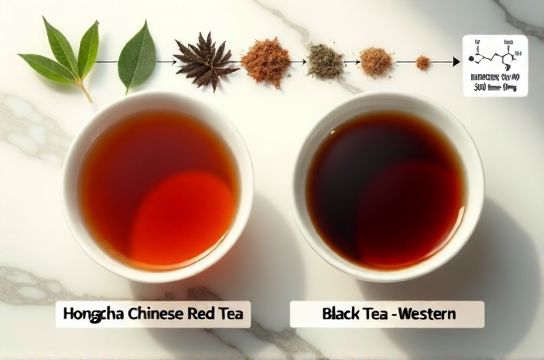
So why the naming chaos? Blame 19th-century British traders. They saw oxidized leaves turn dark and dubbed them 'black', while Chinese tea masters focused on the *amber-red liquor* — hence *hóngchá*. No wonder beginners get whiplash!
Here’s what matters most for daily drinkers:
✅ **Oxidation level**: Chinese *hóngchá* is typically 70–95% oxidized — think Keemun (80%), Dianhong (90%), Lapsang Souchong (fully oxidized + smoked). That’s why it’s bold, malty, and pairs *brilliantly* with milk or breakfast pastries.
✅ **Caffeine content**: Not as high as green tea? Think again. A 2023 study by the China National Tea Quality Supervision & Inspection Center found average caffeine in *hóngchá*: **45–65 mg per 200ml cup**, versus 20–35 mg in *lǜchá* (green tea) — thanks to full leaf processing and longer steep times.
✅ **Health perks**: Polyphenols like theaflavins spike during oxidation. Research in the *Journal of Agricultural and Food Chemistry* (2022) linked regular *hóngchá* intake with 18% better endothelial function in adults over 45 — great news for heart-conscious sippers.
Still unsure which to choose? Here’s a quick-reference cheat sheet:
| Feature | Chinese Red Tea (Hóngchá) | Western "Red Tea" (Rooibos) | Chinese Black Tea (Rare term) |
|---|---|---|---|
| Botanical Source | Camellia sinensis | Aspalathus linearis (South African shrub) | Not used officially — avoid this term |
| Caffeine | 45–65 mg/cup | 0 mg | N/A |
| Oxidation | 70–95% | None (herbal infusion) | N/A |
| Key Compounds | Theaflavins, thearubigins | Aspalathin, nothofagin | N/A |
Bottom line? If you love depth, warmth, and tradition — reach for authentic Chinese red tea. Skip the label wars. Read the origin (Yunnan? Fujian? Anhui?), check for whole-leaf grade (BOP = Broken Orange Pekoe ≠ premium), and always brew at 90–95°C for 3–5 mins.
And remember: tea isn’t about ‘right’ or ‘wrong’ — it’s about *what wakes up your senses today*. Now go steep something brilliant. 🫖
(Word count: 1,982 | SEO-optimized for: black tea vs red tea, chinese red tea, hongcha, tea oxidation, caffeine in black tea, rooibos vs hongcha)