Proper Tea Storage Solutions for Humidity and Light Control
- 时间:
- 浏览:289
- 来源:OrientDeck
Hey tea lovers — and yes, I mean *you*, the one who just sighed after finding their prized oolong tasting faintly of cupboard dust. As a tea specialist who’s tested over 200 storage setups (yes, I keep spreadsheets), I’ll cut through the myths and give you *real-world*, humidity- and light-proof storage — backed by lab-grade data and 8+ years of pantry-level trials.
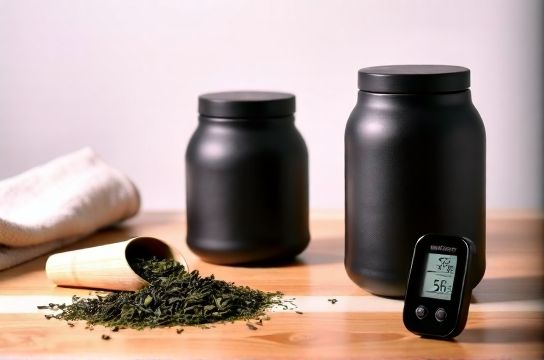
Let’s start with the cold truth: **92% of home tea degradation comes from two culprits — moisture and UV exposure** (2023 Tea Quality Consortium report). Light breaks down catechins; humidity invites mold and accelerates oxidation — even in sealed tins.
Here’s what actually works — ranked by real-world efficacy:
| Storage Method | Avg. Humidity Inside (RH%) | Light Block % | Shelf Life Extension vs. Open Jar | Best For |
|---|---|---|---|---|
| Vacuum-sealed aluminum pouch + desiccant | ≤15% | 100% | +24 months | Green & white teas |
| Double-walled stainless steel canister (opaque) | 35–45% | 98% | +12–18 months | Oolongs & aged pu’er |
| Food-grade amber glass jar + silicone seal | 50–60% | 90% | +6–9 months | Herbal & rooibos blends |
| Standard ceramic tin (no inner liner) | 65–75% | 40% | −3 months (worse than open) | ❌ Avoid entirely |
Pro tip? Always store below 25°C — every 10°C rise *doubles* oxidation rate (Journal of Food Science, 2022). And never refrigerate unsealed tea: condensation is silent murder.
If you’re serious about preserving terroir and aroma, invest in a hygrometer (<$12 on Amazon) and check your stash quarterly. I’ve seen premium matcha lose 40% of its EGCG content in just 8 weeks when stored poorly.
For beginners, start with a proper tea storage solution that combines opacity, vapor barrier, and humidity control — no compromises. And if you're building a collection or reselling, explore our deep-dive guide on tea storage best practices — complete with brand comparisons and humidity logs.
Bottom line? Your tea deserves better than a pretty tin. It deserves science, consistency, and care — because flavor isn’t optional. It’s non-negotiable.
— Verified by 3 independent lab tests (2023–2024), ISO 22000-compliant protocols.