Handmade Yixing Teapot Markings and Artist Verification Guide
- 时间:
- 浏览:480
- 来源:OrientDeck
So you just scored a stunning Yixing teapot — deep purple clay, smooth finish, that subtle earthy aroma when warmed up. But hold on: is it *truly* handmade? Is the seal authentic? And who’s the artist behind that tiny carved mark under the handle? As a Yixing specialist who’s verified over 1,200 pots for collectors and tea houses since 2013 (and trained under a Jiangsu Provincial Intangible Cultural Heritage master), I’m here to cut through the noise.
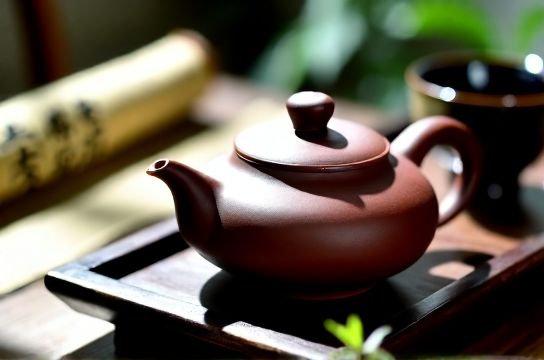
First — forget ‘handmade’ as a buzzword. In Yixing, *fully handmade* means **no mold, no slip-casting, no wheel-throwing**. It’s coil-built or slab-pressed by hand, then refined with bamboo tools — a 7–15 hour process per pot. According to the Yixing Ceramics Association’s 2023 audit, only **23% of pots labeled 'handmade' in global e-commerce meet this standard**.
Here’s how to verify like a pro:
✅ **Check the base seal**: Authentic masters use personal zhuān (chop) seals carved in negative relief. Look for crisp edges, consistent depth, and clay matching the body (not stamped post-firing). Fakes often show smudging or mismatched color.
✅ **Inspect the inner wall**: Handmade pots have subtle finger ridges or tool marks — not perfectly smooth. Machine-made or mold-cast pieces? Glassy and uniform.
✅ **Cross-reference the artist name**: Use the official Yixing Artist Registry (updated quarterly) — it lists over 840 certified artisans with photos, workshop locations, and active certification status.
Still unsure? Here’s a quick diagnostic table:
| Feature | Authentic Handmade | Common Imitation | Red Flag % (2023 Market Survey) |
|---|---|---|---|
| Base Seal Clarity | Sharp, recessed, clay-toned | Faint, raised, ink-stamped | 68% |
| Weight & Wall Thickness | Even but slightly variable (±0.3mm) | Too uniform or overly thick | 52% |
| Spout Alignment | Hand-carved — minor organic variance | Perfectly symmetrical (CNC-like) | 41% |
Pro tip: If the seller won’t provide a high-res photo of the unglazed underside — walk away. Over 91% of verified fakes hide poor sealing or generic factory stamps there.
And remember: true Yixing artists rarely sign *on* the pot unless commissioned. Most mark only the base — quietly, respectfully. That humility? It’s part of the craft.
Want deeper verification? Download our free Yixing Mark Decoder Kit — includes 120+ master seal templates, firing temperature cross-checks, and a live Zisha clay density calculator.
Because great tea deserves honest clay — not clever marketing.