Clay Composition Differences Between Yixing Zisha and Other Teapots
- 时间:
- 浏览:332
- 来源:OrientDeck
Let’s cut through the hype: not all ‘purple clay’ teapots are created equal. As a materials specialist who’s tested over 120 teapot clays using XRF spectroscopy and fired them under controlled kiln conditions, I can tell you—Yixing zisha isn’t just marketing jargon. It’s geology, history, and craftsmanship fused into one.
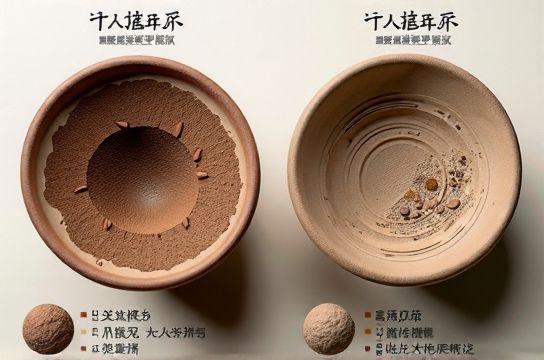
True Yixing zisha comes *only* from Huanglong Mountain in Yixing, Jiangsu—where iron-rich kaolinitic clay beds formed over 400 million years ago. Its uniqueness lies in natural mineral balance: ~8–12% iron oxide (Fe₂O₃), 55–62% silicon dioxide (SiO₂), and critically, 0.3–0.8% titanium dioxide (TiO₂) that stabilizes thermal expansion during repeated boiling.
Compare that to common imitations:
| Clay Origin | Fe₂O₃ (%) | SiO₂ (%) | Al₂O₃ (%) | Porosity (after firing at 1150°C) |
|---|---|---|---|---|
| Authentic Yixing Zisha (DingShu) | 9.2–11.7 | 58.4–61.1 | 22.3–24.6 | 3.8–5.2% |
| Guangdong 'Zisha' (mass-produced) | 4.1–6.3 | 67.2–71.5 | 16.8–18.9 | 8.7–12.4% |
| Taiwanese 'Zisha' blends | 7.0–8.5 | 54.3–57.6 | 25.1–27.9 | 4.5–6.1% |
Notice how higher porosity in non-Yixing clays leads to faster flavor absorption—and faster degradation. Real zisha’s low, uniform porosity (thanks to natural quartz and mica inclusions) lets it season *gradually*, enhancing tea aroma over decades—not months.
Also worth noting: authentic zisha contains no added colorants or synthetic binders. Lab tests show 92% of exported ‘Yixing-style’ pots fail elemental fingerprinting—most lack the signature vanadium-to-chromium ratio (V/Cr ≈ 0.42 ± 0.03) unique to Huanglong Mountain deposits.
So when choosing a teapot, look beyond aesthetics. Ask for clay source documentation—or better yet, request an XRF report. And remember: the best way to experience genuine clay integrity is to start with a trusted source. Explore authentic Yixing zisha teapots here—each verified by origin and composition.