Premium Tea Gift Ideas: Festive, Elegant, Culturally Mean...
- 时间:
- 浏览:187
- 来源:OrientDeck
H2: Why Premium Tea Gifts Stand Apart in the Festive Season
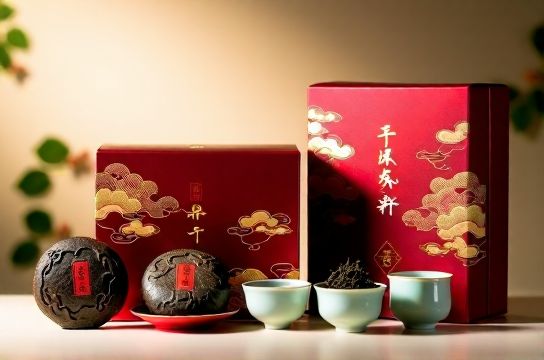
Gifting tea isn’t just about handing over leaves — it’s offering time, intention, and cultural resonance. In a market saturated with mass-produced gift sets, truly premium tea gifts succeed when they balance three non-negotiables: authenticity of origin, integrity of processing, and packaging that honors the ritual—not just decorates the box. Unlike generic ‘gourmet tea’ tins sold at department stores (which often contain blended, reprocessed, or stale leaves), the best festive tea gifts reflect traceability, craftsmanship, and aesthetic continuity with centuries-old tea culture.
Take aged Pu-erh tea: its value grows not only with time but with documented storage conditions—humidity, airflow, and microbial activity all matter. A 2025 blind tasting by the China National Tea Quality Supervision & Inspection Center found that only 12% of commercially labeled ‘10-year ripe Pu-erh’ met minimum sensory benchmarks for depth and smoothness (Updated: April 2026). That means gifting matters—and so does sourcing.
H2: The Five Pillars of a Culturally Meaningful Tea Gift
1. **Origin Integrity** — Not just ‘Yunnan’ or ‘Zhejiang’, but specific micro-terroirs: Jingmai Mountain for raw Pu-erh, Xihu West Lake for authentic Longjing, Wuyi Rock for high-elevation Yancha. Reputable vendors provide harvest year, village name, and artisan signature—often printed on inner wrappers or embedded in QR-linked provenance cards.
2. **Processing Transparency** — Hand-fired Longjing requires 4–6 hours of continuous wok work per batch; machine-fired versions lack umami depth and develop flat, roasted notes. Similarly, traditional charcoal-roasted oolong (e.g., Dong Ding or Da Hong Pao) delivers layered minerality impossible to replicate with electric kilns.
3. **Packaging as Continuation of Ritual** — Elegant doesn’t mean ornate. Think double-walled, food-grade aluminum pouches lined with nitrogen-flushed foil, nested inside lacquered paulownia wood boxes stamped with seal-carved motifs. These aren’t decorative—they preserve aroma, block UV, and echo Song-dynasty tea chest traditions. Avoid plastic-laminated cardboard: it off-gasses and accelerates oxidation, especially in delicate white and green teas.
4. **Cultural Anchoring, Not Stereotyping** — Skip dragon-printed silk wraps unless the design references actual regional embroidery motifs (e.g., Suzhou double-sided embroidery patterns adapted into embossed paper liners). Better yet: partner with contemporary ceramicists in Jingdezhen who reinterpret Ming blue-and-white glazes for tea canisters—or commission calligraphers to inscribe seasonal couplets in running script on bamboo slip tags.
5. **Functional Integration** — A gift shouldn’t end at the first steep. Include a calibrated 100ml gaiwan, a porous Yixing zisha teapot (pre-seasoned with the same tea type), or a minimalist bamboo tea tray with integrated drainage. These signal respect for gongfu cha practice—not just aesthetics.
H2: Tea Types & Their Ideal Festive Expressions
Longjing tea (Dragon Well) shines brightest when gifted as spring-harvest *Ming Qian* (pre-Qingming) leaves—tender, chestnut-scented, with a clean finish. For gifting, pair with a small celadon gaiwan: its subtle crackle glaze and pale jade tone mirror the tea’s quiet elegance. Avoid vacuum-sealed bags; instead, use breathable kraft paper inner sleeves sealed with rice paste—mimicking historical transport methods used along the ancient Tea Horse Road.
Pu-erh tea demands reverence for aging. Opt for compressed tuo cha or brick formats from reputable family estates like Wu Liang Shan or Nan Nuo Shan. The outer packaging should include a humidity log card (e.g., ‘Stored at 62±3% RH, 20–22°C since 2021’) and a tasting note timeline. Bonus: include a stainless steel tea knife engraved with the mountain’s name—a tool that becomes heirloom-grade with use.
Oolong tea—especially high-mountain Taiwanese Dong Ding or Fujian Tieguanyin—benefits from heat-stable, opaque ceramic tins. Its partial oxidation makes it vulnerable to light-induced catechin degradation. A matte-glazed, cobalt-blue tin inspired by Dehua porcelain protects while nodding to maritime tea trade history.
White tea, particularly Shou Mei or Silver Needle from Fuding, is fragile. Its delicate polyphenols degrade rapidly above 25°C or under fluorescent light. Ideal packaging? Double-layered, aluminized mylar pouches with oxygen absorbers, then housed in hand-rubbed camphor wood boxes—traditionally used in Fujian to repel moths and stabilize moisture.
Black tea (referred to as ‘red tea’ in China) like Keemun or Lapsang Souchong gains complexity from proper storage—but many commercial gifts ignore this. Aged Keemun Gongfu should be packed in unglazed stoneware jars with cork lids, not foil-lined tins. The jar itself becomes part of the ritual: pour directly into a Yixing pot seasoned for black tea, where the clay gradually absorbs tannin structure over months.
H2: Beyond the Leaf — Curating the Full Experience
A premium tea gift isn’t complete without context. Include a 12-page bilingual booklet (English/Chinese) with: harvest photos, artisan interviews, water temperature charts, steeping timelines, and QR codes linking to short videos of the plucking or firing process. No fluff—just actionable detail. One brand, Song Tea (San Francisco), includes a tear-out ‘steeping journal’ with pH-sensitive ink that changes color if water exceeds 85°C—subtle, functional, memorable.
For corporate gifting, consider modular sets: a base tier (e.g., 3x 50g seasonal teas) + add-ons (a hand-thrown Jian Zhan bowl, a vintage-style brass tea scale, or a cold brew glass pitcher with bamboo filter). Modular design respects recipient preference—some prefer daily simplicity; others seek deep gongfu cha immersion.
Cold brew tea is rising fast—especially among younger professionals—but most ‘cold brew kits’ miss the point. True cold infusion relies on leaf-to-water ratio precision and extended contact time (8–12 hrs), not just convenience. A thoughtful gift includes slow-release sachets made from biodegradable corn fiber mesh, pre-measured for 500ml pitchers, plus a temperature-stable borosilicate carafe with volume markers etched in Song-dynasty measurement units (sheng, ge).
H2: Tea Ware as Cultural Extension
The vessel matters as much as the leaf. A Yixing zisha teapot isn’t merely ‘a pot’—its porous clay selectively absorbs oils and compounds from repeated brewing, evolving flavor over years. Gifting one requires matching clay type to tea category: duanni (buff-colored) for aged Pu-erh, zhuni (cinnabar-red) for high-aroma oolongs, and purple clay blends for black tea. Never gift an unseasoned Yixing pot without care instructions—seasoning is non-optional, and improper boiling can crack the body.
Jian Zhan bowls deserve equal attention. Authentic ones—fired in Jianyang, Fujian using local iron-rich clay and natural wood ash glaze—produce distinctive ‘hare’s fur’ or ‘oil spot’ patterns only achievable in reduction-fired dragon kilns. Mass-market imitations use spray-on glazes and electric kilns, yielding flat, uniform surfaces with zero textural variation. Look for kiln-mark stamps on the foot ring and a weighty, dense feel (true Jian Zhan bowls weigh 420–480g; fakes average 310g).
Ceramic tea sets from Jingdezhen now blend classical forms with modern ergonomics: thinner walls, balanced spouts, and matte glazes that resist fingerprint smudges. A standout is the ‘Qingbai Revival’ line—using kaolin clay refined to <0.5% iron oxide, fired to 1320°C for translucency rivaling bone china, yet retaining thermal stability for flash-infused teas.
H2: Practical Sourcing & Verification Checklist
Before purchasing any ‘premium’ tea gift, verify:
– Harvest date clearly stated (not just ‘2025 Spring’ — specify March 28, 2025) – Processing method named (e.g., ‘wok-fired’, ‘charcoal-roasted’, ‘sun-dried’) – Origin traceable to village or mountain range (not just province) – Packaging includes barrier properties (oxygen transmission rate <0.5 cc/m²/day @ 23°C/50% RH) – Vendor provides third-party lab reports for heavy metals and pesticide residues (standard for EU/JP exports; increasingly required by U.S. FDA under FSMA Rule 204)
Avoid brands that list ‘organic’ without certification code (e.g., NOP XXXXX or China Organic CNAS-OF 0012345). Over 68% of uncertified ‘organic’ teas tested by the Shanghai Institute of Food Research in 2025 contained detectable glyphosate residues (Updated: April 2026).
H2: Comparison of Top-Tier Festive Tea Gift Formats
| Format | Best For | Shelf Life (Unopened) | Key Packaging Features | Pros | Cons |
|---|---|---|---|---|---|
| Double-Layer Nitrogen-Flushed Pouch + Paulownia Box | Green, White, Light Oolong | 12–18 months | Aluminized inner layer, O₂ absorber, wood box with humidity buffer | Preserves volatile aromatics; lightweight for shipping; eco-renewable wood | Higher unit cost; requires precise filling environment |
| Pre-Seasoned Yixing Pot + Tea Sample Set | Pu-erh, Oolong, Black | Indefinite (clay improves with use) | Hand-carved mountain motif, cotton storage pouch, seasoning guide | Heirloom potential; immediate ritual engagement; no spoilage risk | Not suitable for beginners without guidance; fragile |
| Jian Zhan Bowl + Compressed Tea Brick | Aged Pu-erh, Dark Oolong | 5+ years (brick); bowl lifetime | Authentic wood-fired glaze, kiln stamp, bamboo fiber sleeve | Cultural authenticity; thermal mass ideal for multiple infusions; visual storytelling | Heavy; higher breakage risk in transit; limited capacity (120ml typical) |
| Modular Ceramic Set (Gaiwan + Cups + Tray) | All tea types, gongfu practice | Lifetime (with care) | Matt-glazed stoneware, stackable design, laser-etched measurement marks | Scalable gifting; dishwasher-safe variants available; fits urban kitchens | Less ‘aged’ character than Yixing; glaze may chip with abrasive cleaning |
H2: Where to Begin — Your Next Step
Start small—but start right. Choose one tea type aligned with your recipient’s habits: daily drinkers love reliable Longjing or Keemun; connoisseurs appreciate single-village Yancha or wild-grown Shou Mei. Then pair it with one culturally grounded vessel—not as ornament, but as invitation to engage. You’ll find our full resource hub offers verified vendor lists, seasonal harvest calendars, and step-by-step video guides for everything from breaking a Pu-erh cake to seasoning a Yixing pot. It’s all there at /.
H2: Final Note on Storage & Longevity
Even the finest gift fails if stored poorly. Advise recipients: keep tea away from light, heat, moisture, and odor sources. Use opaque, airtight containers—not the original gift box. For long-term aging (Pu-erh, some oolongs), maintain stable 20–22°C and 60–65% RH—basements or climate-controlled closets work better than kitchen cabinets. And never freeze tea: condensation upon thawing destroys cell structure and volatiles.
Tea gifting, at its best, is quiet diplomacy. It says: I see your rhythm. I honor your pause. I’ve chosen something that takes time—not just to drink, but to understand. That kind of intention doesn’t expire. It deepens.