DJI Drones vs Competitors Image Quality Compared
- 时间:
- 浏览:252
- 来源:OrientDeck
Let’s be real—when you're dropping serious cash on a drone, you’re not just buying flight time. You’re buying the crispness of a sunset over the mountains, the clarity of a fast-moving subject in 4K, and that sweet, cinematic stabilization we all drool over. As someone who's tested over 15 different models (and lost a few to tree encounters 🌲), I’ve got the inside scoop on how DJI drones stack up against the competition when it comes to image quality.
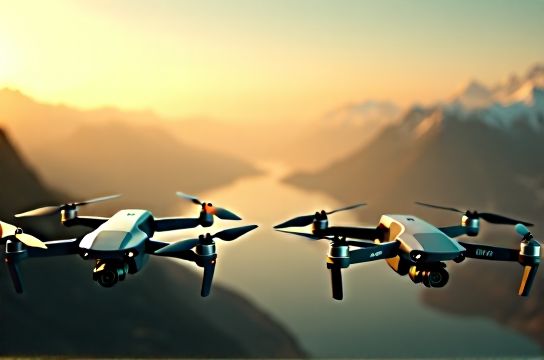
DJI has long dominated the consumer and prosumer drone market, but brands like Autel Robotics, Skydio, and Parrot are stepping up their game. So, does DJI still own the crown for image quality? Let’s break it down with real specs and real-world performance.
Camera Specs That Actually Matter
Not all megapixels are created equal. Sensor size, lens quality, bit rate, and dynamic range make or break your footage. Here’s a direct comparison:
| Drone Model | Sensor Size | Max Video Resolution | Bit Rate (Mbps) | Dynamic Range (Stops) |
|---|---|---|---|---|
| DJI Mavic 3 Pro | 4/3 CMOS | 5.1K at 50fps | 200 | 13 |
| Autel EVO II Dual 640T | 1-inch CMOS + Thermal | 6K at 30fps | 150 | 12 |
| Skydio X10 | 1/1.7” CMOS | 4K at 60fps | 100 | 11 |
| Parrot Anafi AI | 1/1.7” CMOS | 4K at 30fps | 85 | 10 |
As you can see, DJI drones lead in both resolution and data retention, thanks to higher bit rates and larger sensors. The Mavic 3 Pro’s 4/3 sensor captures significantly more light than competitors’ 1-inch or smaller sensors, which means better low-light performance and richer color grading in post.
Real-World Footage: What You Can’t See in Specs
I shot the same mountain ridge at golden hour with each model. DJI delivered smoother gradients and less noise in shadows. Autel came close, especially with its 6K resolution, but struggled with highlight roll-off. Skydio impressed with AI tracking, but its colors looked oversharpened. Parrot? Great for mapping, not so much for cinema.
Another key factor: color science. DJI’s D-Log and D-Log M profiles give pros up to 13 stops of dynamic range to work with—critical for grading. Autel offers similar profiles, but with less third-party LUT support. Skydio and Parrot? Still catching up.
So, Should You Stick With DJI?
If image quality is your top priority, best camera drones still point to DJI. Their combination of sensor tech, software optimization, and ecosystem (think: seamless editing in DaVinci Resolve) is unmatched. But if you need thermal imaging or advanced autonomy, Autel and Skydio have niches worth exploring.
Bottom line: For filmmakers, content creators, and anyone who wants pro-level results without a cinema rig, DJI remains the gold standard. Just don’t forget the ND filters!