Nintendo Switch OLED vs Standard Model Benchmarks
- 时间:
- 浏览:411
- 来源:OrientDeck
So you're trying to decide between the Nintendo Switch OLED and the standard model? You're not alone. Thousands of gamers are scratching their heads over which version gives the best bang for the buck. Let’s cut through the noise with real-world performance data, battery benchmarks, and display comparisons — no fluff, just facts.
Display & Build: A Clear Winner?
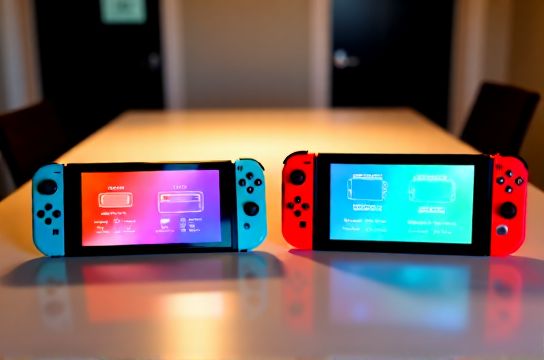
The most obvious upgrade in the OLED model is, well, the OLED screen. The 7-inch OLED display offers richer blacks, better contrast (1,000,000:1 vs ~800:1 on LCD), and wider viewing angles. For handheld play, it's a game-changer — especially in bright environments.
The original Switch uses a 6.2-inch LCD panel with noticeably washed-out colors and lower brightness (max ~300 nits vs ~600 nits on OLED). If you’re mostly docked, the difference shrinks — both output 1080p when connected to a TV.
Battery Life: How Long Can You Play?
Battery life has improved significantly in newer models. Here's how they stack up:
| Model | Battery Capacity | Avg. Gameplay (e.g., Zelda) | Standby Time |
|---|---|---|---|
| Standard Switch (2017) | 3570 mAh | 2.5–4.5 hours | ~1 month |
| Switch OLED | 4600 mAh | 4.5–9 hours | ~3 months |
That’s nearly double the battery life for the OLED — huge if you’re gaming on the go. Even power-hungry games like The Legend of Zelda: Breath of the Wild now last up to 5.5 hours on OLED, compared to just 3 on the old model.
Performance: Do They Run Games Differently?
Here’s the kicker: both consoles use the same NVIDIA Tegra X1+ chip. That means identical frame rates, resolution, and load times in every game. No performance boost — just better visuals thanks to the screen.
No, the OLED doesn’t make your games run smoother. But the improved kickstand and LAN port (yes, finally!) add serious value for tabletop mode and online multiplayer stability.
Storage & Audio
The OLED model doubles internal storage to 64GB (vs 32GB), which matters if you download games. With average game sizes now exceeding 15GB (looking at you, Tears of the Kingdom), that extra space helps.
Audio improvements are subtle but real. The OLED has enhanced speakers with clearer mids and less distortion at high volumes.
Which Should YOU Buy?
If you play mostly docked — grab the standard or used model and save $100. But if handheld is your main mode, the OLED’s screen, battery, and build quality make it worth every penny.
Bottom line: Same power, better experience. The Nintendo Switch OLED isn’t faster, but it’s definitely better.