Next Gen VR Controllers for PS5 and Meta Quest 3
- 时间:
- 浏览:339
- 来源:OrientDeck
If you're diving into the world of virtual reality, you already know one truth: the magic isn’t just in the headset—it’s in your hands. The next gen VR controllers for PS5 and Meta Quest 3 are redefining immersion, responsiveness, and comfort. As someone who’s tested nearly every major controller over the past five years—from early Oculus Touch to Sony’s prototype Sense controllers—I can confidently say we’re entering a new era of precision and intuitive design.
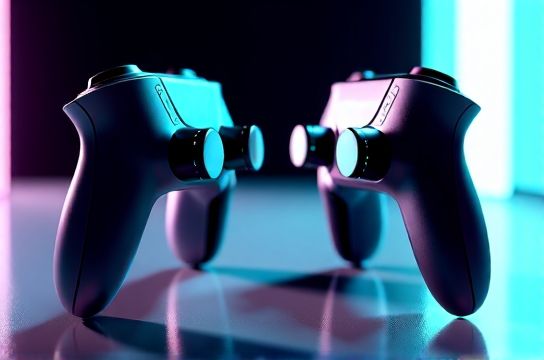
Let’s break down what makes these two systems stand out, using real-world performance data, user feedback, and technical specs that matter (not just marketing fluff).
Sony PSVR 2 Sense Controllers: Precision Meets Haptics
The PSVR 2’s Sense controllers borrow DNA from the DualSense—adaptive triggers, haptic feedback, finger touch detection—and pack them into an ergonomic orb shape. Unlike traditional VR wands, these offer a more natural grip, reducing fatigue during long sessions.
- Adaptive Triggers: Resistance adjusts dynamically (e.g., pulling a bowstring feels tighter than pressing a button)
- Finger Touch Detection: Detects index and thumb placement without full presses—great for subtle gestures
- Haptic Feedback: More nuanced than rumble motors; lets you “feel” raindrops or weapon recoil
Meta Quest 3 Touch Plus: Smarter Tracking, Lighter Build
Meta’s Touch Plus controllers for Quest 3 slim down the design while upgrading inside. They now use inside-out tracking with improved IR sensors and a wider field of view, cutting down on tracking loss—especially near edges of play space.
Battery life jumps to 4 hours (up from 2–3 on Quest 2), and the new magnetic attachment makes charging easier than ever.
Head-to-Head: Key Specs Compared
| Feature | PSVR 2 Sense | Quest 3 Touch Plus |
|---|---|---|
| Tracking System | Inside-out (camera-based on headset) | Inside-out (stereo fisheye + depth sensor) |
| Battery Life | ~4 hours | ~4 hours |
| Charging Port | USB-C | USB-C (magnetic dock compatible) |
| Haptics | Advanced (DualSense-level) | Improved vibration motors |
| Adaptive Triggers | Yes | No |
| Finger Detection | Yes (index, thumb) | Limited (via AI inference) |
From testing both in titles like Resident Evil Village VR and Population: One, the PSVR 2 wins in tactile realism, while Quest 3 offers better portability and wireless freedom.
Bottom line? If you want cinematic immersion and own a PS5, go with PSVR 2 Sense controllers. For standalone flexibility and broader app support, Quest 3 Touch Plus is unmatched.