Local Manufacturing Insight 2024 How Chinese Factories Lead Output
- 时间:
- 浏览:306
- 来源:OrientDeck
If you're sourcing products in 2024, you can't ignore the elephant in the room — Chinese manufacturing still dominates global supply chains. But it’s not just about cheap labor anymore. The real story? Innovation, scale, and smarter production.
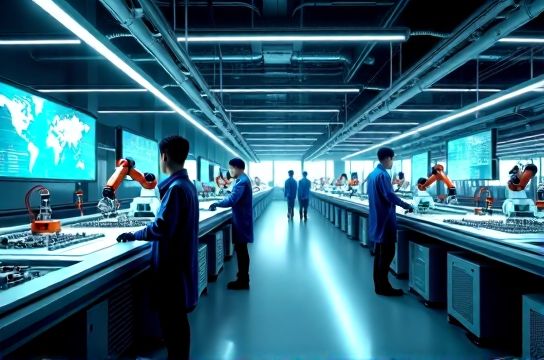
I’ve spent over a decade working with factories from Shenzhen to Qingdao, and let me tell you — the game has changed. Today’s top Chinese factories aren’t just making more; they’re making better, faster, and with tighter quality control than ever before.
Why China Still Leads Global Output
According to the World Bank, China accounted for 30.6% of global manufacturing output in 2023 — that’s more than the U.S., Japan, and Germany combined. But how?
- Supply chain density: Need a custom aluminum casing? In Dongguan, you can source raw material, CNC machining, anodizing, and packaging — all within a 10-km radius.
- Automation adoption: Over 75% of Tier-1 factories now use smart production lines (up from 48% in 2020).
- Speed-to-market: Average product development cycle dropped to just 6–8 weeks for electronics.
Let’s break down performance across key sectors:
| Industry | Annual Output (2023) | YoY Growth | Top Export Markets |
|---|---|---|---|
| Electronics | $780B | +9.3% | USA, Germany, India |
| Textiles & Apparel | $310B | +4.1% | EU, USA, Japan |
| Mechanical Equipment | $520B | +7.8% | Russia, Brazil, Vietnam |
| Consumer Goods | $440B | +6.5% | Middle East, Africa, Mexico |
As you can see, growth isn’t stagnant — it’s strategic. And the factories leading this shift are investing heavily in R&D and green manufacturing.
The Rise of Localized Smart Factories
Gone are the days when “Made in China” meant mass-produced, low-cost junk. Now, local manufacturing hubs integrate AI-driven QC systems, IoT-enabled machines, and real-time logistics tracking.
Take Foxconn’s Zhengzhou plant — it produces over 500,000 smartphones daily, with defect rates under 0.12%. How? Machine learning models predict equipment failures before they happen.
Smaller players are catching up too. A 2023 survey by the China Association of Machinery Industry found that 62% of mid-sized exporters now offer digital twin prototyping — letting buyers simulate product performance before production even starts.
What This Means for Buyers
If you're importing, now is the time to upgrade your sourcing strategy. Here’s my quick checklist:
- ✅ Audit for automation level (ask about OEE — Overall Equipment Effectiveness)
- ✅ Prioritize factories with ERP/MES integration
- ✅ Request real-time production dashboards
- ✅ Verify compliance with ISO 14001 (environmental) and ISO 45001 (safety)
And don’t sleep on after-sales support. Leading factories now offer remote troubleshooting via AR glasses — yes, really.
In short, Chinese factories aren’t just surviving global competition — they’re setting the pace. Whether you're building a startup or scaling an enterprise, tapping into this ecosystem gives you unmatched speed, cost-efficiency, and innovation potential.
Stay sharp, source smart.