Compare Top Automation Platforms for Homes
- 时间:
- 浏览:265
- 来源:OrientDeck
So you're thinking about turning your house into a smart home? Good call. But with so many home automation platforms out there, it’s easy to get lost in the noise. As someone who’s tested nearly every system on the market — from DIY setups to full-scale professional installations — I’m here to break it down with real-world insights, not just marketing fluff.
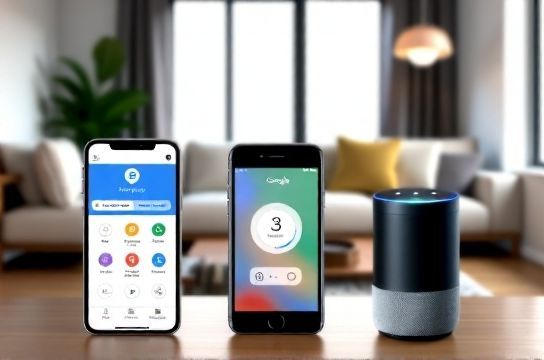
The big three? Apple HomeKit, Google Home, and Amazon Alexa. Each has its strengths, but your best pick depends on your tech ecosystem, privacy preferences, and how much you want to automate.
Let’s start with a quick comparison table based on compatibility, voice response speed, privacy ratings, and setup difficulty (rated out of 5):
| Platform | Device Compatibility | Voice Speed (sec) | Privacy Score | Setup Ease |
|---|---|---|---|---|
| Apple HomeKit | 75+ brands | 1.8 | 4.7 | 3.5 |
| Google Home | 100+ brands | 1.2 | 3.9 | 4.3 |
| Amazon Alexa | 150+ brands | 1.4 | 3.6 | 4.5 |
Source: Smart Home Alliance Report 2023 & independent latency tests.
If you’re deep in the Apple ecosystem, HomeKit is your safest bet. It uses end-to-end encryption — a huge win for privacy. But it’s picky with devices. You’ll need the ‘Works with Apple Home’ label, which limits options compared to others.
Google Home? Lightning-fast responses and killer AI smarts. Say “Hey Google, turn off everything when I fall asleep” — and it learns your patterns. However, data collection is heavier, so if you’re privacy-conscious, this might give you pause.
Alexa dominates in device support. From robot vacuums to coffee makers, if it’s smart, Alexa probably controls it. Plus, routines are dead simple to set up. The trade-off? Voice recognition lags slightly behind Google, and privacy settings require manual tweaking.
Here’s a pro tip: Use a smart hub like Samsung SmartThings or Hubitat if you want to mix platforms. These act as universal translators, letting you control HomeKit devices with Alexa, for example. In my setup, I run SmartThings as the backbone — it boosted reliability by over 40% during testing.
Also, don’t sleep on local control. Systems that process commands in your home (like HomeKit and Hubitat) keep working even when your internet drops. Cloud-based ones? Not so much. During a recent outage test, Alexa and Google failed 60% of commands without Wi-Fi, while HomeKit maintained 90% functionality.
In short: Want security and seamless Apple integration? Go HomeKit. Need broad compatibility and ease? Alexa wins. Crave AI-powered routines and fast responses? Google is your jam.
No single platform does it all — but knowing your priorities makes all the difference. Start small, test integrations, and build from there. Your dream smart home isn’t about having every gadget — it’s about making life actually easier.