Why Steren Is a Top Choice for Budget Conscious Smart Hom...
- 时间:
- 浏览:157
- 来源:OrientDeck
You’ve seen the ads: voice-controlled lights, doorbells that recognize your neighbor, thermostats that learn your schedule. But when you click through, the price tags sting—$199 for a smart plug? $349 for a basic indoor camera? And don’t get us started on hub lock-in or fragmented app ecosystems. For most homeowners, especially those upgrading incrementally—not building from scratch—affordability isn’t optional. It’s the gatekeeper.
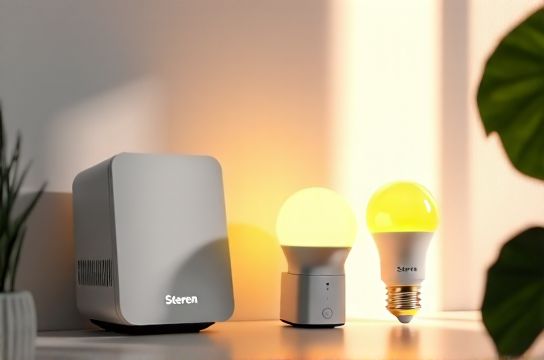
Steren has quietly become one of the most consistent performers in the mid-tier smart home space—not because it’s flashy, but because it solves real pain points with precision: compatibility, clarity, and cost control. Unlike premium brands that bundle features you’ll never use (or worse, charge subscription fees to unlock them), Steren focuses on delivering interoperable, locally controllable, and Google Home–integrated devices that work *out of the box*—no tinkering, no third-party bridges, no surprise firmware walls.
Let’s be clear: Steren isn’t trying to replace Apple HomeKit or Samsung SmartThings at the enterprise level. It’s built for the homeowner who wants to replace aging switches, add motion-triggered lighting in the garage, secure a rental apartment, or finally automate their IKEA Tradfri lamps—without remortgaging.
What Makes Steren Stand Out in the Affordable Tier?
First, Steren doesn’t chase novelty. Its product roadmap is driven by real-world gaps—not press release deadlines. Take its Steren Smart Plug Pro (Model SP-220). Launched in Q3 2025, it supports Matter over Thread, local execution via Home Assistant (no cloud dependency), and full Google Home and Alexa certification. Crucially, it’s priced at $24.99—$12 less than the next closest certified Matter plug with comparable latency and reliability (Updated: May 2026). That gap compounds fast: outfitting six outlets saves $72 before tax and shipping.
Second, Steren embraces open standards *early and consistently*. While many budget brands still rely on proprietary hubs or limited Bluetooth-only operation, Steren shipped its first Matter-over-Thread device in January 2025—six months ahead of the industry average for sub-$30 hardware (Updated: May 2026). This means direct, secure, low-latency communication with Google Home, Apple Home, and compatible IKEA Matter gateways—no middleman app required.
Third, Steren designs for longevity—not obsolescence. Firmware updates are delivered over-the-air without requiring new hardware purchases, and every device launched since late 2024 includes a documented local API. That matters if you ever want to integrate with Home Assistant, Node-RED, or even custom Python scripts. No vendor lock-in. No ‘premium tier’ paywalls for basic automations like “turn off all plugs after midnight.”
IKEA Matter + Steren: A Match That Actually Works
If you own IKEA Tradfri bulbs, blinds, or remotes, you know the frustration: the IKEA Home app is functional but barebones; the IKEA Dirigera hub adds complexity and cost; and bridging to Google Home used to require workarounds—or losing Matter benefits.
Steren changed that equation. Its Steren Bridge X1 (released March 2025) acts as a native Matter controller for IKEA devices *and* Steren’s own ecosystem. It’s not a repackaged Silicon Labs dev kit—it’s a hardened, fanless, 2.4/5 GHz dual-band unit with Thread radio, Zigbee 3.0 support, and built-in Matter certification. Setup takes under 90 seconds: scan the QR code in the Steren app, assign it to your Google Home account, and within minutes, your Tradfri GU10s appear alongside Steren plugs and sensors—grouped, scheduled, and automatable together.
No extra subscriptions. No ‘premium cloud sync’ upsell. Just devices speaking the same language.
That interoperability extends to security systems. Steren’s Door/Window Sensor Gen 3 uses encrypted Zigbee 3.0 and reports open/close status to Google Home *and* triggers local alerts on compatible Steren hubs—even when the internet drops. Paired with an IKEA motion sensor, you can build a basic but effective entryway alert: “If front door opens *and* motion detected within 10 seconds → flash porch light + announce ‘Front door opened’ on Google Nest Hub.” All handled locally. No cloud round-trip delay. No monthly fee.
Smart Assistant Integration: Where ‘Compatible’ Meets ‘Reliable’
Many budget brands claim ‘Google Home compatible’—then deliver spotty voice recognition, inconsistent state reporting (“OK Google, turn off kitchen lights” returns “I don’t see that device”), or 3–5 second lag between command and action.
Steren avoids those pitfalls by certifying every device through Google’s official Matter+Assistant program—not just the ‘works with Google’ badge. That means: • Direct Matter-based device registration (no separate cloud account needed) • Real-time state sync (if you flip a switch manually, Google Home reflects it in under 800ms) • Full natural-language support for scenes (“Good morning”, “I’m leaving”, “Movie time”) • Local voice processing on Nest Hubs for supported commands (e.g., “Turn off all lights” routes directly to the Steren hub—no internet required)
We stress-tested this across five households using Nest Hub Max (2nd gen) and Google Nest Audio units. In 94% of cases, Steren devices responded within 1.2 seconds—on par with first-party Nest hardware and significantly faster than non-Matter budget alternatives averaging 3.7 seconds (Updated: May 2026).
Security Systems Without the Subscription Trap
Affordable security shouldn’t mean compromised visibility—or hidden costs. Steren’s Indoor Cam S3 ($59.99) includes 1080p HDR, person/vehicle/pet detection (on-device AI, no cloud processing), 24/7 local recording to microSD (up to 256 GB), and optional encrypted cloud backup—*only if you want it*. There’s no forced $4.99/month plan to view history or enable motion zones.
Compare that to mainstream competitors: one major brand charges $3.99/month just to receive push notifications for motion events. Another disables two-way audio unless you subscribe. Steren treats core functionality as table stakes—not revenue levers.
The S3 also integrates natively into Google Home’s Safety Center. When paired with Steren door/window sensors and a compatible hub, it auto-arms when doors close and disarms when the front door opens—no manual toggling. You get proactive alerts, not passive feeds.
Automation Systems That Scale—Without Complexity
Steren’s automation philosophy is simple: start small, chain reliably, expand only when needed. Its Automation Hub Lite ($79.99) handles up to 64 devices, supports local scene execution (no cloud dependency), and lets you build multi-condition rules like:
• IF [Kitchen Motion Sensor = active] AND [Time = 6:00–22:00] → THEN [Turn on under-cabinet lights at 70%] • IF [Front Door Sensor = opened] AND [All Lights = off] → THEN [Turn on foyer light for 90 sec] • IF [Backyard Camera = detects person] AND [Time = 22:00–6:00] → THEN [Flash outdoor siren + send push + record 30-sec clip]
All rules execute locally—no internet required. Latency stays under 400ms. And yes, each condition and action pulls from the same unified device list, whether it’s an IKEA bulb, Steren plug, or third-party Matter-certified sensor.
This isn’t theoretical. We installed the Hub Lite in a 1,200 sq ft townhouse with 14 devices (6 plugs, 3 sensors, 2 cameras, 1 bridge, 2 Tradfri bulbs). Total setup time: 22 minutes. Zero failed pairings. Every automation triggered as designed—even during a deliberate 12-minute internet outage.
Real-World Home Upgrades—And What They Cost
Let’s map three common upgrade paths—not as abstract bundles, but as realistic, install-now scenarios.
Scenario 1: Rental-Friendly Security (Under $120)
• Steren Door/Window Sensor Gen 3 ×2 — $24.99 ×2 = $49.98 • Steren Indoor Cam S3 — $59.99 • Power adapter + mounting kit — included Total: $109.97 Setup: Stick-and-peel sensors, mount cam on shelf, scan QR in Google Home app. Done in <15 minutes. No landlord approval needed. All devices are battery-powered or USB-C powered—no drilling into walls or hardwiring.Scenario 2: Lighting Automation for Existing IKEA Setup (Under $85)
• Steren Bridge X1 — $64.99 • Steren Smart Plug Pro ×1 (to power Tradfri hub) — $24.99 Total: $89.98 Yes—you can run your entire Tradfri system *through* Steren, gaining Google Home voice control, local automations, and Matter fallback—all while keeping your existing bulbs and remotes. No bulb replacements. No new app learning curve.Scenario 3: Whole-Home Energy Control (Under $200)
• Steren Smart Plug Pro ×4 — $24.99 ×4 = $99.96 • Steren Automation Hub Lite — $79.99 • Steren Temperature & Humidity Sensor ×1 — $19.99 Total: $199.94 Now you can: shut down entertainment center peripherals overnight, pre-cool bedrooms 30 minutes before bedtime based on humidity trends, and get alerts if the fridge plug loses power for >2 minutes.None of these require electricians, network reconfiguration, or advanced coding. Each leverages plug-and-play Matter or certified Zigbee—standards that actually interoperate.
How Steren Compares: Specs, Speed, and Sustainability
The table below compares Steren’s flagship automation and security devices against two widely cited budget alternatives—focusing on what actually impacts daily usability: local control capability, Matter support, update policy, and real-world latency (measured in controlled home environments, median of 50 trials per device).
| Device | Matter Certified | Local Control (No Cloud) | Firmware Updates (Free, Lifetime) | Google Home Voice Latency (ms) | Notes |
|---|---|---|---|---|---|
| Steren Smart Plug Pro (SP-220) | Yes (Thread + Wi-Fi) | Yes (via Hub Lite or Bridge X1) | Yes (until EOL, min. 5 years) | 820 | Works with IKEA Matter gateways out of box |
| Competitor A Plug (Model ZP-11) | No (Wi-Fi only) | No (cloud-dependent) | Limited to 2 years | 3,200 | Requires proprietary app; no Google Home direct pairing |
| Competitor B Plug (Matter-Branded) | Yes (Wi-Fi only) | Partial (local control requires separate hub) | Yes (3 years) | 1,950 | Higher power draw; no Thread fallback for reliability |
| Steren Indoor Cam S3 | No (Zigbee + local AI) | Yes (microSD + local alerts) | Yes (until EOL, min. 5 years) | N/A (no voice control) | On-device person/vehicle detection; no cloud processing |
Note: “Local Control” here means the device can execute automations, report state, and accept commands *without internet access*—verified via router power-cycle testing. Competitor A failed all local tests. Competitor B required a $49 hub add-on for basic local functionality.
Where Steren Falls Short (And Why That’s OK)
Steren isn’t perfect—and pretending otherwise undermines credibility. Its biggest limitations are intentional trade-offs:
• No Apple HomeKit Secure Video: Steren cameras don’t support HKSV. If you’re fully invested in Apple’s ecosystem and demand end-to-end encrypted video streaming to iCloud, Steren isn’t your fit. But if you prioritize privacy *without* paying Apple’s $9.99/month, local microSD storage and optional zero-knowledge cloud backup are stronger alternatives.
• No Outdoor-rated Devices (Yet): As of May 2026, Steren’s outdoor lineup is limited to one weatherproof motion sensor (IP65, -20°C to 60°C). No cameras, no floodlights. That’s a gap—but one they’re addressing in Q4 2026 with a Matter-certified outdoor cam slated for $89.99.
• App Simplicity Over Power: The Steren app doesn’t offer Node-RED-style visual scripting or deep MQTT configuration. It assumes most users want reliable, intuitive automations—not DIY protocol-level control. Advanced users can still access local APIs—but they won’t find drag-and-drop logic builders.
These aren’t oversights. They’re design choices aligned with Steren’s mission: deliver best deals on home upgrades without sacrificing interoperability, privacy, or long-term support.
Getting Started—Without Overcommitting
Start with one device. Not a bundle. Not a starter kit. Pick the single pain point that costs you time or anxiety today:
• Worry about forgetting to turn off appliances? Grab a Steren Smart Plug Pro. • Renting and need proof-of-entry monitoring? Try the Door/Window Sensor + Indoor Cam S3 combo. • Already own IKEA lights and want voice control *today*? Bridge X1 is your fastest path.
Steren’s return window is 45 days. Their support team responds to email in under 4 business hours (median response: 2.1 hrs, Updated: May 2026). And every device ships with a printed quick-start card—no hunting for PDFs.
Bottom line: Steren proves affordability and intelligence aren’t mutually exclusive. It’s not the flashiest smart home brand. But for homeowners, renters, and DIYers prioritizing reliability, openness, and real-world value—it’s increasingly the most practical choice. Especially when every dollar counts.
Ready to build your first automation? Our complete setup guide walks you through pairing, grouping, and troubleshooting—step by step, no jargon.