Unique Chinese Inventions With a Twist of Humor
- 时间:
- 浏览:205
- 来源:OrientDeck
When you think of ancient China, do you picture dragons, emperors in silk robes, or maybe endless rows of terracotta warriors? Sure, those are cool—but what really made China legendary was its mind-blowing inventions. And no, we’re not just talking about fireworks and tea (though yes, thank you for those). We’re diving into the genius—and sometimes hilarious—side of ancient Chinese innovation.
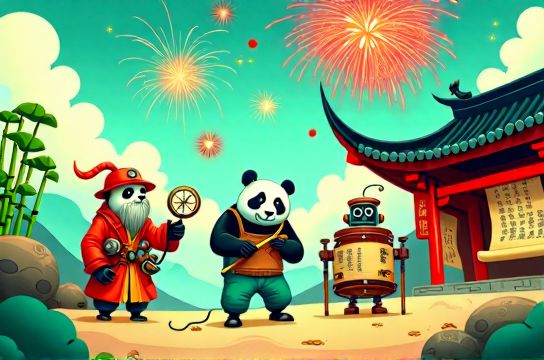
Let’s be real: some of these inventions were so ahead of their time, modern engineers still nod in respect. Others? Well… let’s just say they make you go, ‘Wait, they actually tried that?’
The Big Four (Plus a Few Wildcards)
You’ve probably heard of the “Four Great Inventions” of ancient China: papermaking, printing, gunpowder, and the compass. But here’s the twist—they didn’t just invent them; they perfected them with flair.
| Invention | Year (Approx.) | Original Use | Fun Fact |
|---|---|---|---|
| Compass (Sinan) | 206 BC | Feng Shui alignment | Early compasses pointed south, not north—because yin energy flows better that way, obviously. |
| Papermaking | 105 AD | Imperial bureaucracy | Tsar Cai Lun used mulberry bark, rags, and fishing nets. Recycling before recycling was cool. |
| Woodblock Printing | 7th Century | Buddhist scriptures | By 868 AD, they printed the world’s first complete book—the Diamond Sutra. |
| Gunpowder | 9th Century | Alchemy experiments | Taoist monks wanted immortality. Got explosions instead. Oops? |
Hilarious but Real: The Quirky Side of Innovation
Now, let’s talk about the weirdos of invention—the ones that sound like they came from a late-night infomercial.
- The Mechanical Puppet Theater (1st Century BC): Think ancient animatronics. Craftsmen built life-sized robotic musicians powered by hydraulics. Imagine hosting a dinner party where your entertainment is a robot band playing lutes. No Spotify needed.
- The Seismoscope (132 AD): Invented by Zhang Heng, this dragon-and-toad device could detect earthquakes hundreds of miles away. One dragon drops a ball into a toad’s mouth? Earthquake from the east. It’s like Alexa, but with more mythology.
- Nosegay Gun (Ming Dynasty): Okay, maybe not real, but legend says Emperor Wanli had a tiny cannon that shot perfumed pellets to clear bad smells. Imagine sneezing and accidentally launching rose-scented shrapnel at your advisor.
Why These Inventions Still Matter
China didn’t just invent things—it changed how humanity works. Paper replaced bamboo scrolls (goodbye, back pain from carrying books). Printing spread knowledge faster than gossip in a village square. Gunpowder? Well, it reshaped warfare, politics, and eventually led to fireworks that make dogs cry on the Fourth of July.
And let’s not forget the compass—without it, Columbus might’ve ended up in Canada again and called it India once more.
Final Thoughts: Genius with a Wink
Ancient Chinese inventors weren’t just smart—they were imaginative, bold, and occasionally delightfully bizarre. They solved problems, chased dreams (and immortality), and sometimes just said, ‘Hey, what if we put rockets on a chair?’ (Yes, that happened. Look up Wan Hu.)
So next time you print a document, check your phone’s GPS, or ooh-and-ah at a firework show, take a moment to whisper, ‘Thanks, ancient China.’ Just maybe don’t try the rocket chair at home.