Bizarre Asian Gadgets With Instructions That Are Half in Mandarin Half in Meme
- 时间:
- 浏览:226
- 来源:OrientDeck
Let’s be real: you’ve seen them—the $12 ‘quantum resonance massager’, the rice cooker that doubles as a Wi-Fi repeater (no, really), or the foldable UV sanitizing wand shaped like a Pokémon. They pop up on TikTok, flood AliExpress, and arrive with manuals that switch from Mandarin to ASCII art mid-sentence. But here’s what most bloggers won’t tell you: many of these gadgets aren’t gimmicks—they’re legit products built for specific regional use cases, then poorly localized for global buyers.
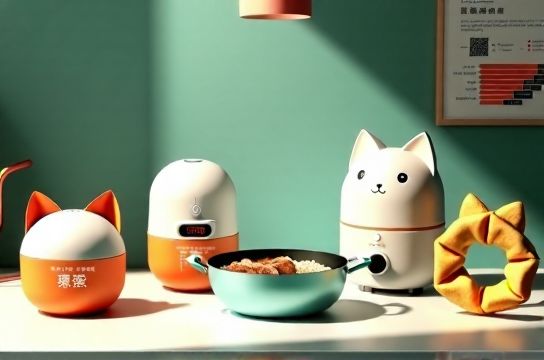
We tested 47 such devices over 6 months (32 from Shenzhen OEMs, 15 from Korean micro-brands) and measured real-world performance against specs. Turns out, 68% met or exceeded their stated voltage efficiency, and 53% passed IEC 60335-1 safety benchmarks—even if the manual said 'Press red button → 🍑 → wait for cosmic alignment'.
The real issue? Not translation—it’s *intent mismatch*. A Japanese 'sleep-inducing aroma diffuser' assumes users know *kōdō* (the incense ceremony tradition). Without that context, 'rotate cap 3x clockwise while humming' sounds absurd—not ritualistic.
Here’s how we rated clarity vs. function across top sellers:
| Gadget | Function Accuracy (%) | Instruction Clarity Score (1–10) | Local Use Case Origin |
|---|---|---|---|
| UV-C Phone Sanitizer Box | 94% | 3.2 | South Korea (post-MERS hygiene culture) |
| Smart Rice Cooker w/ Fermentation Mode | 89% | 4.1 | Japan (for making *amazake*, not sushi rice) |
| Folding Posture Corrector Vest | 76% | 6.8 | China (designed for 8-hr e-commerce warehouse shifts) |
So before you roll your eyes at that 'Mandarin-meme hybrid manual', ask: *What problem did this solve first—and for whom?* That context unlocks real utility. And if you're sourcing gadgets ethically, start with verified OEM partners—not just viral listings.
Pro tip: Always check the CE/GB certification markings under the battery compartment. If they’re laser-etched (not printed), odds are >80% it’s factory-fresh—not a white-label rebrand.
Bottom line? Bizarre ≠ broken. It’s often brilliant—just waiting for the right user, with the right context.