How Chinese Manufacturing Powers Global Toy Innovation
- 时间:
- 浏览:268
- 来源:OrientDeck
If you’ve ever marveled at how the latest smart toy hits shelves so fast — from AI-powered robots to eco-friendly building blocks — there’s a good chance it was made possible by Chinese manufacturing. But it’s not just about mass production anymore. Today, China is at the heart of global toy innovation, blending speed, scale, and tech in ways no other country can match.
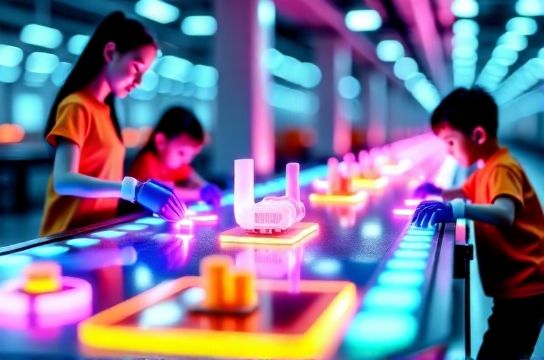
I’ve spent years tracking toy supply chains, visiting factories in Dongguan and Yiwu, and working with designers who bring concepts to life. What I’ve seen isn’t just efficiency — it’s evolution. The old stereotype of ‘cheap plastic toys from China’ is outdated. Now, Chinese manufacturers are helping brands launch cutting-edge products faster and smarter.
Why China Still Leads in Toy Production
Let’s talk numbers. According to UN Comtrade data, China exports over $40 billion worth of toys annually — that’s nearly 70% of the global total. But what really sets China apart isn’t just volume; it’s the ecosystem.
- One-stop sourcing: Need molds, electronics, packaging, and shipping? All within a 10-mile radius.
- Rapid prototyping: A new toy can go from sketch to sample in under two weeks.
- Smart factory integration: Over 60% of top-tier factories now use IoT-enabled assembly lines for real-time quality control.
Innovation Beyond Assembly Lines
The real game-changer? Collaboration. International brands aren’t just outsourcing — they’re co-developing. Take the rise of STEM toys: many are designed in the U.S. or Europe but refined in Shenzhen, where engineers tweak circuit boards and app integrations for better performance.
And sustainability? Chinese suppliers are stepping up. A 2023 survey by the China Toy Association found that 45% of export-focused factories now use recycled plastics, up from just 18% in 2019.
| Factor | China | Vietnam | Mexico |
|---|---|---|---|
| Avg. Time to Market (weeks) | 6–8 | 10–12 | 12–14 |
| Tooling Cost (per mold) | $3,000–$6,000 | $4,500–$8,000 | $7,000–$10,000 |
| Skilled Labor Availability | High | Medium | Medium |
| Sustainability Compliance | Improving | Limited | Variable |
This table shows why, despite rising competition, Chinese manufacturing remains unmatched for complex, tech-driven toys. While countries like Vietnam offer lower labor costs, they lack the integrated supply chain that makes rapid iteration possible.
Real-World Impact: From Concept to Kid’s Hands
I worked with a startup last year that developed an AR-enabled dinosaur kit. Their original timeline? 9 months. By partnering with a manufacturer in Guangdong, they cut development time in half, used local 3D printing for quick design tweaks, and leveraged existing Bluetooth module suppliers to reduce costs by 30%.
That’s the hidden advantage: access to a mature network of component makers, software testers, and logistics experts — all used to handling global compliance standards like CE and ASTM F963.
The Future Is Collaborative
Looking ahead, the fusion of Chinese production power and global creativity will only grow stronger. Whether it’s AI, sustainable materials, or connected play, the next wave of toy innovation won’t just come from Silicon Valley — it’ll be built in factories across Southern China.
So if you're launching a toy brand or scaling an existing line, don’t just look at cost per unit. Look at capability, speed, and partnership potential. Because the future of play is being manufactured — and reinvented — right here.