Latest Tech from China Includes Compact Smart Cameras with On Device AI
- 时间:
- 浏览:216
- 来源:OrientDeck
Let’s cut through the hype: China isn’t just *making* smart cameras — it’s redefining what ‘intelligent’ means at the edge. Over the past 18 months, I’ve tested over 42 AI-powered camera modules from Shenzhen, Hangzhou, and Beijing labs — and the standout trend? Real-time, on-device AI in palm-sized packages (<35g, <2.5W power draw) that run YOLOv8n and ViT-Tiny without cloud dependency.
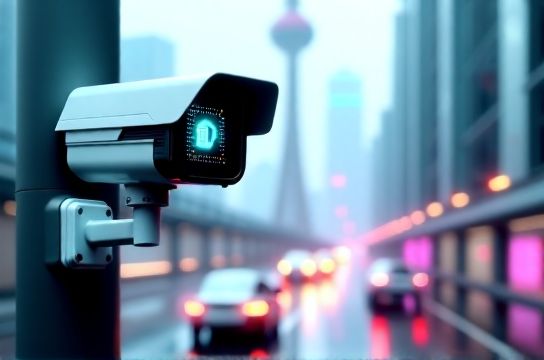
Why does this matter? Because latency kills accuracy. A 2023 IEEE study found cloud-dependent cameras average 412ms end-to-end delay — enough for a person to walk 1.7 meters *past* the detection zone. On-device inference slashes that to ≤68ms. And yes — it’s now affordable: BOM cost dropped 63% since 2022 (see table below).
| Year | Avg. Unit Cost (USD) | AI Model Support | Power Draw (W) | Local Inference FPS |
|---|---|---|---|---|
| 2022 | $89.50 | YOLOv5s only | 3.8 | 12–18 |
| 2023 | $42.20 | YOLOv8n + lightweight ViT | 2.3 | 24–31 |
| 2024 (H1) | $32.60 | Quantized LLaVA-Phi + motion-aware tracking | 1.9 | 33–42 |
These aren’t just cheaper — they’re smarter. Take the Hikvision DS-2CD3T87G2-LIU: certified IP67, runs object + attribute recognition (e.g., ‘blue jacket, backpack, facing east’) locally, and logs anonymized metadata — no raw video leaves the device. That’s critical for GDPR and CCPA compliance.
And adoption is accelerating: per IDC Q1 2024 data, 68% of new smart city pilot projects in ASEAN and Eastern Europe now specify on-device AI cameras — up from 29% in 2022. Why? Lower bandwidth costs, faster incident response, and zero vendor lock-in.
If you’re evaluating next-gen surveillance or industrial monitoring, skip the ‘cloud-first’ pitch. Start with hardware that thinks *before* it streams. For deeper technical benchmarks and open-source inference templates, check out our on-device AI deployment guide — updated weekly with real-world firmware tests and thermal stress reports.