Embodied Intelligence Merging Robots with Human Traits
- 时间:
- 浏览:221
- 来源:OrientDeck
Let’s be real — when you hear ‘robots,’ you probably think of clunky arms on a factory floor or maybe that cute Roomba sucking up dust under your couch. But what if I told you the future of robotics isn’t just about automation? It’s about embodied intelligence: machines that don’t just compute, but *experience* their environment like humans do.
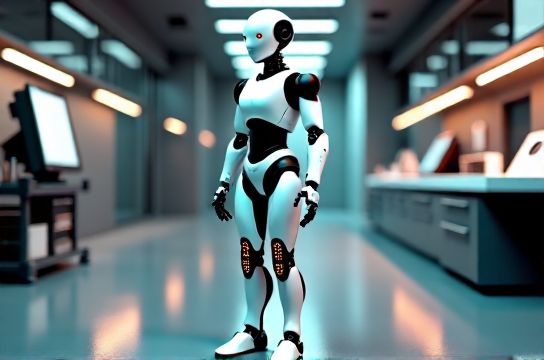
As someone who’s been deep in AI and robotics trends for over a decade, I’ve watched this shift from rule-based bots to systems that learn through interaction. And let me tell you — it’s not sci-fi anymore. We’re talking robots that adapt, respond, and even anticipate needs by merging sensory input, motor control, and learning algorithms. That’s what we mean by embodied intelligence.
Why Embodied Intelligence Changes Everything
Traditional AI focuses on processing data in isolation. But embodied intelligence argues that true understanding comes from *being in the world*. Think about how babies learn: they grab, drop, push, and fall. They learn physics through doing. Same goes for robots now.
Take Boston Dynamics’ Atlas robot. It can parkour, flip, and recover from shoves — not because it has pre-programmed responses, but because it uses real-time feedback from its body sensors to adjust movements. That’s embodiment in action.
Real-World Performance: How Today’s Robots Stack Up
To show you how far we’ve come, here’s a quick comparison of leading humanoid robots based on mobility, dexterity, learning capability, and real-world deployment:
| Robot | Mobility (0-10) | Dexterity (0-10) | Learning Ability | Deployment Status |
|---|---|---|---|---|
| Atlas (Boston Dynamics) | 9.8 | 7.5 | Reinforcement Learning + Simulation | Limited demo use |
| Optimus (Tesla) | 6.5 | 8.0 | Neural Networks + Human Demonstration | Prototype stage |
| Digit (Agility Robotics) | 7.0 | 6.0 | Task-Specific AI | Deployed in logistics (U.S. Postal Service) |
| H1 (Figure AI) | 8.0 | 8.5 | LLM-Integrated Learning | Pilot programs with BMW |
As you can see, we’re moving beyond lab experiments. Humanoid robots like Figure’s H1 are already working alongside humans in factories, using large language models to interpret commands and embodied AI to execute tasks physically.
The Secret Sauce? Integration.
What makes these robots smart isn’t just raw computing power — it’s integration. Vision, touch, balance, and decision-making all work together in real time. For example, H1 uses tactile sensors in its hands, stereo vision, and full-body force control to handle delicate objects without crushing them.
And get this: some models are trained in simulation using millions of virtual hours, then transfer that knowledge to the real world. This ‘sim-to-real’ approach slashes development time and boosts reliability.
What’s Next?
We’re looking at a near future where embodied robots assist in elder care, disaster response, and even space exploration. The key will be making them safe, affordable, and adaptable.
Bottom line? The robots aren’t taking over — they’re finally starting to *understand* us. And that’s the real power of embodied intelligence.