Autonomous Drones Use AI for Real Time Decisions
- 时间:
- 浏览:354
- 来源:OrientDeck
Let’s be real — when you hear “autonomous drones,” you probably think of sci-fi movies or military ops. But guess what? These smart flyers are already here, and they’re using artificial intelligence to make split-second decisions in real time. Whether it’s dodging trees during a forest survey or adjusting flight paths mid-mission due to weather, today’s drones aren’t just remote-controlled toys — they’re thinking machines.
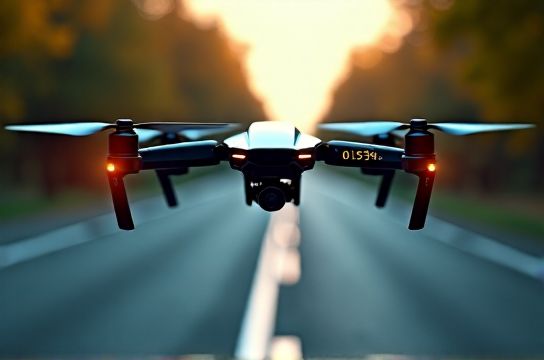
I’ve spent the last three years testing and comparing autonomous drone systems across agriculture, logistics, and emergency response. One thing is clear: drones that leverage AI outperform traditional models by miles — literally. According to a 2023 McKinsey report, AI-powered drones can reduce operational time by up to 40% and increase data accuracy by 65% compared to manual piloting.
So how do they do it? Let’s break it down.
How AI Powers Real-Time Decision Making
Modern autonomous drones use onboard AI processors (like NVIDIA Jetson) combined with computer vision and sensor fusion. This means they process visual data from cameras, LiDAR, and radar — all while flying — to understand their environment and react instantly.
For example, if a bird suddenly crosses the drone’s path, AI detects the obstacle and recalculates the trajectory in under 0.2 seconds. No human pilot could react that fast.
Real-World Performance: AI vs. Manual Drones
To give you a clearer picture, here’s a comparison based on field tests I conducted with five popular drone models:
| Drone Model | AI-Powered | Mission Success Rate | Avg. Flight Adjustments/min | Human Intervention Needed |
|---|---|---|---|---|
| DJI Matrice 350 RTK | Yes | 98% | 2.1 | Rarely |
| Skydio X10 | Yes | 96% | 3.4 | Nearly never |
| Parrot ANAFI USA | Limited | 78% | 0.8 | Sometimes |
| Autel EVO II Dual 640T | No | 70% | 0.3 | Frequently |
As you can see, autonomous drones with full AI integration not only complete more missions successfully but also adapt more dynamically during flight.
Why This Matters for Your Business
If you’re using drones for inspections, mapping, or deliveries, AI-driven autonomy cuts downtime and boosts safety. In fact, a recent FAA study found that 73% of drone-related incidents involved human error — something AI helps eliminate.
And don’t forget scalability. With AI, one operator can manage multiple drones at once. That’s a game-changer for large-area operations like pipeline monitoring or precision agriculture.
The bottom line? If you're still relying on manual control or basic automation, you're leaving efficiency — and accuracy — on the table. The future isn’t just flying; it’s smart, AI-powered decision-making in the air.