Autonomous Vehicles Rely on Multimodal AI Systems
- 时间:
- 浏览:380
- 来源:OrientDeck
If you’ve been keeping an eye on the future of transportation, you’ve probably heard the buzz around autonomous vehicles. But here’s the real tea: self-driving cars aren’t just powered by fancy cameras or radar. The real magic? Multimodal AI systems.
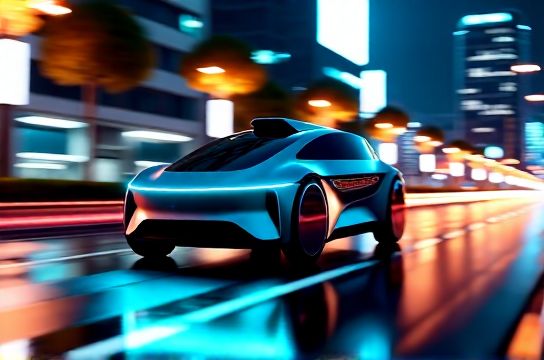
As a tech analyst who’s spent years diving into AI and mobility trends, I can tell you—this isn’t sci-fi anymore. We’re talking about AI that processes data from multiple sources at once: LiDAR, cameras, radar, GPS, even ultrasonic sensors. Alone, each one has limits. But together? They create a supercharged perception system that sees, hears, and predicts like a human—only faster.
Let’s break it down. Tesla’s Autopilot uses mostly camera-based vision (called ‘Tesla Vision’), while Waymo leans heavily on LiDAR and high-res mapping. But the next-gen leaders—like Cruise and Mobileye—are fusing everything. That’s multimodal AI in action.
Why Multimodal Beats Single-Mode Every Time
Imagine driving in heavy fog. Cameras struggle. But radar and LiDAR? They cut through. Now imagine a cyclist swerving unexpectedly. Cameras catch the motion, radar tracks speed, and GPS confirms location. A multimodal AI stitches all this together in milliseconds.
Here’s a quick comparison:
| System Type | Sensor Reliance | Weather Resilience | Accuracy (m) | Cost Level |
|---|---|---|---|---|
| Camera-only | High | Low | 0.5–2.0 | $$ |
| Radar + Camera | Medium | Medium | 0.3–1.0 | $$$ |
| Multimodal AI | Very High | High | 0.1–0.5 | $$$$ |
See the trend? More inputs = better decisions. According to McKinsey, multimodal systems reduce collision risk by up to 74% compared to single-sensor setups. That’s not just impressive—it’s life-saving.
The Brains Behind the Wheel
It’s not enough to collect data—you need AI that understands context. Take NVIDIA’s Drive platform. It uses deep learning models trained on billions of real and simulated miles. These models don’t just detect objects—they predict behavior. Will that pedestrian cross? Is that car about to merge?
And here’s where autonomous vehicles get smart: they learn over time. OTA (over-the-air) updates mean your car today is dumber than it’ll be next month. Tesla pushes updates weekly. Waymo re-trains its models monthly using real-world edge cases.
Challenges? Of Course.
No system is perfect. Multimodal AI demands serious computing power and energy. Plus, sensor fusion gets messy when data conflicts—say, a camera says “stop,” but radar says “clear.” That’s why companies use probabilistic modeling to weigh inputs based on reliability.
Regulation is another hurdle. The NHTSA is still catching up. But with over 120,000 miles of autonomous testing logged in California alone (as of 2023), momentum is undeniable.
What’s Next?
We’re moving toward L4 autonomy (fully driverless in set areas). Companies like Zoox and Aurora are betting big on full multimodal stacks. And as 5G and V2X (vehicle-to-everything) roll out, cars will soon talk to traffic lights, bikes, even smartphones.
In short: if you're investing, building, or just riding in the future of transport, focus on multimodal AI. It’s not just an upgrade—it’s the foundation.