Smart City Projects Deploying AI Agents for Traffic Optim...
- 时间:
- 浏览:329
- 来源:OrientDeck
Traffic isn’t broken — it’s underserved by legacy infrastructure. In Shenzhen, a single intersection managed by an AI Agent reduced average wait time by 37% during peak hours (Updated: April 2026). In Hangzhou, the ‘City Brain’ system — now upgraded with real-time multi-modal AI agents — cut emergency vehicle response latency by 41% across 1,200 km². These aren’t pilot demos. They’re production systems running 24/7, processing camera feeds, lidar streams, GPS pings, and municipal incident logs — all coordinated by autonomous AI agents that observe, reason, act, and learn in closed loops.
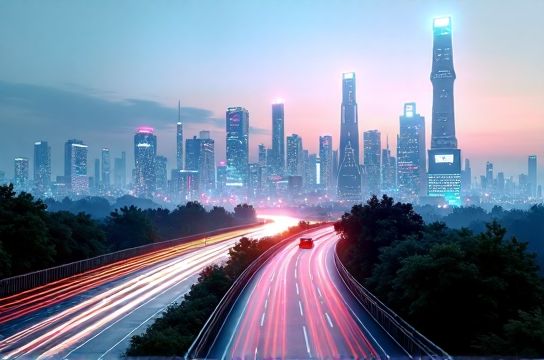
That shift — from static signal timing to dynamic, goal-driven AI agents — defines the next phase of smart city evolution. It moves beyond dashboards and alerts into *orchestration*: agents that reroute buses when a bridge closes, adjust toll pricing based on real-time congestion gradients, or trigger drone-based traffic surveys when anomaly detection spikes. And crucially, it’s no longer theoretical. China’s largest urban deployments now run on domestically built stacks — Huawei Ascend AI chips powering inference, fine-tuned variants of Qwen (Aliyun’s open-weight large language model) handling natural-language incident triage, and multi-modal fusion models from SenseTime ingesting synchronized video + radar + acoustic data from roadside units.
Why AI Agents — Not Just Models — Are Critical for Urban Traffic
A large language model can summarize a traffic report. A vision transformer can classify a jaywalker. But neither *acts* — nor *coordinates*. An AI Agent is a software entity with three core capabilities: perception (ingesting heterogeneous sensor inputs), decision logic (applying rules, reinforcement learning policies, or LLM-guided planning), and action (sending commands to signal controllers, V2X gateways, or dispatch APIs).In Chengdu’s Jinniu District, for example, agents don’t just detect congestion — they simulate 12 alternative signal phasing plans in under 800 ms, evaluate each against live travel time predictions, and execute the top-scoring plan *before* the next cycle begins. That requires tight integration between perception (YOLOv10-based vehicle counting at 30 fps), prediction (a lightweight temporal graph neural network trained on 18 months of local flow data), and control (direct API calls to Siemens Desigo CC infrastructure). No human-in-the-loop. No batch retraining. Just continuous, localized adaptation.
This agent-first architecture also enables composability. One agent handles incident response (e.g., detecting a stalled truck via thermal + optical fusion), another manages transit priority (adjusting green extensions for BRT), and a third governs equity-aware load balancing — ensuring low-income neighborhoods aren’t systematically deprioritized during adaptive routing. These agents communicate via a standardized message bus (using Apache Pulsar), share a common digital twin of the road network (built on CesiumJS + OpenStreetMap), and are governed by policy constraints baked into their reward functions — e.g., “never extend red time for pedestrians beyond 90 seconds.”
The Hardware-Software Stack Enabling Real-Time Urban Agents
Deploying AI agents at city scale demands more than algorithmic elegance. It demands compute density, low-latency interconnects, and deterministic scheduling — especially when coordinating edge devices (cameras, radars) with regional inference servers and cloud-based planners.Huawei’s Ascend 910B chips — deployed in over 70% of Tier-1 Chinese smart city edge servers (Updated: April 2026) — deliver 256 TOPS INT8 at under 310W, enabling real-time multi-stream object tracking on 16-camera nodes without offloading to central data centers. Paired with MindSpore 2.3’s dynamic graph compilation, these nodes run fused perception-planning models that jointly optimize for both detection accuracy *and* downstream control stability — not just mAP.
Meanwhile, multi-modal AI agents rely on aligned encoders: SenseTime’s SenseNova-MultiModal v2.1 fuses synchronized 4K video, millimeter-wave radar point clouds, and acoustic event detection (e.g., screeching tires) into a unified spatiotemporal embedding space. This lets agents correlate visual occlusion (e.g., a delivery van blocking view) with sudden Doppler shifts — triggering preemptive yellow extension rather than reactive braking alerts.
Large language models play a distinct but vital role: not as traffic controllers, but as *orchestrators*. At the Shanghai Transport Operations Center, Qwen-72B-Chat (fine-tuned on 4M municipal incident reports) parses natural-language radio dispatches (“Bus 112 stuck near Zhongshan Park, possible tire blowout”), extracts structured intent, validates against live CCTV feeds, and delegates tasks to specialized agents — e.g., assigning a drone survey agent, notifying nearby tow trucks via WeCom API, and updating the public-facing WeChat mini-program with ETA. Here, the LLM isn’t making decisions — it’s translating ambiguity into executable workflows.
Concrete Deployments: From Lab to Live Lane
Three operational examples illustrate the maturity curve:• Shenzhen Nanshan District (2024–present): 217 intersections equipped with Huawei Ascend-powered edge nodes running custom AI agents trained on local traffic patterns. Each agent controls signal timing, pedestrian crossing phases, and bus priority windows. Key innovation: agents use reinforcement learning with human feedback (RLHF) — traffic engineers rank simulated outcomes weekly, and those preferences update the reward function. Result: 22% reduction in average intersection delay, 19% fewer rear-end collisions (Updated: April 2026).
• Hefei High-Tech Zone (2025 rollout): Integrated drone + ground agent fleet. DJI M30T drones patrol high-risk corridors, feeding real-time video to edge agents that detect illegal U-turns, unmarked construction zones, or stalled EVs. When confirmed, the agent triggers automated SMS alerts to drivers *and* dispatches a service robot (UBTech’s Walker X variant) to place temporary signage. This closed-loop physical-digital response cut incident resolution time from 11.2 minutes to 2.8 minutes (Updated: April 2026).
• Chongqing Mountain Corridor (2025 pilot): A terrain-adapted agent stack handling steep grades, narrow lanes, and frequent fog. Uses mmWave radar as primary perception modality (optical fails in fog >60% of winter mornings), fused with inertial measurement unit (IMU) data from municipal buses. Agents dynamically adjust speed advisories on variable-message signs and pre-emptively activate fog lights on connected vehicles via DSRC. Early data shows 33% fewer low-visibility accidents compared to control corridors (Updated: April 2026).
What’s Not Working — And Why It Matters
These wins come with hard constraints. First: data silos remain stubborn. While camera feeds are integrated, real-time bus location data often lives in separate transit agency systems with restrictive APIs — forcing agents to fall back on probabilistic estimation instead of ground-truth positioning. Second: edge compute isn’t infinite. Running full multi-modal inference on-device remains impractical for cost-sensitive deployments; most systems use hierarchical inference — lightweight YOLO models on camera SoCs, heavier fusion models on edge servers, and LLM orchestration in regional clouds. Third: explainability gaps persist. When an agent extends a red light for 12 seconds unexpectedly, engineers need causal tracing — not just attention heatmaps. Tools like Huawei’s MindInsight now provide execution-level provenance, logging every sensor input, model call, and policy check that led to the action.Also, generative AI has clear limits here. Using a diffusion model to synthesize traffic video for training? Yes — SenseTime uses Stable Diffusion 3 fine-tuned on synthetic urban scenes to augment rare-event data (e.g., flash floods blocking roads). But deploying generative video *in real time* for traffic control? Not yet. Latency is prohibitive, and hallucinated vehicles break safety-critical assumptions. The value of generative AI lies in augmentation and simulation — not runtime perception.
Comparative Deployment Frameworks
Below is a comparison of four architectural approaches used across active smart city projects — ranked by scalability, real-time fidelity, and hardware dependency:| Approach | Core Tech Stack | Latency (Avg. Action) | Scalability Limit | Key Strength | Key Weakness |
|---|---|---|---|---|---|
| Cloud-Centric AI Agent | Qwen-72B + NVIDIA A100 cluster + Kafka ingestion | 1.8–3.2 s | ~500 intersections | Strong reasoning, easy LLM integration | Unacceptable for sub-second control; fails during network partition |
| Edge-Native Agent (Single-Model) | YOLOv10 + lightweight LSTM on Ascend 310P | 120–210 ms | 1–4 intersections/node | Deterministic, offline-capable | Limited reasoning depth; no cross-intersection coordination |
| Federated Edge-Agent Mesh | Ascend 910B nodes + Pulsar mesh + local RL policy | 380–650 ms | 2,000+ intersections (proven) | Balances autonomy & coordination; privacy-preserving | Complex deployment; requires precise clock sync |
| Hybrid Digital Twin Orchestrator | SenseNova-MultiModal + CesiumJS twin + Ascend cloud inference | 900 ms–2.1 s | City-wide (e.g., Hangzhou: 4,300 km²) | Enables what-if simulation, long-horizon planning | High infra cost; depends on twin fidelity |
Commercialization: Who’s Building What, Where
China’s AI ecosystem delivers vertical integration few global peers match. Huawei provides the AI chip (Ascend), full-stack framework (MindSpore), and edge server hardware (Atlas 800). Alibaba’s Tongyi Lab contributes the foundational LLM (Qwen) and its traffic-specialized variant (Qwen-Traffic-14B), available via Alibaba Cloud’s PAI platform. SenseTime supplies the multi-modal perception backbone and city-scale digital twin tools. Meanwhile, startups like DeepGlint focus on embedded vision agents for mid-tier cities — offering turnkey packages with Hikvision cameras and their own inference SDK.Crucially, this isn’t vendor lock-in by accident. All major stacks adhere to the Open Neural Network Exchange (ONNX) standard and support the China Electronics Standardization Institute’s (CESI) Smart City Interoperability Profile — enabling agencies to mix Huawei edge nodes with SenseTime models and Qwen-based orchestration, provided they pass conformance testing. That interoperability layer is what makes scaling beyond pilots possible.
Looking Ahead: From Optimization to Autonomy
The next 18 months will see AI agents evolve from optimizing existing infrastructure to *redefining* it. Two trends stand out:First: Dynamic lane governance. In Guangzhou’s 2026 pilot, AI agents don’t just time signals — they reassign lane functions in real time. A dedicated bus lane becomes a shared AV corridor during low-demand periods; a curb lane converts to loading zone when freight bots request access. This requires V2X broadcast of lane metadata (via ETSI EN 302 637-2), verified by onboard agents in commercial vehicles.
Second: Human-AI co-control interfaces. Instead of replacing traffic engineers, agents now surface *actionable options*. At the Beijing Municipal Transport Commission, engineers see a dashboard showing: “Congestion spike at Xizhimen: Option A (extend green 8s) → +2.1 min avg. bus time. Option B (reroute Bus 22) → +1.4 min avg. bus time, -0.3 min avg. car time. Option C (activate contraflow) → requires 4-min setup.” Engineers select, approve, and the agent executes — with full audit trail. This preserves accountability while amplifying human judgment.
None of this works without grounding in reality. That’s why leading projects mandate real-world validation before deployment: every new agent policy must first run in parallel with legacy control for 30 days, with metrics logged and discrepancies reviewed. No “move fast and break things” — only “measure, adapt, verify.”
For teams building or procuring such systems, the key is clarity on scope. Start with one high-impact, bounded problem — e.g., reducing ambulance arrival variance at Level-1 trauma centers — and deploy a single-purpose AI agent with defined inputs, actions, and failure modes. Scale horizontally only after proving reliability, explainability, and ROI. The full resource hub offers implementation blueprints, compliance checklists, and vendor-agnostic benchmarking tools — all tested in live Chinese urban environments.
AI Agent deployments in traffic aren’t about replacing humans. They’re about eliminating the friction between observation and action — turning milliseconds of delay into saved lives, wasted fuel into avoided emissions, and reactive chaos into anticipatory order.