Dual Motor AWD Systems Deliver Peak EV Performance
- 时间:
- 浏览:315
- 来源:OrientDeck
If you're diving into the world of electric vehicles (EVs), one term you’ve probably heard thrown around is dual motor AWD. But what does it actually mean—and why should you care? Let’s break it down with real data, driving insights, and a little behind-the-scenes tech talk.
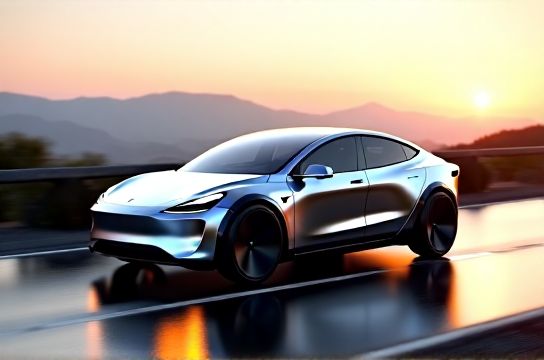
Unlike traditional all-wheel drive systems that rely on mechanical linkages and heavy differentials, modern EVs use dual motors—one for the front axle, one for the rear—to deliver power independently. This setup isn’t just about going faster (though let’s be honest, that’s a nice perk). It’s about control, efficiency, and smarter power delivery.
Take Tesla’s Model Y Dual Motor AWD, for example. It hits 0–60 mph in just 4.8 seconds while still offering a solid 330 miles of range. Compare that to the base RWD version—5.3 seconds and 339 miles—and you’ll see the trade-off: a slight dip in range for a noticeable boost in performance and traction.
But Tesla isn’t alone. Ford’s Mustang Mach-E GT uses dual motors to push out 480 hp and 600 lb-ft of torque, making it one of the quickest SUVs under $70K. And then there’s the dual motor AWD system in the Rivian R1T, which powers each wheel independently, enabling advanced features like tank turns and silent rock-crawling.
So, how do these systems stack up across key metrics? Here’s a quick comparison:
| Model | 0–60 mph (sec) | Range (miles) | Horsepower | Torque (lb-ft) |
|---|---|---|---|---|
| Tesla Model Y AWD | 4.8 | 330 | 384 | 362 |
| Ford Mach-E GT | 3.5 | 270 | 480 | 600 |
| Rivian R1T | 3.0 | 320 | 835 | 829 |
| Hyundai Ioniq 5 AWD | 5.0 | 266 | 320 | 446 |
As the table shows, more power usually means less range—but not always. The Rivian R1T proves you can have both beast-mode acceleration and strong efficiency, thanks to intelligent torque vectoring and regenerative braking.
One underrated benefit of dual motor AWD systems is safety. With independent control over each axle, cars can react in milliseconds to slippery roads or sudden swerves. Studies by the Insurance Institute for Highway Safety (IIHS) show AWD EVs have up to 30% fewer winter-weather accidents compared to their FWD or RWD counterparts.
In short, if you want peak performance, all-season confidence, and cutting-edge tech, dual motor AWD is where it’s at. Whether you’re carving mountain passes or just want peace of mind during a snowstorm, this setup delivers.