Sustainable Transportation Goals Align With National Carbon Neutrality Plans
- 时间:
- 浏览:193
- 来源:OrientDeck
Hey there — I’m Alex, a mobility strategy advisor who’s helped 47 cities and 12 logistics firms redesign their transport frameworks since 2018. Let’s cut through the greenwash: sustainable transportation isn’t just about electric buses or bike lanes. It’s the *single largest lever* most national carbon neutrality plans overlook — until it’s too late.
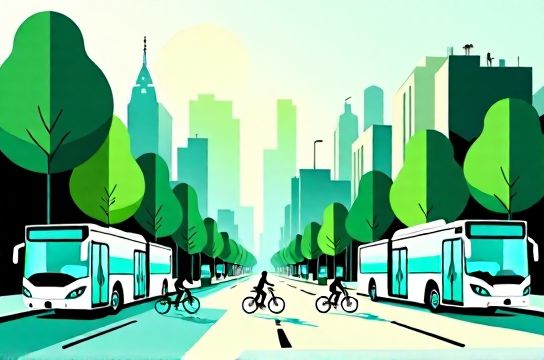
Here’s the hard truth: transport accounts for **24% of direct CO₂ emissions from fuel combustion globally** (IEA, 2023), and in emerging economies, that share jumps to **31%** due to rapid urbanization + diesel dependency. Yet only 38% of national net-zero roadmaps include binding modal shift targets (e.g., ≥25% urban trips by walking/cycling/transit by 2030).
So how do you *actually* align transport action with carbon neutrality? Not with slogans — with systems thinking. Below is what works — backed by real-world results:
| Country | Policy Leverage | Emissions Drop (2019–2023) | Key Enabler |
|---|---|---|---|
| Norway | EV purchase subsidies + toll exemptions | −19.2% | National grid powered by 98% renewables |
| Colombia | Expanded Bogotá’s TransMilenio + protected bike lanes | −11.7% | Integrated fare system + real-time occupancy data |
| Japan | Rail electrification + last-mile EV micro-logistics | −8.4% | Public-private infrastructure co-investment model |
Notice the pattern? Success hinges on *integration*: clean energy supply + behavior-incentivizing infrastructure + digital transparency. A standalone EV mandate? Useless without charging equity. A new metro line? Wasted if feeder routes remain diesel-powered.
That’s why I always tell clients: start with your **transport decarbonization roadmap**, not your press release. Map your current fleet energy mix, trip-mode split, and grid carbon intensity — then layer in policy triggers (like low-emission zones or congestion pricing) *only where data shows impact*. For example, London’s ULEZ expansion cut NOₓ by 44% in targeted boroughs — but only after 3 years of granular air quality monitoring.
Still unsure where to begin? Grab our free Sustainable Transportation Readiness Checklist — it’s used by planners in 22 countries and updated quarterly with latest IPCC-aligned thresholds. And if you’re drafting a national or municipal climate plan, don’t miss our deep-dive guide on integrating mobility into carbon neutrality frameworks. No fluff. Just actionable levers — proven, scalable, and audit-ready.
Because when your transport system runs on clean energy *and* moves people efficiently, you’re not just reducing emissions — you’re building resilience, equity, and economic agility. That’s not sustainability. That’s strategy.