China EV Industry Leads Global Shift to Pure Electric Automobiles
- 时间:
- 浏览:224
- 来源:OrientDeck
Let’s cut through the noise: China isn’t just *participating* in the EV revolution — it’s steering the wheel. In 2023, China accounted for **62% of global battery-electric vehicle (BEV) sales**, up from 47% in 2021 (IEA, Global EV Outlook 2024). That’s not a blip — it’s structural advantage in scale, supply chain integration, and policy coherence.
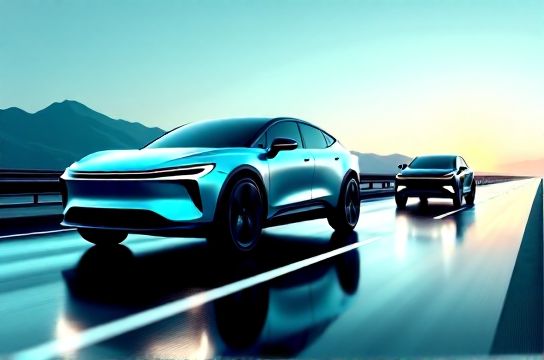
Take batteries: Chinese firms produced 77% of the world’s lithium-ion cells last year. CATL and BYD alone hold over 40% combined global market share — and they’re vertically integrating *upstream*, controlling 35% of global lithium refining capacity (Benchmark Mineral Intelligence, Q1 2024).
Here’s how that translates on the ground:
| Indicator | China (2023) | EU (2023) | USA (2023) |
|---|---|---|---|
| BEV Sales Volume | 5.9 million | 2.3 million | 1.4 million |
| Charging Infrastructure (Public + Private) | 859,000 units | 512,000 units | 152,000 units |
| Avg. BEV Price Drop YoY | −12.3% | −4.1% | −2.8% |
Price erosion isn’t accidental. It’s driven by economies of scale *and* domestic competition — BYD’s Seagull launched at $11,000, undercutting Tesla’s Model 3 in key export markets. Meanwhile, government mandates require 35% of new vehicle sales to be NEVs (New Energy Vehicles) by 2025 — with real teeth: non-compliant automakers face production quotas and R&D penalties.
Critically, China’s edge isn’t just manufacturing — it’s software-defined vehicles. Over 80% of domestically sold BEVs now ship with over-the-air (OTA) update capability, versus 54% in Europe (McKinsey Auto Pulse, March 2024). And yes — safety standards are tightening: GB 38031-2020 battery crash-test requirements now exceed UN GTR 20 in thermal runaway containment.
So where does this leave global players? Not out — but recalibrating. VW, Stellantis, and even Tesla are deepening JVs and localizing battery sourcing *in China*, not around it. Because whether you’re launching an EV startup or advising fleet buyers, ignoring China’s BEV momentum means operating with half the map.
For deeper insights on how this shift reshapes procurement, regulation, and consumer adoption — explore our full EV strategy toolkit.